 Historical Figure MBTI
4 min read
#30 · 2-9-26 · The German Enlightenment
Johann Gottfried Herder
Philosopher of Culture · Language · Human Particularity
1744 — 1803
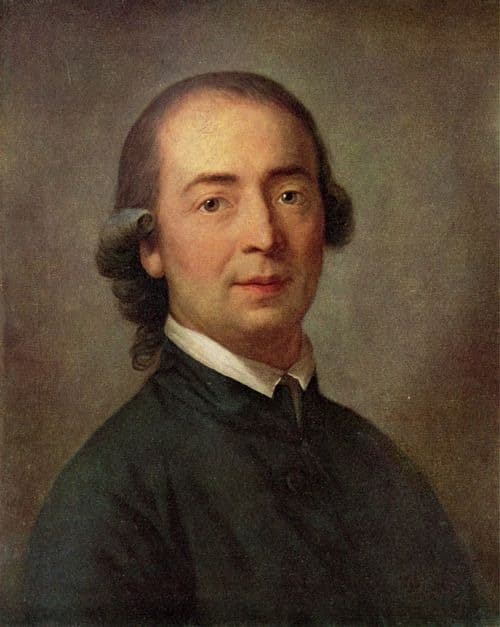
Portrait of Johann Gottfried Herder.
The Mind That Listened to History
Johann Gottfried Herder entered the Enlightenment at a moment when reason was being purified into abstraction and humanity was being measured against universal standards. He listened — and felt that something essential was being lost.
Educated under Immanuel Kant in Königsberg and deeply shaped by Johann Georg Hamann's symbolic intensity, Herder became neither architect nor rebel. He became a listener. Where others sought to define the human mind in general, Herder turned toward peoples, languages, histories, and inner worlds as they actually unfolded in time.
He is best understood as INFJ: an intuitive synthesizer whose vision was guided by human meaning, ethical concern, and historical depth rather than abstraction for its own sake. Unlike Kant, he did not compress reality into universal structures. Unlike Hamann, he did not explode meaning outward in symbolic provocation. Herder integrated.
His work consistently aims at understanding before judgment, coherence before system, and humanity before theory.
Ni — Dominant
Herder's intuition was inward, integrative, and future-oriented. He perceived patterns not as timeless abstractions, but as historical arcs — how language, myth, and culture shape a people's inner life over generations.
Rather than asking what must be true for reason to function, Herder asked what must be understood for humans to flourish. His insights emerge as slow syntheses: civilizations as organisms, languages as worldviews, cultures as living expressions of collective meaning.
This is dominant Ni directed not toward system-building, but toward human coherence.
Fe — Auxiliary
Herder's philosophy is inseparable from empathy. He consistently argued against judging cultures by external standards, insisting instead on understanding peoples from within their own historical and emotional contexts.
This is Fe in service of Ni vision: an outward concern for dignity, mutual recognition, and ethical responsibility. Herder did not seek to win arguments; he sought to humanize discourse.
His writing repeatedly returns to the moral consequences of ideas — how philosophies affect real lives, identities, and futures.
Ti — Tertiary
While not a system-builder, Herder was intellectually rigorous. He engaged Kant critically, refined arguments carefully, and clarified distinctions when necessary.
But logic was always subordinate to meaning. Ti served to support insight, not to replace it. Where Kant interrogated the conditions of thought, Herder animated its contents — ensuring coherence without erasing the human complexity within.
Se — Inferior
Herder was not oriented toward immediacy or sensory immersion. His attention rested on interpretation rather than experience itself — on what events meant within a broader narrative of humanity.
When he engaged art, folklore, or literature, it was not for sensation but for symbolism. The sensory world mattered insofar as it carried historical and emotional significance.
Why Not INFP?
Why not INFP?
While Herder's rich empathy and appreciation for individual experience can superficially resemble INFP traits, his cognitive orientation diverges decisively. INFPs hold their values privately first and only unfold them outwardly once coherently formed. Herder's insights were expressed with intentional direction toward understanding communities and history — not preserved in internal emotional refinement. His work was structured around bringing inward insight into shared human frameworks, not simply preserving it within a subjective inner world.
The Bridge Between Kant and Hamann
Herder's INFJ profile becomes clearest when placed between Kant and Hamann.
From Kant, he inherited seriousness, discipline, and moral gravity. From Hamann, he absorbed reverence for language, culture, and lived meaning.
But where Kant purified and Hamann provoked, Herder reconciled. He transformed their opposition into a humane philosophy that recognized both structure and soul, both reason and history. He did not choose a side. He held the tension.
Connected Figures
Further Reading
- Vico and Herder: Two Studies in the History of Ideas — Isaiah BerlinThe essential introduction to Herder's philosophy of culture and history — Berlin's portrait of Herder as the founder of nationalism and cultural pluralism remains the best entry point.
- Herder: Philosophical Writings — Michael N. Forster (ed. & trans.)A Cambridge Texts in the History of Philosophy volume collecting Herder's most important works, with an authoritative scholarly introduction.
- After Herder: Philosophy of Language in the German Tradition — Michael N. ForsterTraces Herder's lasting impact on the philosophy of language through Schleiermacher, Hegel, and beyond.
- Johann Gottfried von Herder — Robert T. Clark Jr.The standard English-language intellectual biography, covering Herder's life and the full scope of his ideas.
