 Historical Figure MBTI
6 min read
#28 · 2-9-26 · The German Enlightenment
Immanuel Kant
Philosopher of Reason · Architect of the Modern Mind
1724 — 1804
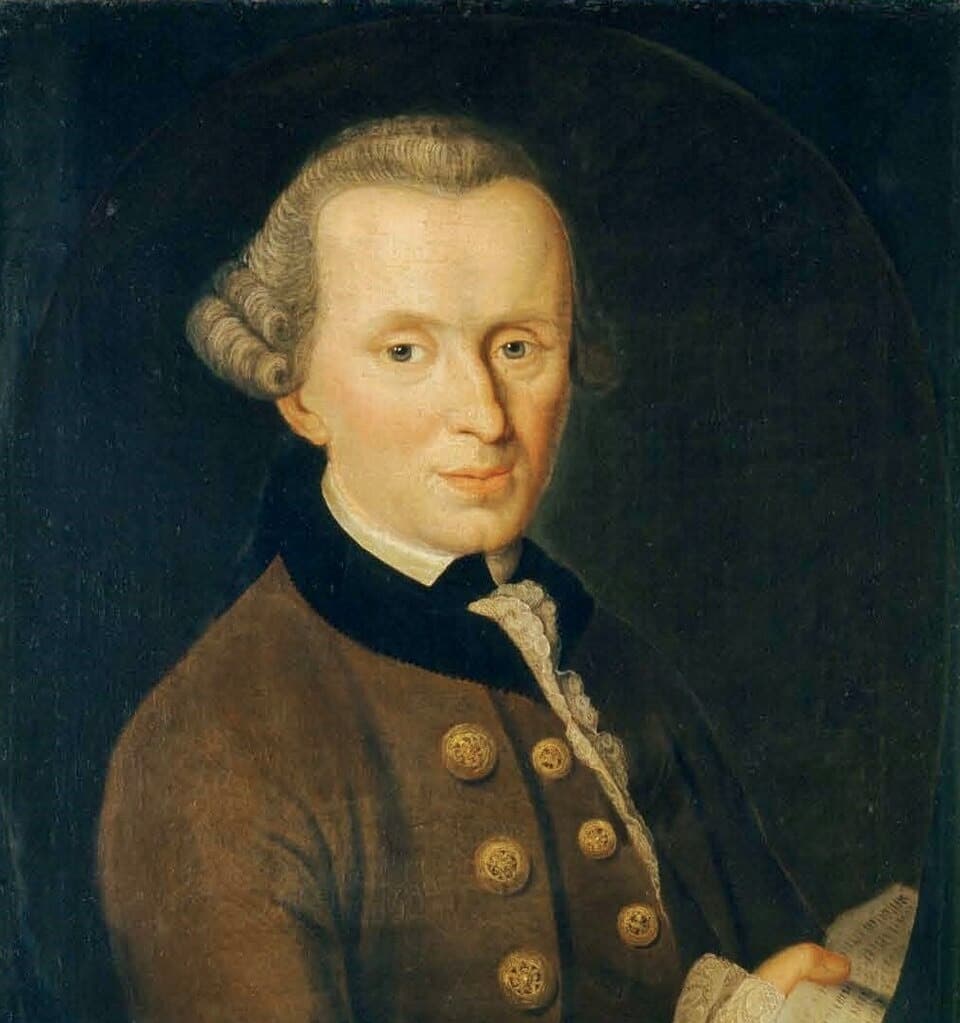
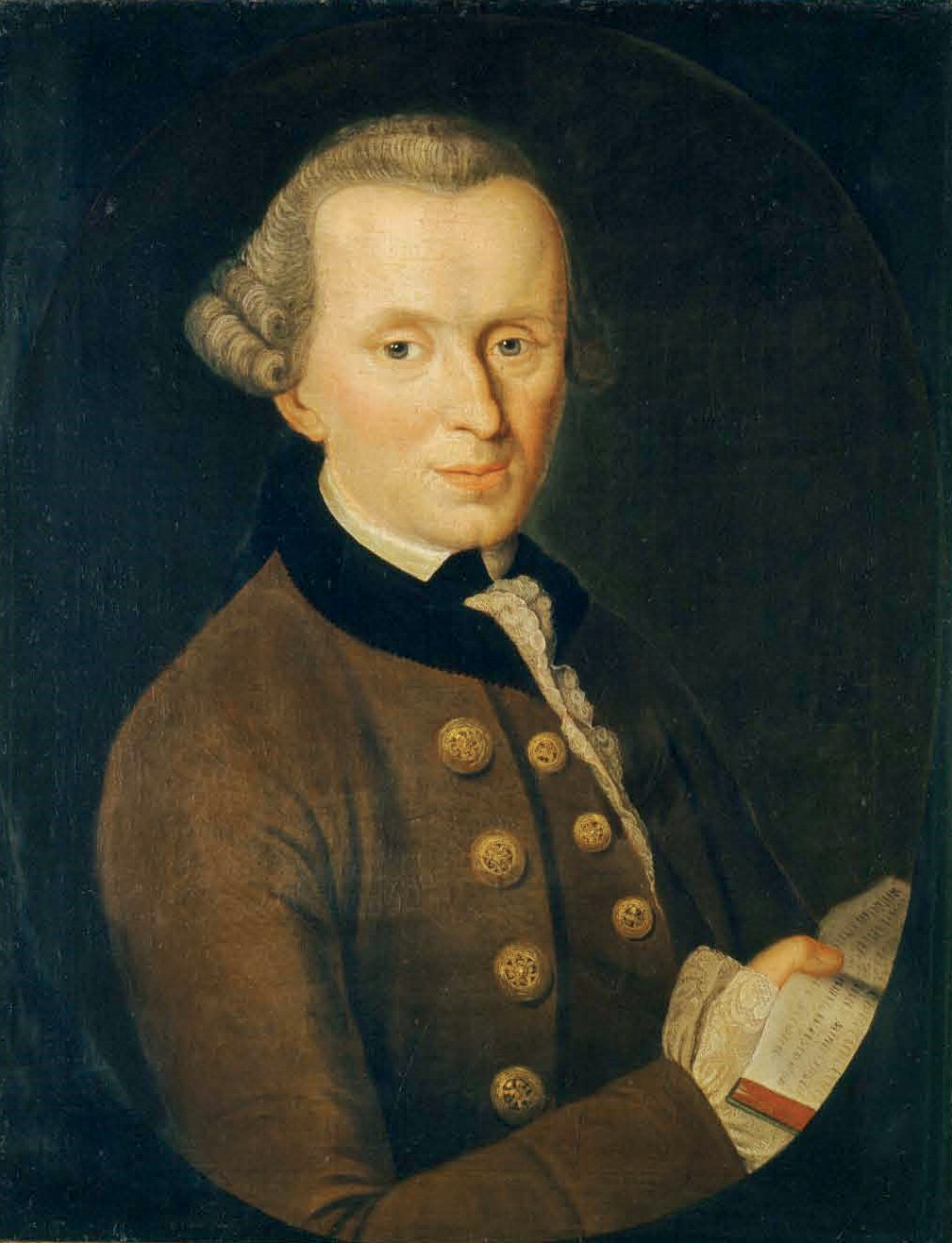
Portrait of Immanuel Kant.
The Man Who Dissected Thought Itself
Immanuel Kant lived his entire life within walking distance of Königsberg, a provincial Prussian city far from Europe's cultural capitals. He never traveled widely, never married, never sought public spectacle. And yet few individuals have reshaped human thought more profoundly.
Kant did not arrive at his philosophy through a sustained inner vision. He arrived through relentless logical interrogation. His fundamental question — what are the conditions that make knowledge possible at all? — is the quintessential move of dominant Ti: not "what is true?" but "by what logical structure does anything count as true?"
He is frequently typed as INTJ due to his rigid habits and monumental systematic output. But his discipline was not the product of Ni vision-locking. It was the product of Pietist formation shaping a Ti mind into iron routine. The clockwork walks, the fixed schedules, the decades of patient construction — these are what an INTP looks like when raised in Königsberg's culture of conscientious duty.
Kant's famous rigor was not natural temperament. It was learned armor — a Pietist upbringing grafted onto a mind that otherwise would have ranged freely.
Ti — Dominant
Kant's entire project was an act of Ti in its purest form: auditing the internal logic of the mind itself. He did not seek to describe the world — he sought to identify the necessary conditions under which any description of the world could function at all.
His categories of understanding — causality, substance, unity — are not empirical observations but logical scaffolding that Ti extracts from within. Space and time as pure forms of intuition: not things in the world, but the mind's own structural contribution to experience. This is Ti reasoning back to first principles, refusing to accept any external authority — including Descartes, Leibniz, and Hume — without first subjecting them to internal logical scrutiny.
The categorical imperative is the summit of this: moral law determined not by consequences or feelings, but by logical universalizability alone. "Act only according to that maxim by which you can at the same time will that it should become a universal law." Pure Ti: if it cannot survive internal logical consistency-testing, it fails.
Ne — Auxiliary
Before the Critiques, Kant was an astonishing intellectual generalist. He lectured on physics, astronomy, geography, anthropology, mathematics, and natural theology. He proposed the nebular hypothesis for the origin of the solar system years before Laplace. He wrote on race, climate, and the nature of beautiful objects. This breadth is the signature of auxiliary Ne — ranging curiosity before the system closes.
His famous awakening from "dogmatic slumber" by Hume is also deeply Ne: an external conceptual disruption that didn't merely modify his thinking but exploded and restructured it entirely. Ne is permeable to paradigm-breaking connections in a way Ni is not. An Ni-dominant protects their internal framework; an INTP allows the framework to be rebuilt when logical necessity demands it.
Kant's students described his lectures as electrifying — full of unexpected analogies, sideways approaches, and surprising connections across fields. That is Ne making philosophy vivid, not Ni making it convergent.
Si — Tertiary
This is where Kant confounds the casual observer. His legendary routines — the afternoon walk so regular that neighbors set their clocks by it, the fixed meal times, the unchanging sequence of daily activities — look like Ni vision-locking, but they are tertiary Si: an INTP's reliance on established personal patterns as a defense against cognitive overwhelm.
Tertiary Si in an INTP manifests as deep attachment to personal routine, comfort in familiar environments, and a strong aversion to disruption. Königsberg itself functioned as Si anchor — Kant never needed to leave because the familiar city was sufficient sensory ground for a mind living almost entirely in abstraction.
His Pietist childhood reinforced this enormously. The Pietist emphasis on discipline, regular devotional practice, and moral earnestness gave Kant's tertiary Si an unusually strong cultural scaffold. What might have been mild habit-preference in another INTP became load-bearing ritual. His conscientiousness was real — but it was cultivated, not native.
Fe — Inferior
Kant was not indifferent to other people. He was an attentive, warm host at his structured dinner gatherings. He cared genuinely about human dignity — his insistence that persons must never be treated as mere means is not a cold logical postulate but a passionate moral commitment that reaches toward Fe's universalism.
His cosmopolitanism — the vision of a world federation of peaceful republics governed by shared rational norms — carries the hallmark of inferior Fe: when it finally appears, it appears as universal moral law rather than personal warmth. Not "I care about you," but "every human being deserves unconditional respect." The emotional concern is real; it simply expresses itself in principle rather than in feeling.
His social discomfort — never marrying, limiting close attachments, structuring social contact carefully — is exactly what inferior Fe looks like: genuine care for humanity at the abstract level, genuine awkwardness with intimacy at the personal level.
Why Not INTJ?
Why not INTJ?
INTJs lead with Ni — a single convergent vision, refined over years into an architectural endpoint the mind has already intuited. Kant's process was the opposite: he began with open-ended intellectual ranging, was disrupted by Hume into total reconstruction, and built his system by logical necessity rather than by following a pre-felt endpoint. His famous delay before Critique of Pure Reason was Ti perfectionism, not Ni consolidation — he needed every logical joint to hold, not every part to align with an inner picture. INTJs also show Te as auxiliary: pragmatic, action-oriented, outcome-focused in the world. Kant was none of these. His auxiliary was the ranging, possibility-generating Ne that made him a brilliant generalist before he became a systematic philosopher. The rigidity was real — but it came from Si and Pietist formation, not from Ni's laser focus.
The Quiet Circle
Kant's relationships were few and carefully bounded. He maintained polite intellectual friendships, hosted structured dinner gatherings, and mentored students — but never allowed relational demands to disrupt his internal work.
Figures like Johann Georg Hamann and Johann Gottfried Herder served as intellectual foils rather than collaborators. Kant engaged with difference, absorbed what was logically useful, and returned to his own framework. His dinner parties were more than mere routine: they were a way for inferior Fe to find human contact on safe, structured terms.
His true intimacy was with the logical structure of thought. But he was not cold — he simply loved humanity more comfortably in principle than in person.
Connected Figures
Further Reading
- Kant: A Biography — Manfred KuehnThe standard English-language biography — thorough on Kant's Königsberg life, Pietist formation, and the long road to the Critiques.
- Critique of Pure Reason — Immanuel Kant (trans. Norman Kemp Smith)The primary source. The Kemp Smith translation remains the most widely used English version for serious readers.
- Kant and the Platypus — Umberto EcoA rewarding indirect approach — Eco's essays on cognition and language show how Kant's categorical framework continues to animate modern thinking about how minds make sense of experience.
- The Roots of Romanticism — Isaiah BerlinPlaces Kant at the pivot between Enlightenment reason and the Romantic reaction — essential for understanding why Herder and Hamann pushed back so hard.
