 Historical Figure MBTI
4 min read
#27 · 2-8-26 · Scientific Paris
Frédéric Joliot-Curie
Physicist · Idealist · Emotional Catalyst of Science
1900 — 1958
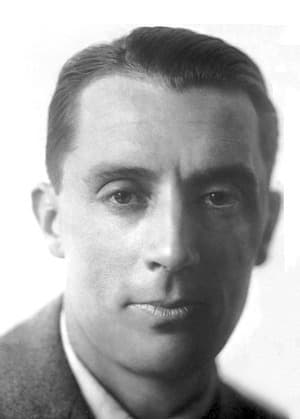
Portrait of Frédéric Joliot-Curie.
The Man Who Believed Science Should Feel Alive
Frédéric Joliot-Curie did not enter science as a custodian of austerity. He entered it with enthusiasm — a belief that discovery should feel alive, human, and morally meaningful.
Where others in the Curie orbit carried knowledge as burden or duty, Frédéric carried it as possibility. He was not driven primarily by preservation or enforcement, but by the conviction that science must remain connected to human values. He did not narrow ideas toward closure. He expanded them outward, linking physics to ethics, education, politics, and social responsibility.
Like Paul Langevin, he believed knowledge carried responsibility, and that scientists could not remain emotionally or morally neutral. What distinguishes him is how that belief moved through him: not as structure or orchestration, but as internal conviction seeking expression. He aligns most clearly with ENFP.
Science, for Frédéric, was not an inward discipline of coherence but an outward expression of belief.
Ne — Dominant
Frédéric approached ideas as living fields rather than problems to be closed.
He thrived in discussion, cross-pollination, and imagining futures where science served humanity more directly. He was energized by connection — between disciplines, between people, between ideals and action. This openness made him intellectually animated and emotionally present, but also resistant to narrowing or containment.
He explored first, trusted momentum, and allowed meaning to emerge through engagement rather than resolution.
Fi — Auxiliary
Frédéric's moral commitments were deep, personal, and non-negotiable.
He did not arrive at ethics through consensus or calibration, but through inner alignment. When he spoke or acted politically, it was not because a role demanded it, but because he felt compelled. His idealism was sincere and emotionally charged, often at personal or professional cost.
This is where he aligns closely with Paul Langevin: both believed science must serve humanity, and both acted publicly on that belief. But Frédéric's motivation was not moral architecture — it was moral fire.
Te — Tertiary
When Frédéric organized, advocated, or assumed responsibility, it was always in service of values rather than efficiency. He could act decisively, take public stands, and accept leadership — but structure was never the source of his confidence. It was a tool he used when ideals demanded form.
This made him inspiring, expressive, and occasionally impractical — a man moved more by meaning than by maintenance.
Si — Inferior
Frédéric showed little attachment to precedent or routine for their own sake.
Unlike those who felt bound by legacy, he treated tradition as optional — something to be honored only if it remained aligned with living values. Stability did not reassure him; relevance did.
This resistance to containment gave him flexibility and warmth, but also made him less suited to long-term enforcement or procedural stewardship.
How His Children Remembered Him
The domestic sphere confirms the pattern. Frédéric's children remembered him as warm, emotionally available, and expressive — someone who talked, explained, joked, and shared enthusiasm.
In a household shaped by Irène's seriousness and expectation, Frédéric brought connection. He was easier to approach, more verbally present, and more reassuring.
He did not command. He inspired.
Partnership and the ENFP Current
Frédéric's marriage to Irène Joliot-Curie functioned because their roles were complementary. She carried continuity and enforcement; he carried belief and motivation.
Together they produced extraordinary scientific results — winning the Nobel Prize in Chemistry in 1935 for the discovery of artificial radioactivity. But psychologically, Frédéric was never the anchor. He was the emotional catalyst, the one who kept meaning alive when responsibility threatened to harden into obligation.
Connected Figures
Further Reading
- Obsessive Genius: The Inner World of Marie Curie — Barbara GoldsmithA psychological portrait of the Curie milieu — illuminates the laboratory world Frédéric married into.
- Marie Curie: A Life — Susan QuinnThe most thorough English-language biography of Marie Curie, covering the Paris scientific community in depth.
- Madame Curie: A Biography — Ève CurieWritten by Frédéric's sister-in-law — an intimate account of the family and laboratory from inside the circle.
- The Curies: A Biography of the Most Controversial Family in Science — Denis BrianCovers Marie, Pierre, Irène, and Frédéric — the fullest account of the dynasty as a whole.
