 Historical Figure MBTI
4 min read
#26 · 2-8-26 · Scientific Paris
Paul Langevin
Physicist · Moral Idealist · Emotional Catalyst of Science
1872 — 1946
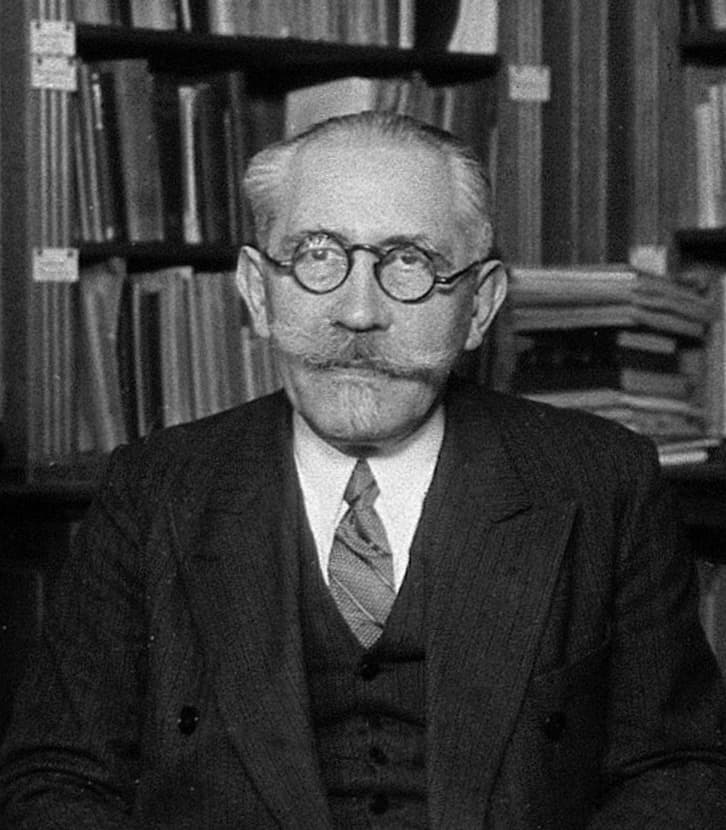
Portrait of Paul Langevin.
The Man Who Could Not Keep Knowledge Private
Paul Langevin did not believe science could remain silent.
Born into the accelerating machinery of the Long Century, he lived at a fault line many intellectuals tried to avoid: the place where discovery spills into conscience, where knowledge awakens feeling before it hardens into policy. Unlike those who endured quietly or retreated into principle, Langevin responded emotionally — outwardly, passionately, and often at personal cost.
He is often mistyped as INTP for his intellect, INFJ for his idealism, or ENFJ for his visibility. But taken together, these votes reveal the real pattern: a man driven not by internal systems or guiding vision, but by value-charged curiosity and emotional urgency. He is best understood as ENFP — not because he lacked conviction, but because his conviction was personally felt before it was publicly expressed.
He did not see science as neutral. He saw it as alive.
Ne — Dominant
Langevin's relationship to ideas was expansive, associative, and connective. He delighted in implications — scientific, philosophical, and social — and moved freely between them. His thinking did not converge quickly, nor did it seek closure for its own sake. He tolerated ambiguity, contradiction, and emotional intensity without discomfort.
In writing and conversation, ideas branch. Analogies proliferate. Meaning unfolds as he speaks. This is not Ni convergence, but Ne exploration — curiosity activated by possibility and consequence rather than structure.
He did not ask, "Where must this lead?" He asked, "What does this open?"
Fi — Auxiliary
Langevin's moral life was deeply personal.
His values were not adopted to harmonize society or guide others, but because they felt unavoidable. In private letters and intimate accounts, his emotional tone is sincere, sometimes impulsive, and unfiltered. He expressed outrage, hope, affection, and belief without careful calibration.
This is not Fe regulation. It is Fi conviction.
When injustice stirred him, he spoke because silence violated inner alignment — not because he felt responsible for managing collective sentiment. His politics were idealistic rather than strategic, often costing him safety, reputation, or stability.
Te — Tertiary
When Langevin acted, it was not to impose order, but to externalize conviction. His engagement with institutions, education, and politics followed emotion rather than preceded it. Structure served expression — not the other way around.
This explains both his effectiveness and his volatility. He could mobilize quickly, speak powerfully, and accept visibility — but without the containment or endurance of Te-dominant types. Action flowed from feeling, not from system.
Si — Inferior
Langevin did not anchor himself in routine, precedent, or personal safety. Stability was repeatedly sacrificed to immediacy. He struggled to protect boundaries — emotional, relational, and institutional — and paid for it through scandal, persecution, and exhaustion.
This is not carelessness. It is the vulnerability of someone oriented toward what feels urgent now, not what preserves continuity.
Why Not INTP, INFJ, or ENFJ?
Why not INTP?
Langevin did not retreat into models or refine ideas privately. He externalized thought early, emotionally, and relationally. His response to the world was always personal before it was analytical.
Why not INFJ?
He did not compress insight into a guiding vision or tolerate silence for the sake of endurance. His response to tension was expression, not containment. INFJs converge; Langevin kept opening.
Why not ENFJ?
His values were not socially regulated or strategically framed. He did not manage emotion for harmony. He expressed belief even when it fractured relationships or damaged standing. ENFJs orchestrate; Langevin ignited.
Langevin and the Curie Constellation
Paul Langevin makes sense only in contrast.
Marie Curie (INTJ) endured silently for truth.
Pierre Curie (INFP) guarded moral alignment inwardly.
Irène Joliot-Curie (ESTJ) enforced duty and execution.
Ève Curie (INFJ) translated sacrifice into meaning.
Langevin alone reacted. He spoke, protested, loved, and believed in real time. He activated moral energy rather than anchoring it. This made him powerful — and unstable within the Curie orbit.
His connection with Marie Curie was intense precisely because it was stimulating, not stabilizing. He offered emotional expression, intellectual resonance, and public advocacy. But he did not offer containment, endurance, or structural alignment. The relationship flared — then fractured — not from betrayal, but from cognitive mismatch. He moved toward feeling. She moved toward completion.
Connected Figures
Further Reading
- Marie Curie: A Life — Susan QuinnThe most thorough English biography of Marie Curie; covers the Langevin affair and its consequences in detail.
- Obsessive Genius: The Inner World of Marie Curie — Barbara GoldsmithA focused account of Curie's psychology and her relationships, including her bond with Langevin.
- The Curies: A Biography of the Most Controversial Family in Science — Denis BrianA family portrait that traces Langevin's role within the broader Curie constellation.
