 Historical Figure MBTI
4 min read
#22 · 2-8-26 · Scientific Paris
Marie Curie
Physicist · Chemist · Architect of Radioactivity
1867 — 1934
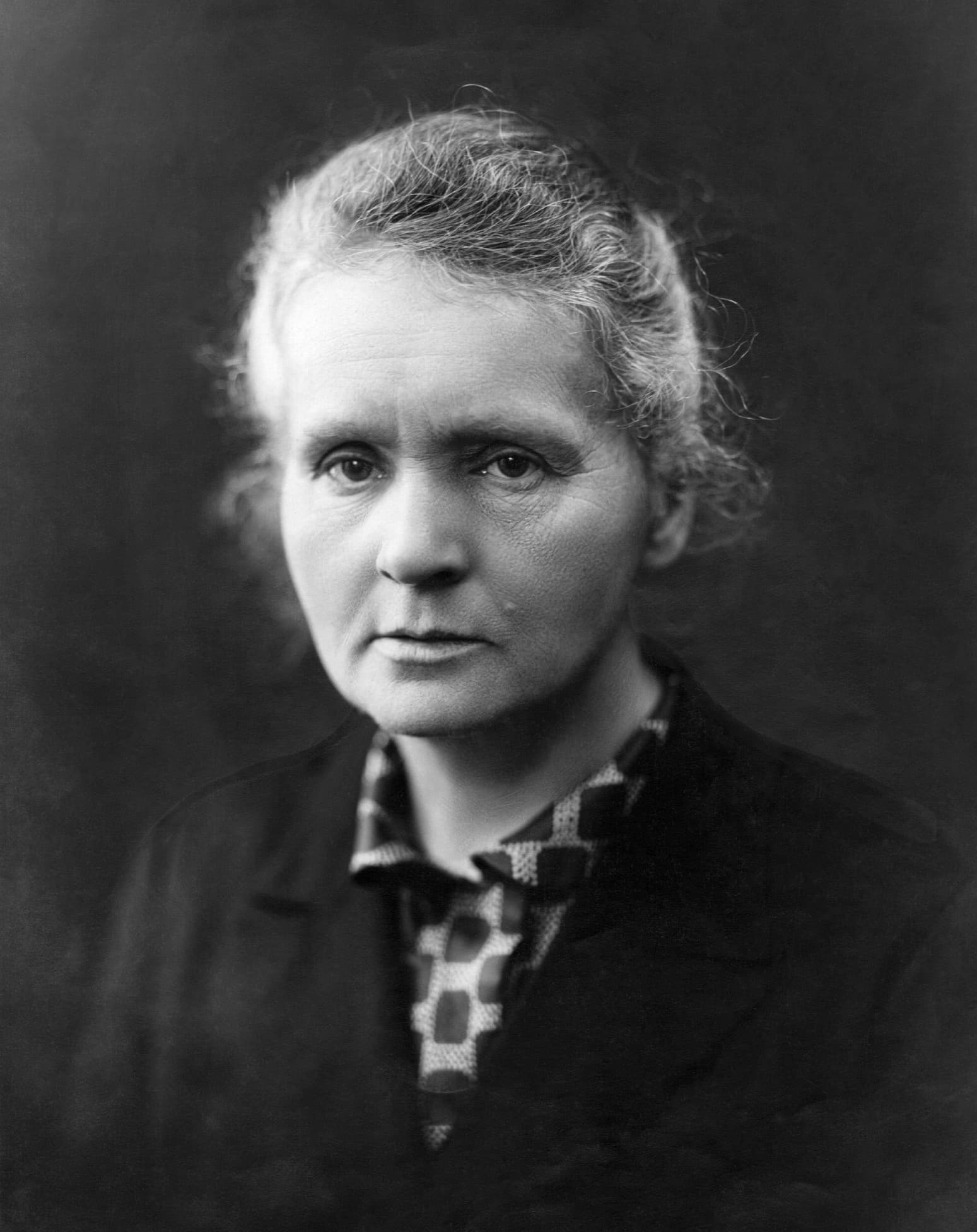
Portrait of Marie Curie.
The Weight of Continuation
Marie Curie did not live a life designed for brilliance.
She was born into political erasure, educated in secret, and shaped early by loss. Opportunity was delayed, constrained, and rationed. And yet — once she identified her path, she never deviated from it. Her life reads not as a sequence of inspirations, but as a single, unbroken line of continuation.
Where others slowed under hardship, Curie compressed. Where recognition failed to arrive, she continued anyway. This was not resilience for show. It was a quieter conviction: that truth, once perceived, demands completion — regardless of cost.
She is frequently typed as INTP — quiet, analytical, withdrawn, theoretical. On the surface, this seems plausible. But a closer look at her cognitive patterns, work process, and emotional regulation suggests a different structure. Curie was not a model-builder circling questions for intellectual satisfaction. She was a truth-extractor — selecting a problem, committing to it fully, and enduring reality until it yielded a definitive answer. This pattern aligns far more closely with INTJ.
She did not chase discovery. She endured toward it.
Ni — Dominant
Curie's thinking was vision-led and unbranching. Once she identified radioactivity as a coherent phenomenon, she did not wander between hypotheses. She named it early, defined its scope, and oriented years of labor toward uncovering its underlying properties.
Her research trajectory was linear and compressive: fewer questions over time, greater depth, increasing inevitability. This is classic Ni — an internal certainty guiding prolonged focus, not curiosity hopping between possibilities.
She did not ask what else could this be? She asked what is this, fundamentally — and how far does it go?
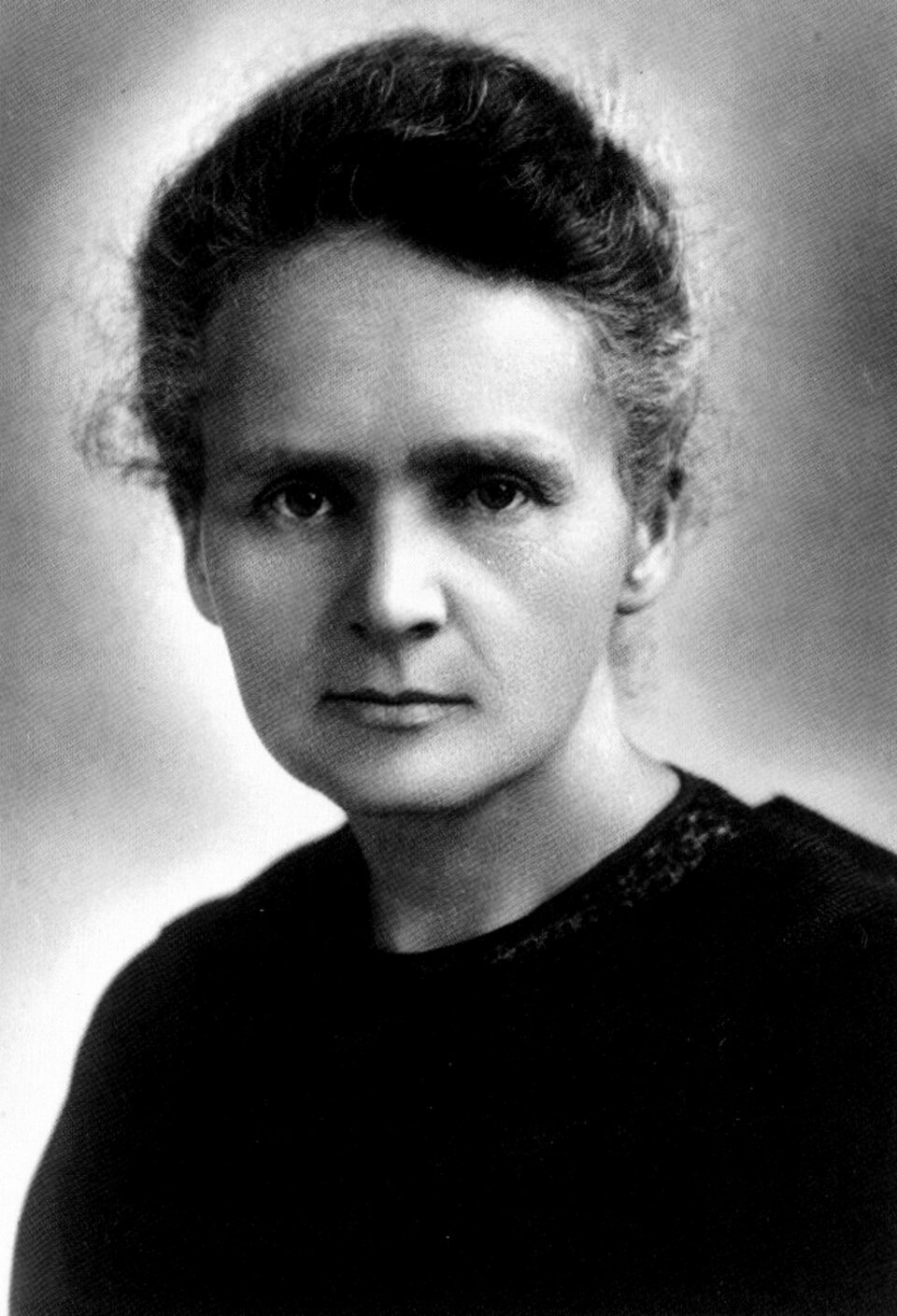
Te — Auxiliary
Curie's work ethic was famously severe. She subjected herself to years of repetitive, physically exhausting labor, processing tons of raw material by hand to isolate minute quantities of radium and polonium.
This was not exploratory tinkering. It was execution in service of a known goal.
Her writing reflects the same orientation: sparse, declarative, results-focused. She wrote to formalize conclusions, not to think aloud. Theory was always instrumental — valuable only insofar as it enabled extraction, proof, and application.
During World War I, this Te axis became unmistakable. She pivoted her knowledge into mobile X-ray units, personally deploying them at the front. No rhetoric. No hesitation. Just applied vision under pressure.
Fi — Tertiary
Curie's values were internal, rigid, and non-negotiable. She refused to patent her discoveries, believing scientific knowledge belonged to humanity — even at personal financial cost. She named polonium after her occupied homeland, a quiet act of loyalty rather than public protest.
In personal life, she showed little interest in reputation management. During public scandal, she did not explain herself. She did not defend her character. She continued working.
Her journals reveal not emotional exploration, but emotional containment. Grief is acknowledged, then subordinated to obligation. Feeling exists — but it does not lead.
Se — Inferior
Curie's relationship with the physical world was sacrificial. Her body bore the consequences of prolonged radiation exposure. She ignored physical limits, comfort, and safety in service of insight.
This is not sensory attunement. It is inferior Se — an uneasy, obsessive engagement with the material world as a means to feed higher-order understanding, often at great cost.
Her death from radiation-related illness stands as a final testament: the body spent to complete the vision.
Why Not INTP?
Why not INTP?
An INTP would emphasize internal model refinement, hypothesis cycling, and conceptual play — writing that circles uncertainty, journals that interrogate emotion, a work pattern that follows interest rather than endurance. Curie did none of these. She did not write to understand her feelings. She wrote to contain them. She did not theorize endlessly. She committed decisively. Her science was not exploratory — it was extractive. Her thinking was not open-ended — it was convergent. She did not ask permission from uncertainty.
The Partnership That Clarified Her Type
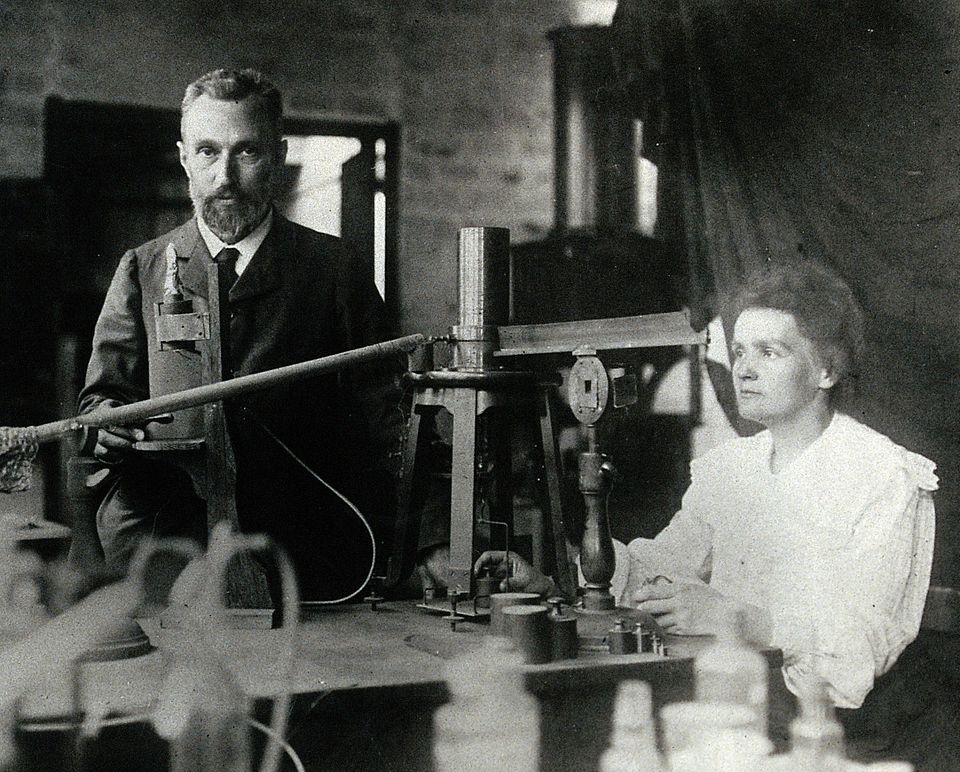
Marie Curie's INTJ structure becomes clearest in contrast with Pierre Curie. Pierre was brilliant, principled, and intellectually refined — but less directed. After meeting Marie, his work gained coherence and momentum.
She provided the spine.
Their relationship was not romantic spectacle but shared construction: two minds aligned around a single axis of truth. When Pierre died, Marie did not collapse into reflection. She assumed his role and continued the work.
That continuation — without replacement, without deviation — reveals the core of her cognition.
Connected Figures
Further Reading
- Marie Curie: A Life — Susan QuinnThe most thorough modern biography — scrupulously researched and attentive to the full arc of her inner and scientific life.
- Madame Curie — Ève CurieThe portrait written by her daughter Ève — intimate, elegiac, and the source of much of the enduring legend.
- Obsessive Genius: The Inner World of Marie Curie — Barbara GoldsmithA compact, psychologically alert account that draws on previously restricted notebooks and letters.
- Pierre Curie — Marie CurieMarie's own memoir of Pierre — spare and declarative, a window into how she processed grief through continuation.
