 Historical Figure MBTI
3 min read
#25 · 2-8-26 · Scientific Paris
Ève Curie
Interpreter of Legacy · Humanizer of Genius
1904 — 2007
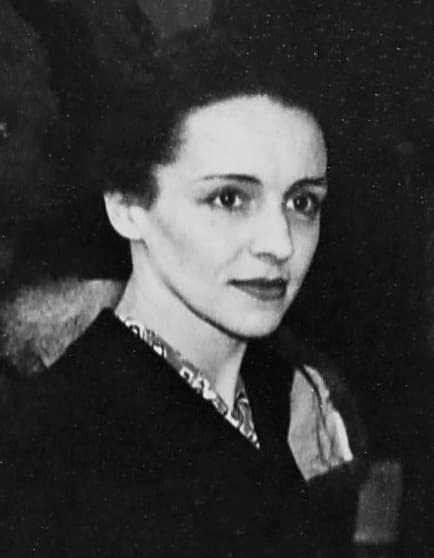
Portrait of Ève Curie.
The One Who Turned Pressure into Meaning
Ève Curie grew up inside severity.
Her mother, Marie Curie, modeled endurance without softness — work as love, discipline as devotion, silence as strength. In that house, emotion wasn't discussed; it was absorbed. Achievement wasn't celebrated; it was expected.
Irène responded by hardening into duty. Ève responded by listening. She became the one who noticed what the others carried — and translated it so the world could understand.
Ève is best understood as INFJ: a mind oriented toward meaning, synthesis, and moral narrative — private in process, public in impact. She did not reject her mother's values. She reframed them. She did not compete with science. She contextualized it.
Where Marie lived the sacrifice, Ève explained it.
Ni — Dominant
Ève's orientation was inward and integrative.
She didn't collect facts for their own sake. She searched for through-lines — how grief shaped resolve, how exile shaped discipline, how genius shaped loneliness. Her most famous work, Madame Curie, isn't a technical account; it's a compressed moral portrait.
This is classic Ni: seeing the life behind the data, the pattern behind the years, the meaning behind the silence.
Fe — Auxiliary
Ève's gift was accessibility.
She wrote and spoke so others could feel what Marie never articulated — without diluting the truth. She bridged genius and humanity, rigor and empathy. As a journalist, war correspondent, and public speaker, she moved comfortably in social space — not to dominate it, but to attune it.
Her Fe didn't moralize. It translated.
Ti — Tertiary
Ève's thinking was careful and clarifying.
She organized narratives cleanly, avoided sensationalism, and resisted easy mythmaking. Her prose is balanced — never indulgent, never cold. Ti supports her Ni by ensuring the story holds together without overclaim.
Se — Inferior
Ève was not sensation-seeking or impulsive.
She engaged the world deliberately, often under pressure (war reporting), but always in service of meaning. Presence mattered insofar as it enabled witness — not thrill.
Why INFJ and Not Something Else
Ève is sometimes mistaken for an extravert because she spoke publicly and moved through cultural institutions with ease. But her energy source was inward. She processed privately, then emerged with something distilled.
She was not exploratory like Ne types.
She was not directive like Te types.
She was not self-referential like Fi types.
She was interpretive. INFJ empathy at its best: compassionate without distortion.
The Sibling Contrast
In the Curie family system:
Same origin. Three responses.
Ève did not need to prove herself by continuing the work. She proved herself by ensuring the work — and the woman behind it — were understood.
Connected Figures
Further Reading
- Madame Curie: A Biography — Ève Curie (1937)Ève's own landmark biography of her mother — one of the best-selling books of 1937 and the primary source for the Curie legend.
- Obsessive Genius: The Inner World of Marie Curie — Barbara Goldsmith (2005)A reassessment of Marie Curie drawing on newly opened archival material, including letters Ève helped preserve.
- Marie Curie: A Life — Susan Quinn (1995)A comprehensive scholarly biography that situates both daughters within the Curie family dynamic.
- Radioactive: Marie & Pierre Curie — A Tale of Love and Fallout — Lauren Redniss (2010)A visually inventive account of the Curie circle that covers Ève's role as family chronicler.
