 Historical Figure MBTI
4 min read
#24 · 2-8-26 · Scientific Paris
Irène Joliot-Curie
Physicist · Inheritor of Duty · Enforcer of Legacy
1897 — 1956
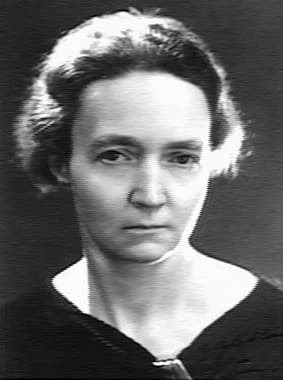
Portrait of Irène Joliot-Curie.
The Child Who Learned There Was No Room to Drift
Irène Joliot-Curie did not grow up in a house that rewarded play.
She was raised by Marie Curie — a woman governed by endurance, vision, and moral austerity. In that environment, curiosity without purpose was indulgence. Emotion without function was excess. What mattered was contribution.
Irène learned this early. While other children explored, she trained. While others speculated, she acted. Competence was not encouraged — it was assumed. By adolescence, she was already working alongside her mother in wartime hospitals, operating X-ray machines near the front.
She is sometimes typed through intelligence alone, leading to intuitive or perceiving hypotheses. But this misses the direction of her mind. Irène did not approach life as an open field of possibilities. She approached it as a set of obligations to be met correctly — standards assumed, enforced, and maintained without hesitation. This places her most clearly as ESTJ.
This upbringing did not produce a playful thinker. It produced a carrier of duty.
Te — Dominant
Irène's public and private life were marked by decisiveness.
In science, she prioritized results over speculation. In politics, she took positions openly and unapologetically. In institutions, she expected competence and compliance.
She did not tolerate ambiguity. She resolved it. She did not endure inefficiency. She corrected it.
Her authority was not performative — but it was unmistakable. Present. Firm. Expectant. This is Extraverted Judgment: standing in responsibility, not retreating from it.
Si — Auxiliary
Irène's core orientation was toward what had already been established.
She inherited a framework — scientific rigor, seriousness of purpose, moral responsibility — and treated it as binding. She did not reinterpret her mother's legacy or seek to redefine it. She preserved it intact and ensured it was carried forward correctly.
Her loyalty was not sentimental. It was procedural. Standards mattered. Precedent mattered. Continuity mattered.
Ne — Tertiary
Irène could consider alternatives when necessary — but she did not linger.
Possibility existed to serve execution, not exploration. New ideas were evaluated quickly and either implemented or discarded. Indecision was not a phase; it was a problem.
This is why she appears severe to some observers. She was not resistant to ideas — she was resistant to drift.
Fi — Inferior
Irène's values were powerful, but rarely introspected.
She did not dwell on personal feeling or internal conflict. When values were threatened, she acted. Advocacy, enforcement, and commitment replaced reflection.
This gave her a reputation for inflexibility. But the rigidity was not emotional coldness — it was value urgency, pushed outward through Te.
Why Not INTP?
Why not INTP?
The INTP hypothesis collapses immediately under scrutiny. Irène was not exploratory, playful with ideas, tolerant of ambiguity, or inwardly analytical. She did not speculate for pleasure. She did not write to think. She did not detach from action into theory. Growing up under an INTJ mother who modeled relentless purpose, Irène learned early that thinking without doing was unacceptable. INTP cognition requires room to wander — Irène was never given that room, and she did not seek it.
The Mother–Daughter Axis
The contrast with Marie Curie is subtle but decisive.
Marie led with vision. Irène led with obligation.
Marie absorbed pressure inwardly. Irène projected standards outwardly.
Marie created the legacy. Irène ensured it was not diluted.
This is not imitation. It is specialization.
Partnership and Family Life
Irène's marriage to Frédéric Joliot-Curie followed the same pattern. Their bond was collaborative and productive, oriented toward shared output rather than emotional refuge.
At home, her children later recalled a mother who was present, demanding, and unsentimental — not withdrawn, not mentally elsewhere, not indulgent. Authority came from expectation, not expression.
This was not introversion. It was embodied duty.
Connected Figures
Further Reading
- Marie Curie: A Life — Susan QuinnThe most thorough biography of Marie Curie, with substantial coverage of Irène's upbringing and career formation.
- Obsessive Genius: The Inner World of Marie Curie — Barbara GoldsmithCompact and psychologically sharp; illuminates the mother–daughter dynamic and the weight of the Curie legacy.
- Madame Curie: A Biography — Ève CurieWritten by Irène's sister — a primary source for family atmosphere and the household Irène grew up in.
- Nobel Prize Women in Science — Sharon Bertsch McGrayneDedicated chapter on Irène Joliot-Curie, covering the artificial radioactivity discovery and her political commitments.
