 Historical Figure MBTI
#709 · 5-27-26 · The Age of Exploration
Juan de la Cosa
Master of the Santa María · Mapmaker of the New World
c. 1450 — 1510
3 min read
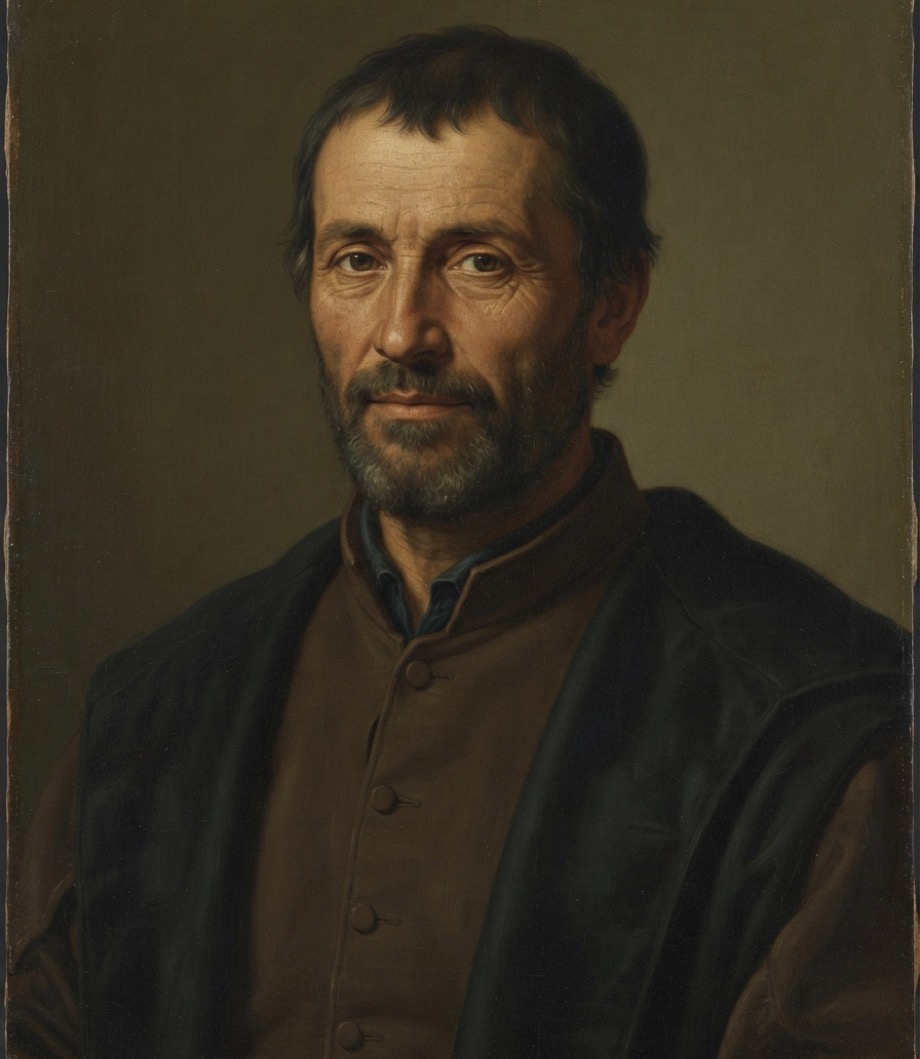
AI-assisted Portrait of Juan de la Cosa
The Owner of the Ship
History remembers the Santa María as Columbus's ship. It was not. It belonged to Juan de la Cosa, a Basque or Cantabrian shipmaster who chartered his own vessel to a Genoese captain with a theory and a royal commission, then climbed aboard as its master to make sure the theory survived contact with the Atlantic. That arrangement — practical man, borrowed dream — tells you almost everything about him before he ever draws a coastline.
He was not a visionary. He was the person visionaries need standing next to them: someone who has actually handled a hull in a storm, who trusts what he has seen more than what he has been told. After the wreck of the Santa María off Hispaniola on Christmas Eve 1492 — a loss he absorbed without apparently losing his nerve or his usefulness — he kept sailing, on Columbus's second voyage and then with Alonso de Ojeda and Vespucci himself along the Caribbean and South American coast, piling up the one currency he seemed to trust: direct observation.
That currency paid off in 1500, when he drew the first European map to show any part of the Americas as its own landmass rather than an outcropping of Asia. It was not built from theory. It was stitched together from what he and other working sailors had actually charted, coastline by coastline, on ships he had personally sailed. He died in 1509 the way he had lived, close to the coast rather than behind a desk — killed by poisoned arrows during a landing on the coast of present-day Colombia.
He never argued the New World into existence. He simply went and looked, and drew what was there.
Connected Figures
Further Reading
- La Cartografía Náutica Española en los Siglos XIV, XV y XVI — Ricardo Cerezo MartínezThe standard study of Spanish nautical cartography, situating the 1500 mappa mundi in its technical context.
- Juan de la Cosa: Piloto y cartógrafo — Jesús Varela MarcosBiographical study tracing his voyages from the Santa María's wreck to his death in Colombia.
