 Historical Figure MBTI
#710 · 5-27-26 · The Age of Exploration
Amerigo Vespucci
Florentine Navigator · The Man Who Named a Continent · Author of the New World's First Doubt
1454 — 1512
8 min read
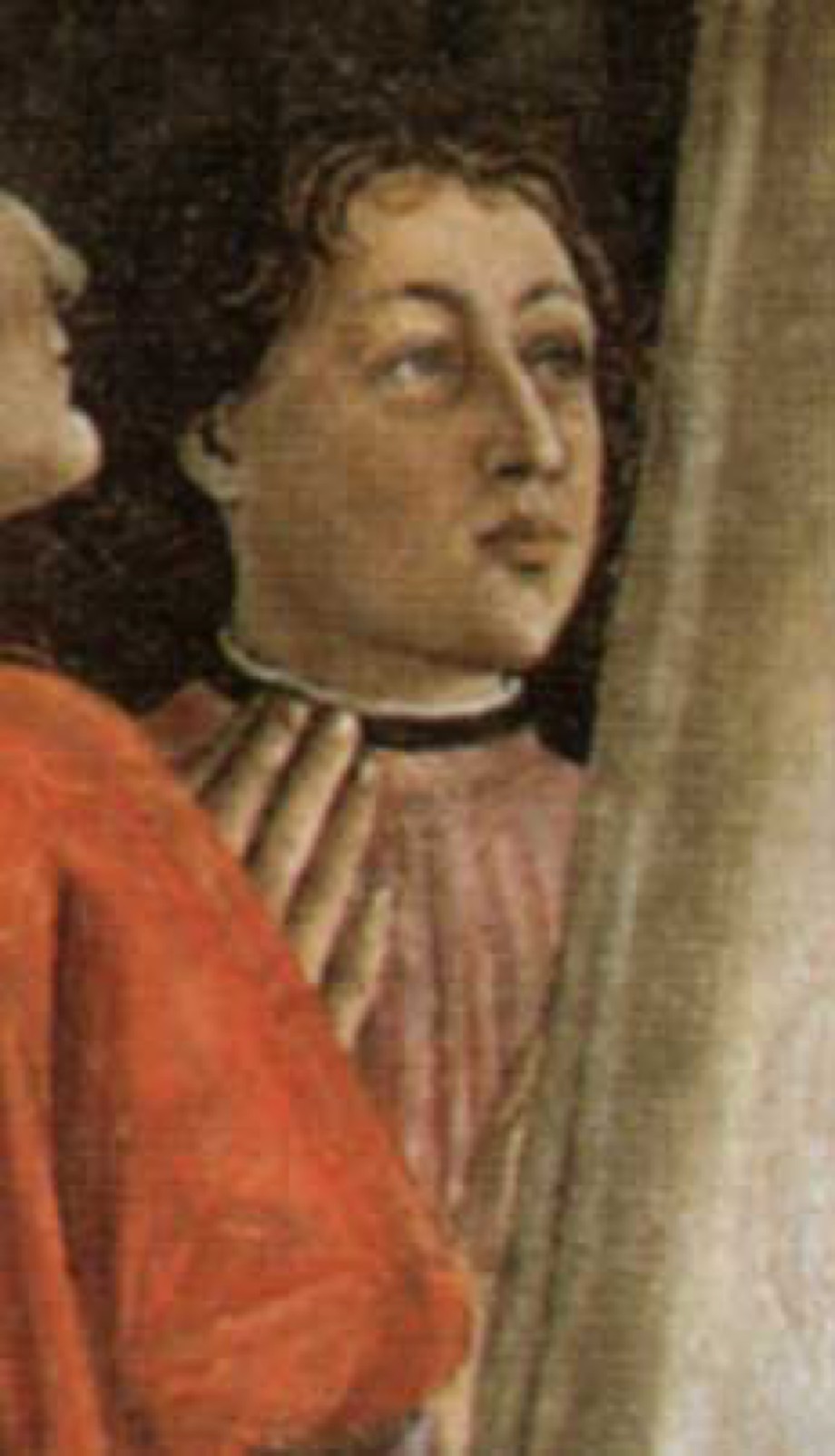
Portrait of Amerigo Vespucci
The Man Who Changed the Question
He was not the best sailor on any ship he ever boarded. He was a Florentine businessman who had spent years in the Medici bank, drifted to Seville to outfit ocean ventures, and only in his forties talked his way onto a deck. The men around him could take a latitude and read a coast. Vespucci's gift was rarer: he looked at the shoreline everyone else was looking at and asked a different question about it.
The question everyone else was asking, after 1492, was how far along the coast of Asia they had come. On the far side of the Ocean Sea lay the Indies — rearranged from Ptolemy, but recognizably the eastern edge of the known world — and every league of new coastline was fitted into that frame. Columbus went to his grave inside it. It was not a stupid frame; it was the only one there was, and the data could be made to fit if you bent a little.
Vespucci would not bend. In the letters he published in the first years of the sixteenth century — above all the pamphlet that swept Europe as Mundus Novus — he made the argument nobody else had put into print: these lands are not Asia. The coast runs too far south, the stars overhead are wrong, the people and animals match no description in any book. This is a new world, not a new route to the old one. He was also lying around the edges of that argument — about his rank, about which voyages he had been on at all — and historians have been sorting the inference from the salesmanship ever since. But the inference was correct, and it reorganized the mind of Europe.
Vespucci was an ENTP — dominant Extraverted Intuition, the function that refuses to accept the category it has been handed and reaches instead for the one nobody has proposed yet.
Ne — The Fourth Part of the Earth
Extraverted Intuition does not gather facts better than anyone else. It gathers the same facts and refuses the box they came in. Everyone on those Iberian decks saw a coastline that would not end; only Vespucci treated the endlessness as evidence about the category rather than an inconvenience within it. Sailing south along Brazil, past the latitudes where Asia had no business being, he did the Ne thing — he stopped patching the map and threw the map away.
The title of the pamphlet is the whole cognitive move in two words. Mundus Novus — not a new land, which would be a fact slotted into the existing world, but a new world, a rival totality. He had found regions, he wrote, "which we may rightly call a New World, because our ancestors had no knowledge of them." That sentence is doing philosophy, not geography; its claim is about the limits of inherited knowledge. Ne always ends up there, because its native suspicion is that the frame is arbitrary and nobody has yet said so out loud.
The reach was general. His letters swerve constantly — stellar observation, the customs of the Tupi, the prospects of brazilwood — some careful, some borrowed, some invented for effect. A mind that will not stay inside Ptolemy's categories will not stay inside the modest ones either.
Ti — The Argument Under the Boast
A hunch alone would have been worthless; the Atlantic was full of hunches. What made the New World claim survive was that Vespucci could show his work. Introverted Thinking is the auxiliary that audits the intuition privately — does this hold together? — and the letters carry the residue of that audit. He argued from longitude estimated by lunar conjunction, described in enough detail to be checked; from the coast run and the latitudes reached; from stars that appear in no classical author.
The structure of the reasoning is the tell. He is not saying I saw a new world, which is testimony any of a hundred sailors could have offered. He is saying: given these measurements, the Asia hypothesis cannot be made consistent — therefore it is wrong. That is an argument from internal coherence, the characteristic Ti weapon, and it is why the pamphlet persuaded scholars who had never smelled salt water. Ne supplied the alternative; Ti made it load-bearing.
It is also why the fabrications are so oddly local. Vespucci embellished his rank, his seniority, the number of his voyages, possibly the existence of one of them — but he did not falsify the geography. The vanity attached itself to the story of the man; the reasoning about the world stayed, so far as anyone can check, honest. Ti will let its owner tell almost any lie about himself before it lets him hold an incoherent thought.
Fe — The Pamphleteer's Instinct
Vespucci understood his audience the way a merchant understands a market, and wrote for it shamelessly. The letters are addressed to patrons — Lorenzo di Pier Francesco de' Medici, the Gonfalonier Soderini — and they are pitched: flattering, confiding, full of wonders calibrated to what a Florentine reader would find delicious. The passages on Tupi nakedness and cannibalism are there because they sold, and they were pirated across Europe within a few years, which is exactly what Columbus — a far greater sailor and far worse writer — never achieved.
Tertiary Extraverted Feeling is not warmth; it is a working sense of how a claim will land in other people, and Vespucci had it in the form that makes promoters. An idea wins not by being right but by being repeated, and to be repeated it must be pleasurable.
The shadow side of a tertiary function is that it flatters its owner along with everyone else. The instinct that shaped the pamphlet for readers shaped Vespucci's role inside it: the seasoned commander, the man the fleet deferred to. By sober reconstruction he was a junior figure on voyages other men led — not quite a liar in the cold sense, but a man whose feel for what an audience wanted ran ahead of his scruples about what was so.
Si — The Ledger He Could Not Keep
Introverted Sensing is memory as fixed record: this happened, in this order, on this date. It is the faculty of the archivist and the ship's clerk, and Vespucci's is a wreck. His accounts contradict each other on how many voyages he made and where they went; four centuries of scholarship have failed to settle the basic itinerary of a man who wrote at length about his own itinerary. That is the inferior function — not merely weak, but bent by the dominant. Where an ISTJ would have produced a dull, exact, unimprovable logbook and no theory, Vespucci produced the theory and lost the logbook.
The irony is that Spain eventually handed him precisely the job Si does best. In 1508 the crown made him piloto mayor — chief pilot of Castile — keeper of the master chart, the padrón real, onto which every returning captain's findings were to be transcribed. The man least able to keep his own past straight was set to guard the empire's official memory. He died in the post four years later, and it is a fair guess he found it the least interesting thing he ever did.
Why ENTP Over INTP
Why not INTP?
The reasoning in the letters is genuinely Ti-shaped, which makes INTP the serious rival — and the archive types Waldseemüller, who read those letters and drew the consequence onto a map, exactly that way. But an INTP leads with the framework and lets the world come to it; Vespucci led with the pitch. He wrote for publication, courted patrons in two kingdoms, inflated his rank to make the story carry, and pushed the claim into print while the question was still open rather than refining it in private. That is dominant Ne with Ti in support: the energy of a man selling a possibility, not a scholar perfecting a model.
The distinction shows in what each man kept. Waldseemüller, having accepted the argument, worried about it afterward and by 1513 had quietly dropped Vespucci's name from his maps — an INTP's late correction of a framework he had come to doubt. Vespucci never revisited anything. He made the leap, sold it, and took a salaried post that required none of it. ENTPs are not builders of systems; they are breakers of frames who leave the rebuilding to whoever picks up the pieces.
Connected Figures
Further Reading
- Amerigo: The Man Who Gave His Name to America (2007) — Felipe Fernández-ArmestoThe standard skeptical biography — separates the documented voyages from the self-promotion.
- Mundus Novus (1503) — Amerigo VespucciThe primary source: the short published letter that told Europe the new lands were a separate world.
- Amerigo and the New World (1955) — Germán ArciniegasThe older sympathetic account, useful for how the reputation was defended before modern scrutiny.
- The Fourth Part of the World (2009) — Toby LesterOn the Waldseemüller map of 1507 and how Vespucci's name came to be printed across a continent.
