 Historical Figure MBTI
3 min read
#132 · 3-16-26 · The Founding Generation of USA
Louisa Catherine Adams
First Lady · Diplomat's Wife · Writer of Profound Inner Reflection
1775 — 1852
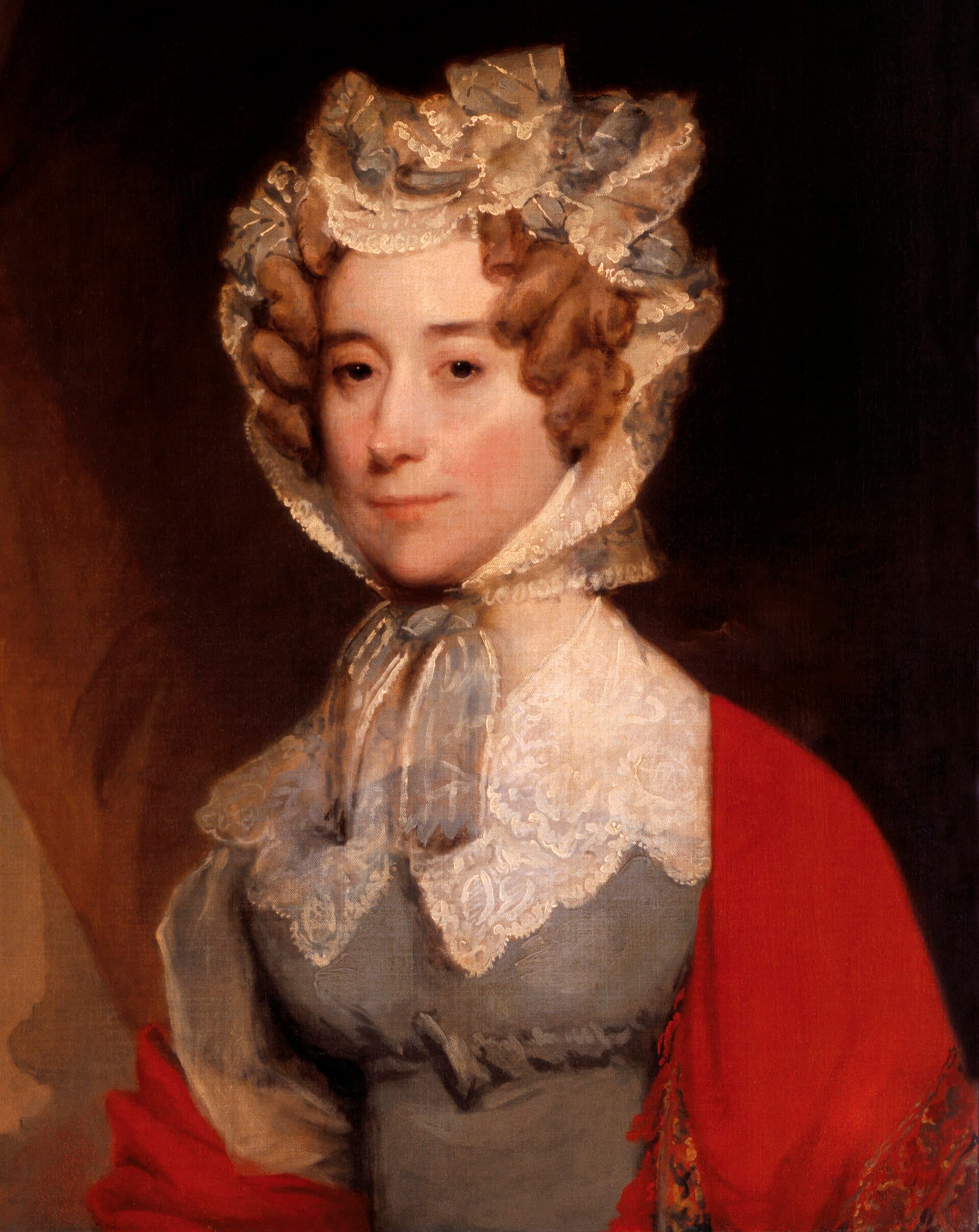
Portrait of Louisa Catherine Adams
The Inner Life in a World of Duty
To understand Louisa Catherine Adams is to understand a life lived between worlds—between countries, between expectations, and most importantly, between external duty and internal truth.
As the wife of John Quincy Adams, she occupied one of the most structured and demanding roles in early American political life. Yet her writings reveal a personality that did not naturally conform to structure, but instead continuously questioned, interpreted, and emotionally processed it.
Her voice is not one of control or direction. It is one of reflection, longing, and meaning-making.
A Life Interpreted from Within
Louisa’s writings consistently return to the same center: her feelings, her identity, and her place in the world. She does not simply record events. She asks what they mean to her.
Across her letters and memoirs, she reflects on isolation in foreign courts, the emotional cost of political life, and her struggle to reconcile her inner self with her outward role. This is not external evaluation. It is an inwardly anchored emotional framework.
Even when describing shared experiences, the focus remains personal:
- How did this affect me?
- What does this say about my life?
- Where do I belong in all of this?
This persistent inward referencing is the clearest signal of Fi dominance.
Life as Possibility, Not Structure
Louisa does not experience life as fixed. She moves through different countries, shifting identities, and changing expectations. And rather than anchoring herself in routine, she responds through imagination and interpretation.
Her reflections often carry a sense of “what could have been,” alternative emotional realities, and subtle re-framings of her circumstances. Even in hardship, there is a quiet pattern: not just enduring reality, but mentally moving around it. This is not the stability of Si. It is the fluidity of Ne supporting Fi.
Resistance to Role — Identity vs Expectation
One of the defining tensions of Louisa’s life is her relationship with her role. As a diplomat’s wife and later First Lady, she was expected to host, perform socially, and represent stability and grace. And while she fulfilled these duties, her writings suggest something deeper: she never fully became the role.
Instead, she observed it — almost as if from a distance. She reflects on the strain of constant social performance, the emotional dissonance of public life, and the difficulty of maintaining authenticity within expectation. This is not Fe adaptation. It is Fi maintaining identity under pressure.
The Psychological Verdict
Why Not INFJ?
INFJs tend to interpret patterns in others and derive meaning from external dynamics. Louisa consistently returns to her own internal emotional experience. Her writing is not “this is what it all means for everyone”; it is “this is what this means for me.”
Why Not ISFJ?
ISFJs typically adapt more fully to social roles and anchor themselves in routine. Louisa’s life shows tension with her role, discomfort with expectation, and a tendency to retreat inward rather than stabilize outward.
The Marriage Dynamic — Structure and Soul
Her relationship with John Quincy Adams reflects this contrast: he approaches life through duty, structure, and discipline; she experiences life through feeling, meaning, and identity. Where he asks, “What must be done?”, she asks, “What does this mean to me?” Their bond is not one of mirrored cognition, but of parallel endurance in different languages. This reflects the dynamic between Si-Te and Fi-Ne.
Connected Figures
Further Reading
- Louisa: The Extraordinary Life of Mrs. Adams — Margery M. HeffronThe most comprehensive biography of Louisa Catherine Adams, drawing extensively on her diaries and letters.
- The Remarkable Education of John Quincy Adams — Phyllis Lee LevinCovers the Adams family world in which Louisa moved, including her marriage and life in diplomatic postings.
- John Quincy Adams — Fred KaplanA close biography of her husband that illuminates the household and diplomatic postings Louisa endured alongside him.
- The Adams Papers: Diary and Autobiographical Writings of Louisa Catherine Adams — Judith S. Graham et al. (eds.)Primary source — Louisa's own words, edited and annotated; essential for understanding her inner life directly.
