 Historical Figure MBTI
4 min read
#131 · 3-16-26 · The Founding Generation of USA
John Quincy Adams
Lawyer · Revolutionary · Diplomat · Architect of American Independence
1767 — 1848
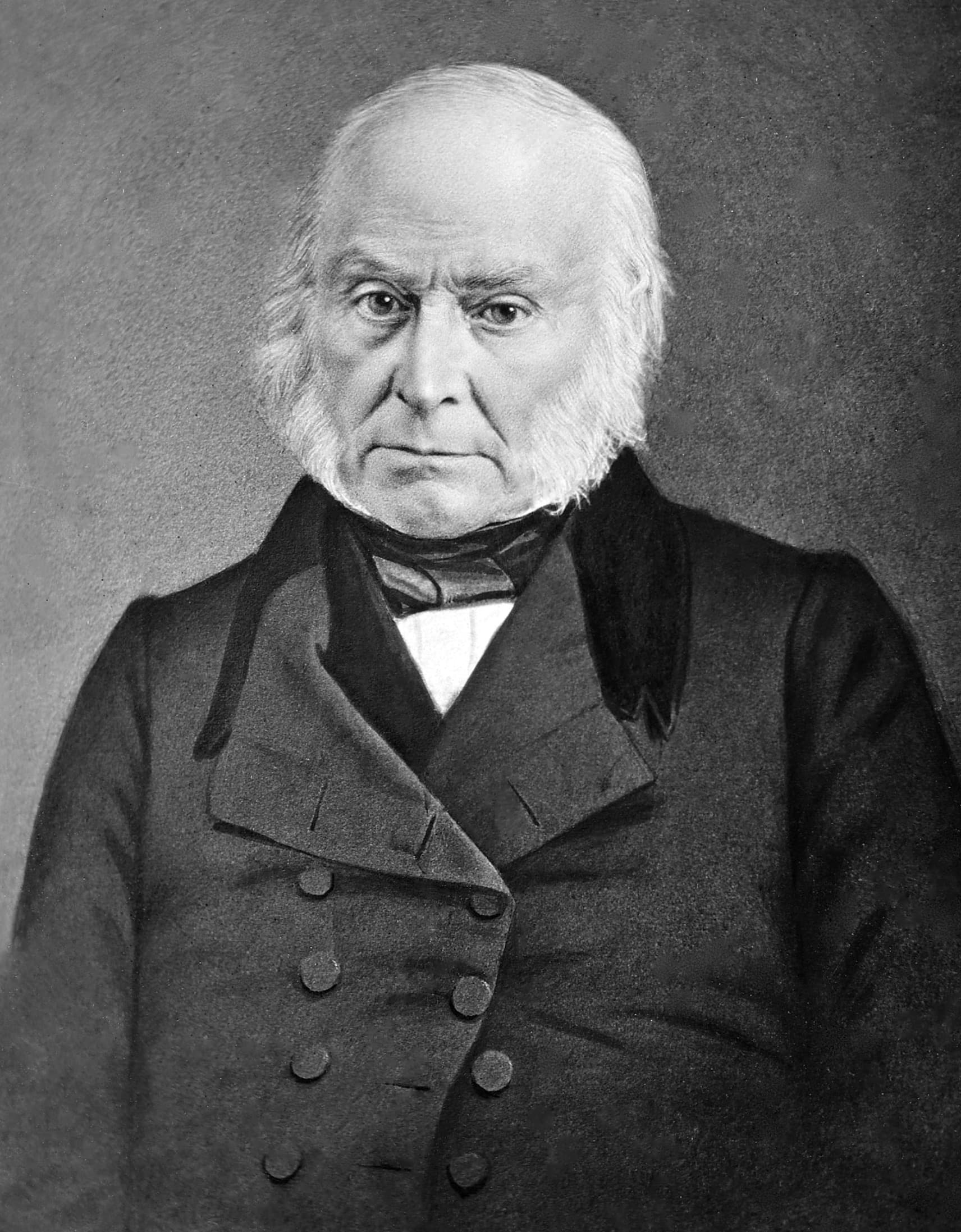
Portrait of John Quincy Adams
The Burden of Discipline
From the age of twelve, John Quincy Adams was already doing something few children in history have ever done: documenting the world with a level of precision, discipline, and moral structure that would persist for over seventy years. His journals—begun during diplomatic travels across Europe—are not merely records of a precocious child, but the earliest expression of a personality defined by duty, observation, and internal regulation.
While his later life—statesman, diplomat, president—often invites intuitive or intellectual typings such as INTJ or INTP, it is his earliest writings that reveal his true cognitive orientation. These entries do not read as the abstract musings of a visionary, nor the playful ideation of a theorist. They read as something far more grounded:
a mind organizing reality, recording it, judging it, and holding itself accountable to it.
This is the essence of Si–Te.
The World as Record and Reference
From his earliest entries, Adams demonstrates a relentless commitment to capturing reality in detail:
- distances traveled (“7 leagues… 10 good English leagues”)
- names of guides, postillions, and companions
- descriptions of buildings, roads, and living conditions
- structured observations of churches, institutions, and hierarchies
He does not merely notice—he catalogues.
Even at age twelve, he writes lists such as:
- names of every individual involved in travel logistics
- numerical breakdowns of convents and clergy
- architectural and environmental details
This is not curiosity for novelty’s sake. It is a need to anchor the world into something stable, knowable, and recallable. Unlike an intuitive dominant, who abstracts away from detail, Adams returns to it, builds from it, and trusts it. This reflects dominant Si.
Early Moral Structuring — Judgment Before Abstraction
One of the most cited passages from his youth is his harsh description of Spanish villages—calling the people “lazy,” “dirty,” and “nasty,” while simultaneously recognizing that they are “eat up by their priests.”
This moment is often misread as intuitive generalization. But what is actually happening is more precise:
- He observes material conditions (Si)
- He applies a moral framework (Te + internalized standards)
- He reaches a structured conclusion about cause and effect
And most importantly, he contrasts it with his own upbringing: “I thank Almighty God that I was born in a Country where any body may get a good living if they Please.”
This is not open-ended curiosity. It is evaluation grounded in internalized standards derived from experience and upbringing. An intuitive type might explore multiple interpretations. Adams instead selects one, affirms it, and integrates it into a moral worldview.
Life as Discipline and Self-Correction
Perhaps the clearest evidence for ISTJ lies not in what he observes—but in how he treats himself. Adams uses his diary as:
- a tool for self-improvement
- a record of failures and inefficiencies
- a system of accountability
He does not write to express emotion. He writes to correct behavior. Later in life, this becomes even more pronounced: tracking how he spent each hour, criticizing himself for lack of productivity, and holding himself to impossibly high standards. This is classic Te in service of duty — not external dominance, but internal enforcement.
The Illusion of Intuition — Environmental Influence
Adams can feel intuitive for a reason. He was raised by John Adams—forceful, argumentative, visionary—and Abigail Adams—emotionally articulate, socially and morally engaged.
From a young age, he was exposed to political theory, global diplomacy, and philosophical discourse. So yes—he develops big-picture awareness, early political insight, and a capacity for abstraction.
But this is learned context, not cognitive preference. What remains constant — across childhood and adulthood — is his method: observe → record → evaluate → correct. That is not Ni. That is Si–Te.
The Psychological Verdict
Why Not INTJ?
The INTJ argument rests on his intelligence, his foresight, and his later political analysis. But INTJs abstract early, prioritize patterns over details, and reshape systems through vision. Adams does not start with abstraction; he starts with what is concretely there.
Why Not INTP?
INTPs explore ideas without needing closure and resist rigid structure. Adams seeks conclusion, enforces discipline, and structures his life obsessively. His diary is not a playground of ideas, but a ledger of reality and responsibility.
Why Not ENTP?
ENTPs are exploratory and thrive in improvisation. Adams is reserved, controlled, and internally driven. He does not engage the world to test ideas, but to understand and fulfill his role within it.
Connected Figures
Further Reading
- John Quincy Adams: A Public Life, A Private Life — Paul C. NagelThe most psychologically acute single-volume biography, drawing heavily on JQA's extraordinary private diaries.
- John Quincy Adams and the Foundations of American Foreign Policy — Samuel Flagg BemisPulitzer Prize-winning study of his diplomatic career; essential for understanding his role in shaping the Monroe Doctrine.
- The Diaries of John Quincy Adams — John Quincy Adams (ed. David Grayson Allen et al.)The primary source — over fifty years of daily entries covering his entire public and inner life.
- Adams vs. Jefferson: The Tumultuous Election of 1800 — John FerlingIlluminates the political world JQA inherited and the rupture between the Adams and Jefferson factions.
