 Historical Figure MBTI
#944 · 7-11-26 · The Second World War
Marian Rejewski
Cryptanalyst · The Pole Who Broke Enigma First
1905 — 1980
5 min read
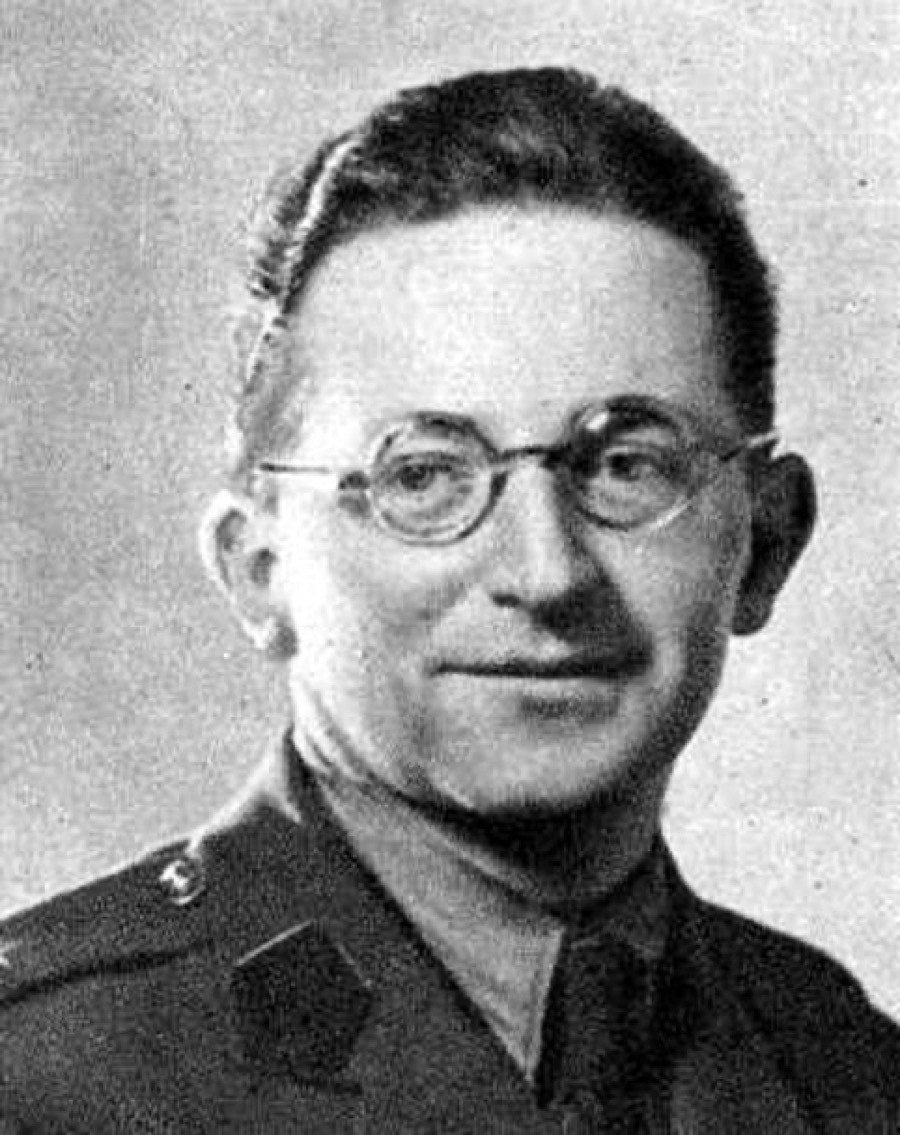
Marian Rejewski, circa 1932 (public domain)
The Machine He Never Saw
Years before Bletchley Park existed, a Polish mathematician working almost entirely alone deduced the internal wiring of the German military Enigma machine without ever laying eyes on one. Marian Rejewski did it with permutation group theory — pure abstract mathematics applied to an object he knew only through the patterns in its output. No prototype, no hands-on trial and error, no physical access. Just deduction, carried through to its conclusion.
That 1932 breakthrough, and the electromechanical "bomba" he built afterward to find daily keys, gave the Polish Cipher Bureau a working method years ahead of anything Britain or France had. In July 1939, with invasion imminent, Rejewski's team handed the entire method — and physical Enigma replicas — to French and British intelligence. Bletchley's later, larger triumph started from a head start most of its own histories rarely credit properly.
Rejewski was an INTP, dominant Ti reconstructing an unseen machine from first principles alone, before any experimentation was even possible.
Deduction Without a Single Data Point You Could Touch
What Rejewski accomplished in 1932 has no real hands-on analogue. He never saw the inside of a military Enigma machine. What he had was intercepted ciphertext and a captured commercial variant of the device that was, crucially, wired differently from the military version. From that gap, using group theory to model the permutations the machine's rotors could produce, he reasoned his way to the actual internal wiring — a purely internal, logical reconstruction of a physical object from the abstract structure of its behavior.
That is dominant Ti operating about as far from improvisation as cryptanalysis gets. There was no mechanism to tinker with first. The theory had to be right before any machine could be built to exploit it, which inverts the usual order of engineering entirely — model first, hardware second, because hardware wasn't available at all.
From One Solved Machine to a General Method
His auxiliary Ne shows in how quickly the single insight generalized. Solving one machine's wiring wasn't the end point — Rejewski and his colleagues extended the underlying logic into the "bomba kryptologiczna," a device built to systematically search the space of daily key possibilities rather than solve them by hand each time. That leap, from a one-off deduction to a repeatable searching method, is Ne taking a Ti insight and multiplying its reach across new possibilities.
It's also visible in how the Polish Cipher Bureau's work later fed directly into Bletchley's much larger effort: the underlying idea — mechanize the search for the machine's daily settings — was portable, and it's the conceptual ancestor of the British Bombe that Turing and Welchman built on a far larger scale.
A Life Folded Back Into the Ordinary
Rejewski's tertiary Si is easiest to see in what happened after the war ended. Excluded from Bletchley Park itself despite having done the foundational work that made it possible, he continued cryptanalytic service for Polish forces in France and then Britain — and then, once communist Poland made his wartime role impossible to acknowledge, simply returned to an ordinary civilian life as an accountant.
He didn't chase recognition or reinvent himself in exile. He settled into a stable, unremarkable routine that lasted decades, one so thorough that even his own family didn't know the true scope of what he'd done until historians uncovered it long after. That capacity to fold an extraordinary achievement quietly back into an ordinary, settled existence is Si's tertiary signature — a preference for steady continuity once the theoretical work was finished.
No Instinct for Self-Promotion
Inferior Fe explains one of the stranger injustices in the whole Enigma story: Rejewski did almost nothing, for decades, to publicize or claim credit for a discovery that reshaped the outcome of the war. He didn't campaign for recognition, didn't cultivate the kind of public narrative that might have secured his place in the story sooner. The July 1939 handoff to French and British intelligence went largely uncelebrated by Bletchley's own postwar mythology for years.
For an INTP, this tracks — the pull toward managing how one is perceived by a wider audience is the weakest part of the stack, and Rejewski's story is a near-total absence of that instinct. It took outside historians, working decades later, to reconstruct and publicize what he himself never pushed to claim.
Why INTP Over ISTP
Why not ISTP?
An ISTP solves through direct, hands-on interaction with the physical object in front of them — trial, adjustment, feel. Rejewski had no physical object to interact with at all in 1932; the entire breakthrough happened before any mechanical experimentation was even possible, built purely on abstract permutation theory applied to intercepted text. That is a Ti-Ne profile solving in the abstract first, not an Se-backed ISTP solving with its hands.
Even the "bomba" that followed was the product of theory dictating what the machine needed to do, not experimentation discovering it. Rejewski's method was reasoning from first principles to a working conclusion, with the machinery arriving only afterward to execute what the mathematics had already proven — the defining signature of INTP over ISTP.
Connected Figures
Further Reading
- Enigma: How the German Machine Cipher Was Broken — Władysław KozaczukThe foundational account of Rejewski's mathematical breakthrough and the Polish Cipher Bureau's work.
- X, Y & Z: The Real Story of How Enigma Was Broken — Dermot TuringReconstructs the Polish, French, and British collaboration and Rejewski's underrecognized role in it.
