 Historical Figure MBTI
#945 · 7-12-26 · The Pacific War
Isoroku Yamamoto
Naval Strategist · Reluctant Warrior · Architect of Pearl Harbor
1884 — 1943
9 min read
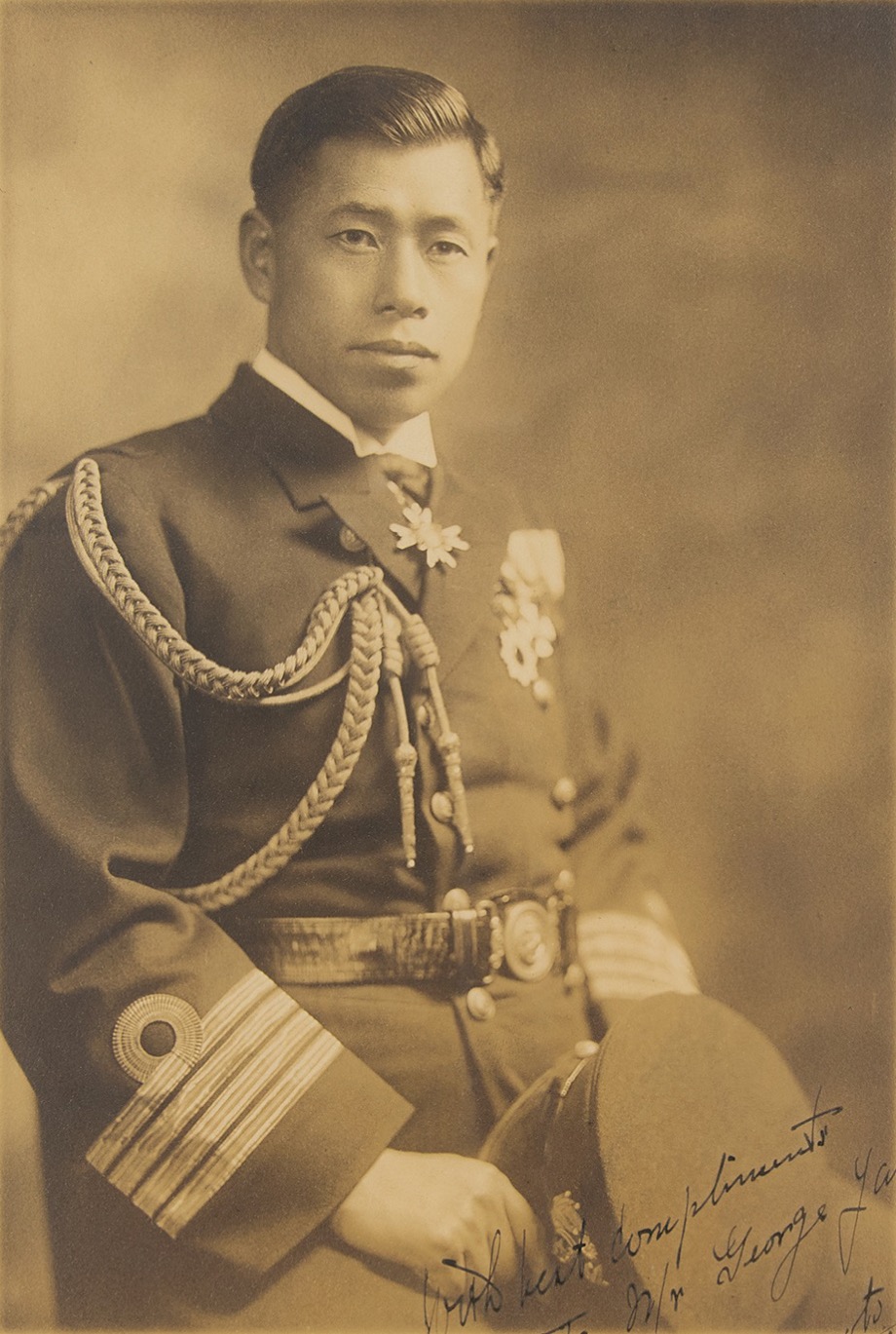
Portrait of Isoroku Yamamoto
The Man Who Had Counted the Factories
Most of the men who ordered Japan into the Pacific had never seen America. Isoroku Yamamoto had. He spent two years at Harvard after the First World War reading about the oil industry, hitchhiked through New England on a student’s allowance, and returned in the mid-1920s as naval attaché in Washington, where he made a point of looking at the things a naval officer is not usually sent to look at — Detroit’s assembly lines, the Texas oilfields, the sheer indifferent scale of a country that could build anything it decided to build. He came home carrying a number instead of an impression.
That number governed everything he said for the next fifteen years. He argued against the alliance with Germany and Italy so publicly that ultranationalists put a price on his head and the Navy Ministry moved him to sea duty partly to keep him alive. When Prime Minister Konoe asked him in 1940 what would happen if Japan fought the United States, he did not soften it: he could run wild for six months, perhaps a year, and after that he had no confidence whatsoever. It was not a warning delivered for effect. It was a forecast, and it came true nearly to the week — Midway fell six months and one day after Pearl Harbor.
And then, ordered to fight a war he had spent a decade arguing was unwinnable, he did the most startling thing in his career. He did not hedge. He designed the single boldest opening move available to him — six carriers steaming three thousand miles in radio silence to hit the American battle line at anchor — precisely because his own analysis said the only survivable war was a short one. That combination, a mind that reasons its way to an unwelcome conclusion and then executes against it without flinching, is the signature of INTJ.
Yamamoto is the archive’s cleanest study in INTJ Ni: a dominant function that showed him the end of the war before it started, harnessed to a Te that built the only opening capable of proving his own forecast wrong.
Ni — The Six Months He Could Already See
The Imperial Japanese Navy had one idea about how a Pacific war would go, and it had held that idea since 1905. The American fleet would steam west; Japanese submarines and light forces would whittle it down; and somewhere in the Marianas the battleships would meet in a second Tsushima. Yamamoto thought the whole doctrine was a museum piece. Through the 1930s, as head of the Naval Aviation Department and then commander at Kasumigaura, he pushed money and talent into aircraft — long-range land-based bombers, the carrier arm, the fighter that became the Zero — while the Naval General Staff was still ordering the superbattleships. His argument was not that aircraft were useful. It was that the battleship was already finished and simply had not been told.
Pearl Harbor was that same inversion carried to its conclusion. Doctrine said wait for the decisive battle; Yamamoto proposed to abolish the decisive battle by deleting the enemy fleet at its moorings before the war formally existed. The idea required believing several things at once that nobody had yet seen proven — that carriers could be massed rather than parcelled out to battleship groups, that a fleet could cross the northern Pacific undetected, that torpedoes could be made to work in forty feet of water. Ni does not accumulate these conclusions one at a time. It arrives with the whole configuration and then goes looking for the engineering.
What separates him from every other bold planner of the war is that the same faculty told him the bold plan was insufficient. He never claimed Pearl Harbor would win anything. He described it as the only way to buy the time in which something else might win — and he said openly that Japan would then need a negotiated peace it had no plausible route to obtaining. He was, in the most literal sense, executing a strategy he did not believe in, because his foresight had already priced in every alternative and found them worse.
Te — The Arithmetic of Force
A vision that stays a vision is not INTJ; it is a hobby. Yamamoto’s auxiliary Te turned the Hawaii concept into a machine of specifications. Torpedoes had to run in the shallow water of a harbour, so wooden stabiliser fins were designed and tested until they did. Pilots had to attack a target they had never seen, so the strike force rehearsed for months against the topographically similar Kagoshima Bay, flying low over the town until residents complained. Six carriers had to operate as a single formation, which no navy had attempted, so the Kido Butai was assembled and drilled as one instrument. War-gamed, timetabled, refuelled at sea in weather the planners were told was impossible.
Te also explains how he handled opposition. The Naval General Staff considered the Hawaii operation reckless and refused approval in the autumn of 1941. Yamamoto did not lobby, did not build a coalition, did not wear them down. He informed them that if the operation were not approved, he and his entire Combined Fleet staff would resign. It was an ultimatum framed as an administrative fact, and it worked in a matter of days. This is Te as a lever rather than as charm — the decision extracted by making the alternative structurally impossible.
The same instrument turned on him at Midway. The plan he built for June 1942 was over-engineered in the way Te over-engineers when it is compensating for a strategic position it cannot fix: forces split between the Aleutians and Midway, a battleship line trailing hundreds of miles behind the carriers it was supposed to support, a scheme whose every element depended on the Americans behaving as predicted. They did not, because they were reading his mail. Four carriers were lost in approximately six minutes, and the six months he had promised expired on schedule.
Fi — The Private Ledger
He had lost the index and middle fingers of his left hand at Tsushima as a young ensign aboard the Nisshin, and the geisha of the Shimbashi district nicknamed him “Eighty Sen” — a manicure being ten sen a finger. He enjoyed the joke. That easy self-mockery sat on top of an interior life that was unusually well documented for a Japanese admiral: thousands of letters, calligraphy sent to friends, a long attachment to the geisha Chiyoko Kawai, and a strain of plain melancholy about what he was being asked to do.
Fi in an INTJ is not warmth on display; it is a privately held standard that will not bend to consensus. Yamamoto held out against the Tripartite Pact when holding out meant assassination threats and a bodyguard, and he did it without ever assembling a faction. He was loyal — to the Navy, to the Emperor personally rather than to the Army’s ideology — and that loyalty is precisely what made him the man to plan a war he had opposed. He wrote to a friend, with no visible self-pity, that his own life was already forfeit and that Tokyo would burn.
Se — The Gambler’s Hand
Underneath the ice was an appetite. Yamamoto gambled constantly and well — poker, bridge, shogi, go, and the roulette tables of Monte Carlo, where he claimed he could make a living if the Navy ever threw him out. Colleagues remembered the speed of his play more than the winnings. Inferior Se in an INTJ often surfaces exactly this way: as a hunger for the moment of exposure, the instant where the calculation stops and the card is turned.
It is not decorative biography. Pearl Harbor was a bet made by a man who genuinely enjoyed betting, and the Midway plan was the same instinct after the odds had turned — the gambler doubling into a bad position because the alternative was to sit and lose slowly. And it is how he died. On 18 April 1943 he flew a front-line inspection tour of the Solomons; his itinerary had been transmitted in a cipher American cryptanalysts were reading, and a squadron of long-range P-38s was waiting over Bougainville. He was famous for punctuality. He arrived on time.
Why INTJ Over ENTJ
Why not ENTJ?
The ENTJ reading is tempting because Yamamoto commanded the largest fleet in the world and forced his plan through by ultimatum. But an ENTJ leads with Te: the room first, the organisation first, the objective set and then the analysis assembled to serve it. Yamamoto worked the other way round. He reached his conclusions alone — over charts, over factory tonnage figures, over letters written at two in the morning — and only then went to the room, usually with a decision already finished and non-negotiable. Nor was he eager. The defining ENTJ posture is appetite for the contest; Yamamoto’s defining posture was a man telling his own government it would lose, and then saluting.
The tell is in his most famous sentence. An ENTJ asked whether Japan could beat America answers with a plan for beating America. Yamamoto answered with a timeline for losing — six months of freedom of action, then nothing — and only afterwards produced the operation. The forecast came first and the command decision came second, which is Ni-Te and not Te-Ni. It also explains the shape of his career inside the Navy: enormously respected, personally magnetic in small rooms, and yet never the political operator that a Te-dominant admiral of his standing would have become. He built instruments, not coalitions, and when he needed the Naval General Staff to move he threatened to remove himself rather than to out-argue them.
Connected Figures
Further Reading
- The Reluctant Admiral: Yamamoto and the Imperial Navy — Hiroyuki AgawaThe standard Japanese-language biography in translation — the essential source for his letters, gambling, and opposition to the war.
- At Dawn We Slept: The Untold Story of Pearl Harbor — Gordon W. PrangeDecades of interviews on both sides; the fullest account of how the Hawaii operation was conceived and forced through.
- The Rising Sun: The Decline and Fall of the Japanese Empire, 1936–1945 — John TolandNarrative history from the Japanese perspective, useful for the political pressure Yamamoto was operating under.
- Shattered Sword: The Untold Story of the Battle of Midway — Jonathan Parshall and Anthony TullyRebuilds Midway from Japanese records and is unsparing about the flaws in Yamamoto's plan.
- Kaigun: Strategy, Tactics, and Technology in the Imperial Japanese Navy, 1887–1941 — David C. Evans and Mark R. PeattieThe institutional context — the decisive-battle doctrine Yamamoto spent his career arguing against.
