 Historical Figure MBTI
#947 · 7-12-26 · The Pacific War
Minoru Genda
Air Strategist · Pearl Harbor's Architect · Postwar Statesman
1904 — 1989
6 min read
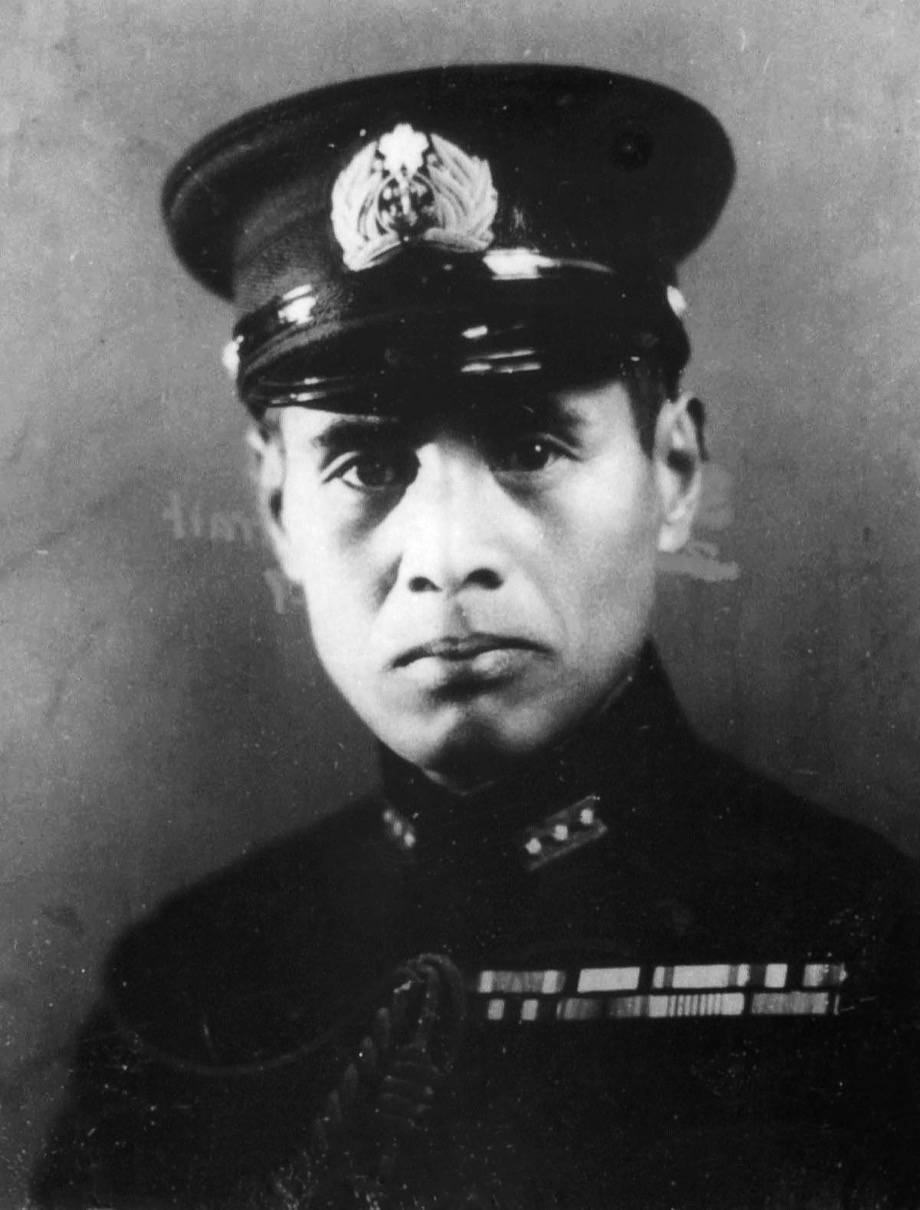
Portrait of Minoru Genda
The God of Operations
Junior officers do not usually redesign a navy. Minoru Genda was a commander — a staff air officer, thirty-seven years old, with no fleet of his own — when he took Yamamoto’s sketch of an attack on Pearl Harbor and turned it into something no navy in the world had attempted. He had been a fighter pilot good enough to lead an aerobatic team the press nicknamed “Genda’s Flying Circus,” and an attaché in London when the Fleet Air Arm crippled the Italian battle fleet at Taranto with a handful of obsolete biplanes. What he brought back from that was not a technique but a thought: torpedoes work in shallow harbours, and the target that matters is not the ship, it is the fleet.
His colleagues called him the God of Operations, and not always warmly. He was brash, contrarian, and relentless in argument — the sort of staff officer who tells a room of admirals that their central doctrine is wrong and then stays in the room. The concept he pushed through against the Naval General Staff’s objections was the massing of all six fleet carriers into one formation, the Kido Butai, at a time when accepted practice everywhere was to disperse carriers as escorts and scouts. That single reorganisation is why 7 December 1941 was a catastrophe rather than a raid.
Genda is ENTP in its most dangerous professional form: dominant Ne that reaches an unheard-of operational configuration in a leap, and a Ti that can defend it line by line against everyone senior to him in the room.
Ne — Recombining the Pieces Everyone Else Had Sorted
Every element of the Hawaii operation existed already. Carriers existed. Aerial torpedoes existed. Taranto had proved shallow-water attack. What did not exist was the combination, and Ne is the function that assembles combinations before it can fully justify them. Genda’s contribution was a set of leaps that his more careful colleagues would have reached years later or not at all: put all six carriers in one box, use fighters to sweep the sky first, attack the airfields simultaneously so no defence can rise, and treat the battleships as one target system rather than a queue of individual ships.
He also argued, at the outset, for something even more radical than the plan that flew: a one-way operation if necessary, and — he later maintained — an accompanying invasion of Hawaii, because destroying a fleet that could be rebuilt struck him as a half-measure. The Naval General Staff thought the whole conception a gamble bordering on fantasy. It was, and it worked, which is the characteristic ENTP career pattern in compressed form.
The same restlessness ran the other way after the attack. While Nagumo was counting sunk battleships, Genda was already three moves ahead — the tank farms, the submarine pens, the dry docks, the unlocated American carriers — and pushing hard for a third wave to finish the base rather than the fleet. He was right, and he lost the argument, and he spent the rest of his life saying so.
Ti — The Argument Beneath the Audacity
Ne alone produces enthusiasts. What made Genda formidable was the auxiliary Ti that turned each leap into a chain of specifications an admiral could not wave away. The torpedo problem was not hand-waved: Pearl Harbor’s forty-foot depth was treated as an engineering constraint with a solution, which the ordnance people supplied in wooden stabiliser fins. The training problem was answered with Kagoshima Bay, chosen because its approach geometry matched the target. The coordination problem — six air groups, two waves, dive bombers and torpedo bombers and fighters sequenced over a single harbour — was worked out as a system of dependencies, not as an inspiration.
Ti also shows in his willingness to be openly, tactlessly critical of his own side. He thought the Midway plan he helped draft was compromised by its dispersal of force, and said so; he was dismissive of the Naval General Staff’s attachment to the decisive-battle doctrine; he was scathing after the war about Japanese failures in reconnaissance and radar. This is analysis unhitched from loyalty — the type’s great professional virtue and its great political liability.
Fe — Winning the Room, Then Changing Rooms
A quiet analyst with Genda’s ideas would have died a commander with a drawer full of unread papers. Tertiary Fe gave him the thing that mattered: he was good in committees. He could read who in the room needed persuading, cultivate patrons — Yamamoto above all — and build a reputation as the man whose objections were worth hearing. His nickname was half compliment and half complaint, which is usually what happens when a socially fluent junior officer keeps being right in public.
The postwar career is the strangest confirmation. The architect of the attack on Pearl Harbor joined the American-sponsored Japan Air Self-Defense Force, rose to command it as Chief of Staff, flew the F-86 and championed the F-104 for Japanese service, worked closely with the United States Air Force, and then spent twenty-five years in the House of Councillors of the Diet. He also, in 1969, told an American interviewer that Japan should have followed the attack with an invasion of Hawaii — a remark that caused a diplomatic scene. Both halves are the same man: an adaptable, socially engaged operator who never once conceded that his operational reasoning had been wrong.
Why ENTP Over INTJ
Why not INTJ?
Genda shared a plan with an INTJ and is often folded in with him, but the two men worked in opposite directions. Yamamoto arrived at conclusions alone, over figures, and delivered them as finished non-negotiable decisions; Genda thought out loud, in argument, generating options faster than he could rank them and sharpening them against opposition. An INTJ with the Pearl Harbor concept converges on one plan and defends it as inevitable. Genda kept proposing alternatives — massed carriers, a one-way strike, invasion, a third wave — and enjoyed the fight over each. His postwar reinvention seals it: an expansive, publicly combative career in an American-founded air force and then in electoral politics is Ne-Fe territory, not the guarded singularity of Ni.
The clearest evidence is what he did when he lost. An INTJ overruled at Pearl Harbor absorbs the decision and recalculates from the new position. Genda went on arguing — on the bridge, in the after-action reports, in the Midway planning that followed, in interviews thirty years later. The ideas never became a doctrine he owned and defended; they stayed live options he was still relitigating in the 1970s. That is dominant Ne with Ti as its blade, and it is the reason the most consequential naval operation of the twentieth century was designed by a man who never commanded anything larger than an air group.
Connected Figures
Further Reading
- At Dawn We Slept: The Untold Story of Pearl Harbor — Gordon W. PrangeDraws directly on Prange's extensive postwar interviews with Genda; the fullest account of how the plan was built.
- Shattered Sword: The Untold Story of the Battle of Midway — Jonathan Parshall and Anthony TullyAssesses Genda's role in the Midway planning and his influence on Japanese carrier doctrine.
- Sunburst: The Rise of Japanese Naval Air Power, 1909–1941 — Mark R. PeattieThe institutional history of the air arm Genda helped shape, including the massed-carrier debate.
- The Reluctant Admiral: Yamamoto and the Imperial Navy — Hiroyuki AgawaShows the patronage relationship that let a mere commander push a plan past the Naval General Staff.
