 Historical Figure MBTI
#946 · 7-12-26 · The Pacific War
Chuichi Nagumo
Carrier Admiral · Cautious Executor · Midway's Fatal Pause
1887 — 1944
6 min read
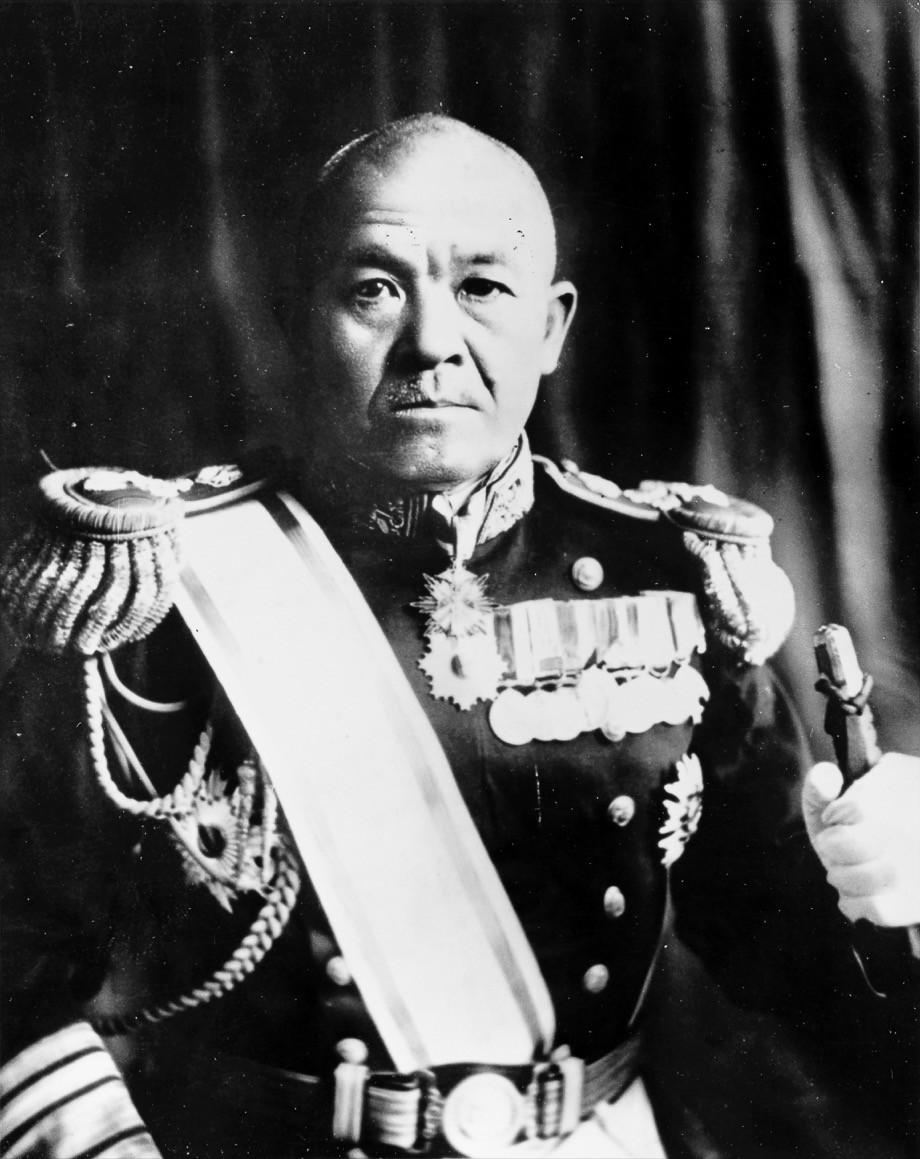
Portrait of Chuichi Nagumo
The Wrong Man in the Right Chair
Chuichi Nagumo commanded the most powerful naval formation on earth and did not really understand what it was. He was a torpedo and destroyer specialist, a product of the surface fleet’s hard night-fighting school, and he received the Kido Butai — six fleet carriers operating as a single strike weapon, an idea barely two years old — because Japanese seniority lists said it was his turn. He knew it, too. He confided to colleagues that he felt out of his depth among aviators, and he leaned on the air staff he had been given because he had no independent judgement to offer them.
What he was good at was executing a plan exactly as written. On 7 December 1941 he took four hundred aircraft across three thousand miles of empty North Pacific in radio silence, launched on schedule in heavy seas, achieved complete surprise, and sank or crippled the American battle line for the loss of twenty-nine planes. It was, procedurally, close to flawless. Then his air officers came to the bridge and asked for a third strike against the fuel farms, the submarine base and the repair yards, and he refused, and the war took a different shape.
Nagumo is the ISTJ at the outer edge of what dominant Si can carry: a superb executor of doctrine placed twice in the one situation dominant Si cannot handle — a decision with no precedent to consult.
Si — Everything Written Down, Nothing Improvised
Nagumo had spent thirty years inside a service that taught its officers what to do by teaching them what had been done. He was an expert in torpedo tactics, a graduate of the Naval Staff College, a man whose competence was real and entirely bounded by precedent. The Hawaii operation suited him perfectly for exactly that reason: it was, by the time it reached him, a fully specified document. Refuelling points, launch bearings, the wooden-finned torpedoes, the rehearsal at Kagoshima, the two-wave sequence — all of it decided in advance by Yamamoto’s staff. Nagumo carried it out to the minute.
The moment the document ran out, he stopped. The third-wave decision on the morning of 7 December is the purest illustration in the archive of Si under pressure. His reasons were all backward-looking and all individually defensible: the American carriers were unaccounted for, his fuel state was planned rather than generous, the enemy would be alerted now, and the operation order said two waves. Fuchida and Genda pressed him on the bridge of the Akagi to hit the tank farms — four and a half million barrels of oil sitting unarmoured above ground, the fuel on which the entire Pacific Fleet floated. He weighed the risk he could see against a gain he had no precedent for measuring, and turned north for home.
Si has no mechanism for valuing something it has never seen destroyed. Sunk battleships were legible — they matched the picture of victory he had been trained on. Burned fuel and wrecked dry docks were an abstraction, and abstractions did not appear in his operation order.
Te — The Competent Administrator of a Weapon He Did Not Invent
It is easy to caricature Nagumo as a mere brake. The record does not support it. For six months the Kido Butai under his flag was the most successful naval formation in history: Pearl Harbor, then Rabaul, then Darwin, then a raid into the Indian Ocean that sank a British carrier, two cruisers and scattered the Eastern Fleet — all without losing a ship. That was Te doing what Te does well: schedules kept, sorties generated, a large organisation run efficiently against clearly defined objectives.
His limit was that Te in an ISTJ optimises the task it has been handed rather than asking whether it is the right task. Confronted at Midway with a genuinely open situation — an unlocated enemy, a strike ashore to be rearmed, a scouting report arriving late and wrong — his executive function had nothing to organise. It defaulted to tidiness. He ordered the rearming reversed so that his aircraft would go out in the correct configuration, in one properly composed strike, rather than launching a ragged half-armed group immediately. The neat solution was the fatal one. Bombs, torpedoes and fuel lines were still on the hangar decks when the American dive bombers arrived, and within minutes Akagi, Kaga and Soryu were burning; Hiryu followed that afternoon.
Ne — The Possibility He Could Not Hold in Mind
Inferior Ne shows up as a narrow and anxious relationship with the unknown: not the absence of imagination, but a tendency to treat unconsidered possibilities as threats to be avoided rather than openings to be seized. Nagumo worried constantly about the missing American carriers — correctly, as it turned out — but the worry produced caution rather than search. At Pearl Harbor it argued him out of the third wave. At Midway it left him hesitating between two enemies, the island and the fleet, and committed to neither.
He was, in the end, an honourable officer destroyed by being given the one command in the Imperial Navy where doctrine had not yet been written. Reassigned after Midway to lesser commands, he ended the war ashore on Saipan with a garrison he could not save, and took his own life in July 1944 as the island fell.
Why ISTJ Over ISTP
Why not ISTP?
Quiet, technical, unshowy senior officers are often read as ISTP, and Nagumo’s torpedo-specialist background invites it. But the ISTP is a Ti-Se improviser: most alive in the unscripted moment, quick to discard the manual when the situation contradicts it. Nagumo was the opposite in every documented crisis. He was excellent while the plan held and paralysed the instant it did not, and his reasoning under pressure was never first-principles analysis of the situation in front of him — it was an appeal to what the order specified, what the fuel tables allowed, what had been agreed before sailing. A Ti-Se commander launches the half-armed strike at Midway. Nagumo tidied the hangar deck.
The contrast with his own subordinates settles it. In the same rooms, on the same days, sat two men who did think that way — Genda leaping to unconventional operational concepts, Fuchida reading a tactical picture live and acting on it — and both of them found their admiral immovable. Nagumo was not slower than they were. He was oriented differently: toward the record rather than the moment, toward the correctly executed version of the agreed plan rather than the best available action right now. That orientation delivered the most spectacular opening campaign in naval history, and then lost the war in ten minutes.
Connected Figures
Further Reading
- Shattered Sword: The Untold Story of the Battle of Midway — Jonathan Parshall and Anthony TullyThe definitive reconstruction from Japanese sources; corrects much of the received story about Nagumo's rearming decision.
- At Dawn We Slept: The Untold Story of Pearl Harbor — Gordon W. PrangeIncludes the bridge conversations aboard the Akagi over the proposed third strike.
- Kaigun: Strategy, Tactics, and Technology in the Imperial Japanese Navy, 1887–1941 — David C. Evans and Mark R. PeattieExplains the seniority and doctrine system that put a torpedo specialist in command of the carrier force.
- The First Team: Pacific Naval Air Combat from Pearl Harbor to Midway — John B. LundstromOperational detail on the carrier battles from the American side, useful for judging what a third wave could have achieved.
