 Historical Figure MBTI
#949 · 7-12-26 · The Pacific War
Husband E. Kimmel
Pacific Fleet Commander · Scapegoat · Ruined by Surprise
1882 — 1968
6 min read
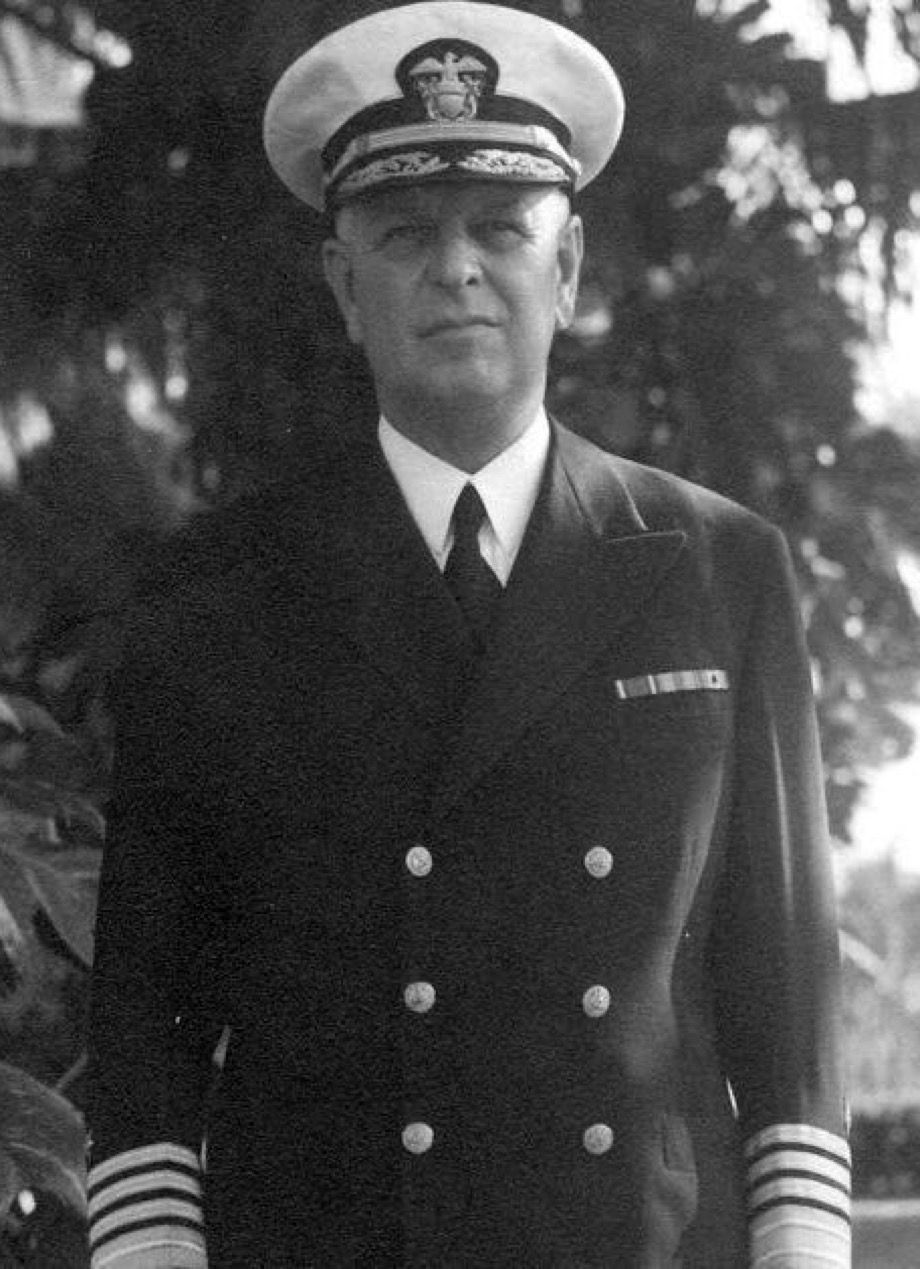
Portrait of Husband E. Kimmel
The Officer Who Did Everything He Was Told
In February 1941 Husband Kimmel was jumped over thirty-two admirals senior to him and given four stars and the United States Pacific Fleet. The promotion was not political; it was the reward of a career built on being the man whose reports were always right. He was a gunnery specialist, famously exacting about ordnance and drills, the kind of officer whose fitness reports used the word “thorough” until it stopped meaning anything. Ten months later he was standing at the window of his headquarters above Pearl Harbor watching the Arizona blow up, and a spent machine-gun round came through the glass and struck him in the chest without breaking the skin. He picked it off the floor and said it would have been merciful if it had killed him.
He was relieved of command on 17 December, ten days later. A presidential commission accused him of dereliction of duty within six weeks. He retired at his permanent two-star rank, and spent twenty-six years — through nine separate official investigations, a 1944 Naval Court of Inquiry that cleared him of dereliction, and a book of his own — arguing one point: that Washington had been reading Japanese diplomatic traffic and had not shared what it knew with the commander whose fleet was the target.
Kimmel is the tragic reading of ISTJ: dominant Si trusting the system that trained it, doing every procedure correctly, and being destroyed because the system itself failed to send the one thing he needed.
Si — Faith in the Chain of Information
An ISTJ commander does not invent his own picture of the world; he receives it from the institution and then acts on it with total fidelity. Washington’s war warning of 27 November told Kimmel that negotiations had ended and that hostile action was possible — and the accompanying guidance, and the Army’s parallel message to General Short, emphasised sabotage by the local population as the near threat. Kimmel and Short responded to the warning they were sent. Aircraft were bunched wingtip to wingtip on open aprons where they could be guarded against saboteurs, which is precisely the worst possible arrangement against an air attack.
Behind that lay a deeper Si assumption: precedent. In the entire history of naval warfare no one had opened a war with a carrier strike three thousand miles from home against a defended fleet base, and the standing estimate — held at every level from Kimmel’s staff up to the Navy Department — was that Japan would move south, against the Philippines and the British and Dutch possessions. He was short of long-range patrol aircraft and rationed the reconnaissance he could fly, covering the sectors doctrine called most likely. The north was not among them.
None of this is stupidity. It is the characteristic vulnerability of a mind whose confidence comes from the accumulated record: it is superbly reliable inside the range of what has happened before, and it has no defence against the thing that has never happened.
Te — The Fleet He Actually Built
What is usually forgotten is how hard Kimmel worked in his ten months. He drove the Pacific Fleet through a punishing training programme, pressed Washington repeatedly and in writing for more patrol planes, more anti-aircraft guns, more men, and warned that the base’s defences were inadequate. He had ordered the fleet to sea on exercises so relentlessly that his own staff complained. He was, in the ordinary Te manner, an excellent manager of a large organisation against measurable objectives.
The same executive competence shaped the twenty-six years afterwards. He did not appeal to sympathy; he built a case. He obtained testimony, assembled the record of the intercepts Washington had held — including the message asking Tokyo’s Honolulu consulate to grid the harbour berth by berth, which was never forwarded to him — and published Admiral Kimmel’s Story in 1955. It reads like a staff document: exhibits, dates, chains of custody. He wanted the finding overturned on evidence, not the verdict softened out of pity.
Fi — The Private Wound That Never Closed
Tertiary Fi in an ISTJ is rarely visible and almost never negotiable. Kimmel never publicly raged, never courted the press, never disowned the Navy. He simply refused — for the rest of his life, across three decades — to accept a judgement he believed was factually wrong, and he did it in the register of a man defending a standard rather than a reputation. His son Manning was lost commanding a submarine in 1944; another son and later his grandsons carried the campaign on after his death in 1968.
The vindication arrived incompletely. In 1999 the Senate passed a resolution finding that Kimmel and Short had not been given crucial intelligence and recommending posthumous restoration of their wartime ranks — a recommendation successive presidents have declined to act on. He is, in the archive’s terms, the ISTJ who kept faith with an institution that did not keep faith with him.
Why ISTJ Over ESTJ
Why not ESTJ?
A four-star fleet commander invites the ESTJ reading, and the Te is certainly there in the training regime and the written demands to Washington. But Kimmel led from inside the paperwork, not from the front of the room. Contemporaries describe a reserved, austere, undemonstrative man — no rhetoric, no cultivated public presence, no political constituency in the Navy Department when he badly needed one. An ESTJ in his position after 7 December fights loudly and in public from the first week; Kimmel went quiet, gathered documents, and made his case through official channels for years before publishing a book.
The distinction matters for judging him. His fatal defect was not arrogance or complacency, the failure modes an ESTJ commander is prone to, but an internal, procedural conscientiousness so complete that it never occurred to him that the information reaching him might be curated. He assumed Washington was telling him what Washington knew, because that is what the system was for and he had spent thirty-seven years inside it doing his own part correctly. Dominant Si trusts the record. When the record is withheld, there is nothing underneath the trust to catch the fall.
Connected Figures
Further Reading
- Admiral Kimmel's Story — Husband E. KimmelHis own 1955 case, assembled like a staff brief — the primary statement of the withheld-intelligence argument.
- At Dawn We Slept: The Untold Story of Pearl Harbor — Gordon W. PrangeThe standard narrative of the attack and of what Washington and Hawaii each knew.
- Pearl Harbor: Final Judgement — Henry C. Clausen and Bruce LeeThe findings of the Army's secret 1944-45 investigation; sharply unsympathetic to Kimmel and Short, and a useful counterweight.
- A Matter of Honor: Pearl Harbor, Betrayal, Blame, and a Family's Quest for Justice — Anthony Summers and Robbyn SwanTraces the nine investigations and the decades-long campaign to restore his rank.
- Nimitz — E. B. PotterThe authorised biography of his successor, including Nimitz's own assessment of what would have happened had the fleet been at sea.
