 Historical Figure MBTI
5 min read
#79 · 2-28-26 · The Founding Generation of USA
Martha Laurens Ramsay
Intellectual correspondent, moral observer, and reflective voice of the Revolutionary generation.
1759 — 1811
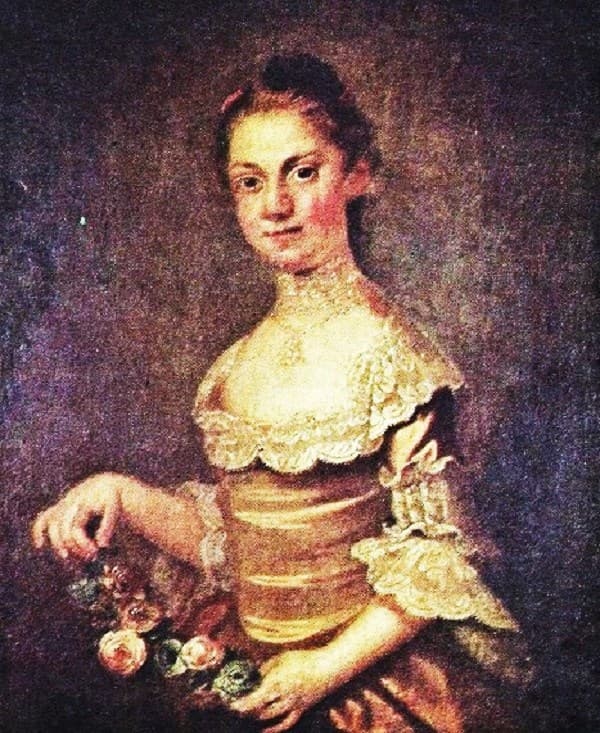
Portrait of Martha Laurens Ramsay.
The Quiet Mind of Charleston
Born in 1759 in Charleston, South Carolina, Martha Laurens Ramsay belonged to one of the most influential families of the revolutionary era. Her father, Henry Laurens, served as President of the Continental Congress, while her brother John Laurens became one of the most passionate young officers of the American Revolution.
Yet Martha’s contribution to the era unfolded in a quieter sphere.
Educated far beyond what was typical for women of the period, she developed a reputation for intellectual seriousness and moral reflection. Her letters reveal a thoughtful engagement with religion, philosophy, and the political transformations reshaping the colonies. Rather than participating directly in the battlefield or the halls of government, she observed the revolutionary moment from the vantage point of correspondence and conversation.
Her marriage to David Ramsay, a physician and historian of the American Revolution, further placed her within a circle of intellectual exchange. Their Charleston household became a meeting place where ideas about politics, morality, and the future of the republic were discussed.
Martha Laurens Ramsay did not seek public prominence.
But through letters and reflection, she helped interpret the moral meaning of the age she lived in.
The Psychological Verdict
While historical women of the 18th century are difficult to type due to limited documentation, the surviving letters of Martha Laurens Ramsay suggest a personality organized around introspection, ethical reflection, and long-range moral perspective.
These patterns align strongly with INFJ.
Her writings reveal a mind that consistently searched for deeper meaning within the events surrounding her. Rather than reacting impulsively to circumstances, she processed them through contemplation — asking what the revolution revealed about human character, virtue, and the responsibilities of the emerging republic.
This orientation toward interpretation and moral synthesis reflects the Ni–Fe cognitive axis.
Ni — dominant
Martha’s letters frequently move beyond the immediate details of daily life to reflect on the broader significance of events.
Rather than merely describing political developments, she explored what they meant for the moral direction of society and the character of those involved. Her reflections show a tendency to interpret history through underlying themes of virtue, faith, and human responsibility.
This is characteristic of dominant Ni: the search for hidden patterns and deeper coherence beneath surface events.
Where others described the revolution as a sequence of battles and political disputes, Martha often approached it as a story about the transformation of a people.
Fe — auxiliary
Although introspective, Martha’s worldview remained deeply relational.
Her letters reveal strong concern for the well-being of family members and the emotional impact of war on those around her. She wrote with warmth and sincerity about the sacrifices of loved ones, especially the loss of her brother John.
This outward attentiveness reflects Fe: the ability to perceive and respond to the emotional currents within a community.
Her reflections were rarely purely abstract. They were grounded in empathy for the people living through the upheaval of the revolutionary age.
Ti — tertiary
Alongside her moral reflections, Martha displayed a quiet analytical capacity.
Her correspondence shows careful reasoning about theological and philosophical questions. She often weighed different perspectives before arriving at her own conclusions, demonstrating an internal framework for evaluating ideas.
This intellectual precision reflects tertiary Ti — a reflective logic that supports her broader insights rather than dominating them.
Se — inferior
Martha’s writing rarely emphasizes sensory immediacy or dramatic action. Instead, it moves toward contemplation and meaning.
Her life also reflects this inward orientation. Unlike her brother John, who pursued battlefield heroism, Martha’s influence remained rooted in thought, conversation, and reflection.
The physical drama of the revolution unfolded around her. Her focus remained on understanding what it meant.
Why not INFP?
Martha’s moral seriousness could suggest INFP at first glance. However, her letters often reveal a different cognitive rhythm.
INFP writing typically centers on personal emotional experience and individual authenticity. Martha’s reflections, by contrast, frequently turn outward — examining the ethical responsibilities of communities, families, and nations.
Her perspective consistently situates personal feelings within a broader social and historical framework.
This outward orientation toward shared meaning aligns more closely with Fe-supported Ni than with Fi-centered introspection.
The Laurens Family
Seen within the Laurens family itself, Martha’s personality forms an intriguing contrast with her brother John Laurens.
John embodied the passionate activism of the revolutionary generation — a young officer willing to risk everything for moral ideals.
Martha represented the reflective side of that same spirit. She interpreted events, preserved correspondence, and contemplated the ethical questions raised by the struggle for independence.
One pursued the revolution through action.
The other through understanding.
Together, they represent two complementary responses to a moment when the future of a nation was still uncertain.
The soldier fought the revolution.
The sister asked what it meant.
Connected Figures
Further Reading
- Memoirs of the Life of Martha Laurens Ramsay — David Ramsay (1812)The primary source on Martha's life — compiled by her husband from her diaries, letters, and religious reflections shortly after her death.
- The South Carolina Laurens: A Colonial Family — David Duncan WallaceTraces the Laurens family across generations; essential context for understanding Martha's world and the Charleston planter circle she inhabited.
- Well-Behaved Women Seldom Make History — Laurel Thatcher UlrichIlluminates how women like Martha — who recorded, reflected, and preserved — shaped historical memory even without public roles.
