 Historical Figure MBTI
6 min read
#77 · 2-28-26 · The Founding Generation of USA
John Laurens
Revolutionary officer, abolitionist idealist, and the moral fire of the American Revolution.
1754 — 1782
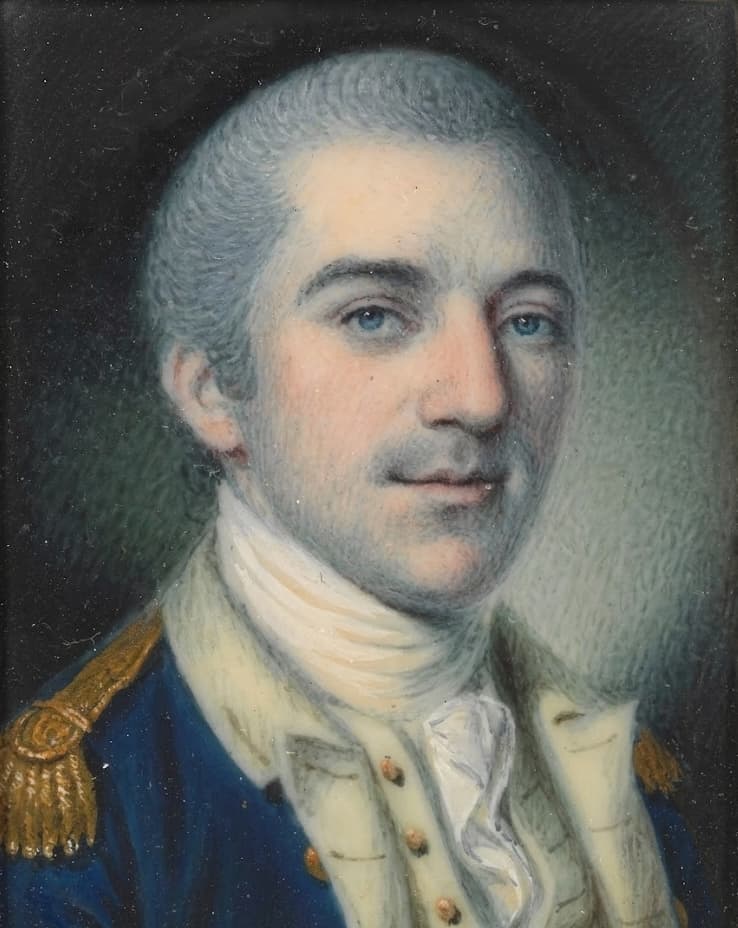
Portrait of John Laurens.
The Young Idealist of the Revolution
Born in 1754 in Charleston, South Carolina, John Laurens grew up in the highest ranks of colonial society. His father, Henry Laurens, was one of the wealthiest men in the colony and later served as President of the Continental Congress. Laurens’ upbringing placed him squarely within the planter elite whose wealth depended on slavery — the very institution he would later challenge with remarkable intensity. His sister, Martha Laurens Ramsay, would also become a figure of intellectual significance in the young republic.
Educated in Europe during the intellectual ferment of the Enlightenment, Laurens absorbed new ideas about liberty, republicanism, and human dignity. When the American Revolution erupted, he returned to the colonies determined not merely to defend independence but to reshape what that independence meant.
Laurens quickly distinguished himself as an officer in the Continental Army and as a close aide to George Washington. He also formed a deep intellectual and emotional friendship with Alexander Hamilton, a bond preserved in a remarkable collection of letters.
Yet Laurens’ most striking ambition was not military glory. It was moral transformation.
At a time when slavery remained entrenched across the southern colonies, Laurens repeatedly proposed a radical idea: enslaved men should be armed, fight for the revolution, and earn their freedom. The proposal shocked southern elites and was ultimately rejected — but the intensity with which Laurens pursued it reveals the core of his character.
He was not simply fighting a war.
He was trying to make the revolution live up to its own ideals.
The Psychological Verdict
John Laurens is sometimes interpreted as an ENFJ due to his moral passion and charismatic advocacy. However, a closer look at his intellectual style and emotional expression suggests a different configuration: ENFP.
Laurens’ personality was defined less by organized leadership and more by idealistic imagination, personal conviction, and emotional intensity. His writings reveal a mind that moved fluidly between philosophy, friendship, and political vision. Rather than structuring systems or commanding institutions, he championed causes and pursued moral possibilities with restless enthusiasm.
This pattern aligns strongly with the Ne–Fi cognitive axis.
Ne — Dominant
Laurens’ thinking was fundamentally possibility-oriented. His most famous proposal — recruiting enslaved soldiers and granting them freedom — was not a cautious policy reform but a bold conceptual leap.
At a time when the southern elite saw slavery as immovable, Laurens imagined an entirely different future. His arguments framed the revolution as an opportunity to reinvent social structures rather than simply preserve colonial rights.
This kind of thinking reflects dominant Ne: the ability to see alternative realities where others see fixed systems.
Laurens did not merely defend liberty; he explored what liberty might become.
Fi — Auxiliary
Laurens’ abolitionism was driven by personal moral conviction, not social consensus.
Many revolutionary leaders opposed slavery in theory while remaining politically cautious in practice. Laurens, by contrast, pursued the issue with striking emotional sincerity. His letters reveal frustration and even anger toward the hypocrisy of fighting for liberty while denying it to others.
This intensity reflects Fi: a deeply internal moral compass that operates independently of social approval.
Laurens did not adopt abolitionism because it was strategically advantageous. He pursued it because it felt ethically undeniable.
Te — Tertiary
Although idealistic, Laurens did attempt to translate his vision into practical proposals. He drafted plans, lobbied political leaders, and tried to organize regiments of freed soldiers in South Carolina.
These efforts show the presence of Te, though in a less dominant form than in figures like Hamilton. Laurens’ plans were ambitious but often lacked the sustained institutional backing necessary for success.
His focus remained on advocating the vision, rather than constructing the bureaucratic machinery to guarantee it.
Si — Inferior
Laurens’ relationship with tradition and precedent was uneasy. Born into a planter family deeply embedded in the slave system, he rejected the social assumptions that had defined his upbringing.
Rather than preserving inherited structures, Laurens continually questioned them. His proposals disrupted established norms in ways that made political allies nervous.
This tension with tradition is characteristic of inferior Si: the past is acknowledged but rarely accepted as binding.
For Laurens, inherited structures were not sacred. They were challenges waiting to be reimagined.
Why not ISFP?
While ISFP is another type driven by intense personal conviction (dominant Fi), Laurens’ life was defined more by conceptual restlessness than by the grounded, sensory focus of the ISFP.
ISFPs tend to express their values through direct action or individual presence in the tangible world. Laurens, by contrast, was fundamentally a creature of ideation. His energy was constantly pushed toward reimagining future social structures and exploring conceptual possibilities.
His restlessness was intellectual and visionary — the mark of an Ne-dominant mind — rather than the experiential or sensory immersion typical of the Se-user. He did not merely want to live his values; he wanted to conceptually re-architect the world around them.
The Unfinished Flame
The American Revolution claimed many lives, but few deaths felt as poignantly unnecessary as that of John Laurens. He was killed in a small, low-stakes skirmish at the Combahee River in August 1782 — nearly a year after the victory at Yorktown and just as the wider war was reaching its exhausted conclusion.
His death devastated his contemporaries, most notably Alexander Hamilton, who had found in Laurens a rare moral equal. It also left a void for his wife, Martha Manning Laurens, who was left to raise their daughter in South Carolina. Laurens vanished just before the messy, compromise-heavy work of drafting a constitution and building a nation began.
Because he died at twenty-seven, his legacy remains untarnished by the political failures or later contradictions that marked many of the other Founders. He exists in the historical record as a pure, unfinished flame — the embodiment of a revolution that might have been more radical, and more just, had he lived to help build it.
Connected Figures
Further Reading
- John Laurens and the American Revolution — Gregory D. MasseyThe definitive biography of Laurens, covering his abolitionist campaigns and his relationships with Hamilton and Washington.
- Alexander Hamilton — Ron ChernowPulitzer Prize-winning biography that draws extensively on the Hamilton–Laurens correspondence and places Laurens at the heart of the revolutionary circle.
- The Founding Fathers Reconsidered — R. B. BernsteinA concise reassessment of the founders' generation that situates figures like Laurens within the contradictions of revolutionary ideology.
