 Historical Figure MBTI
4 min read
#96 · 3-8-26 · The Founding Generation of USA
George Washington
General, statesman, and first President of the United States.
1732 — 1799
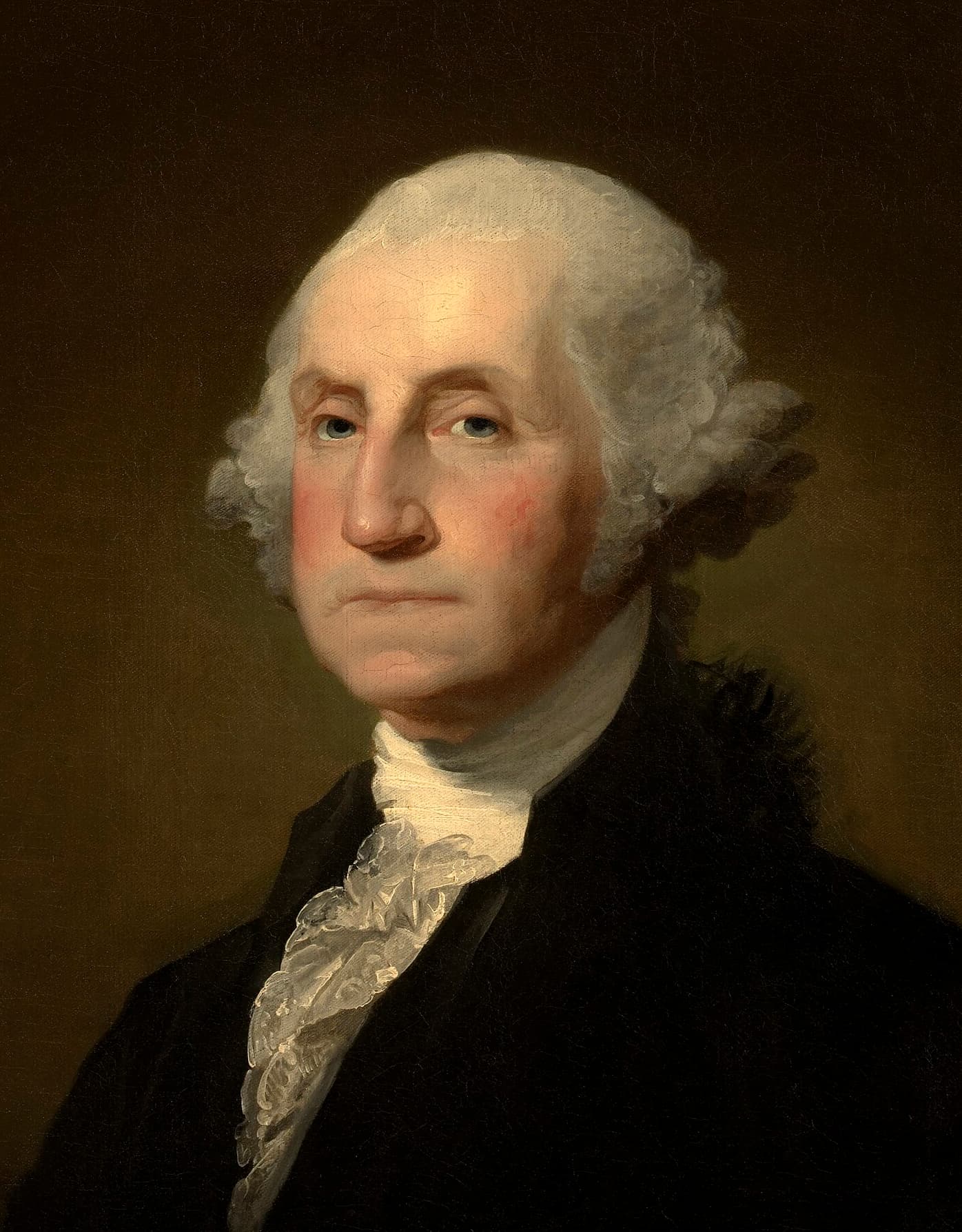
Portrait of George Washington.
The Reluctant Founder
Born on February 22, 1732, in Virginia, George Washington emerged from the colonial gentry to become the central stabilizing figure of the American founding. Unlike many of his contemporaries, he was not a prolific theorist or revolutionary pamphleteer. His influence was expressed through presence, discipline, and the ability to command trust across deeply divided factions.
For eight difficult years Washington led an army plagued by shortages, political interference, and uncertainty. Victory depended less on dramatic triumphs than on persistence. He maintained discipline, preserved the army through repeated crises, and sustained the legitimacy of the revolutionary cause long enough for British political will to falter.
After independence was secured, Washington performed the unexpected. In 1783 he voluntarily resigned his military commission and returned to Mount Vernon, rejecting the possibility of personal rule. His life there was anchored by his wife Martha Washington. Later, as the first President, he helped establish the norms of republican leadership: civilian authority, institutional stability, and the peaceful relinquishing of power.
That's the ISTJ signature: Si discipline paired with Te structure — he didn't win through brilliance alone, but through the one quality no other general could offer: trustworthiness.
Washington did not merely win a revolution. He demonstrated how power should behave in a republic.
Si — Dominant
Washington's worldview was deeply rooted in precedent, responsibility, and continuity — reflecting dominant Si.
From a young age he trained himself in the “Rules of Civility,” internalizing a code of conduct that shaped his behavior throughout life. His decisions frequently reflected concern for long-term institutional stability rather than personal ambition. Even as president he worried about the precedents his actions would establish for future generations. This attention to tradition, order, and accumulated experience is characteristic of Si-dominant personalities.
Te — Auxiliary
Washington's leadership was highly practical and organizational — reflecting auxiliary Te.
As commander of the Continental Army, he focused relentlessly on logistics, discipline, and coordination between political and military authorities. He worked closely with aides like Hamilton and trusted officers like Henry Knox. He reorganized command structures, enforced standards of conduct, and worked continuously to maintain operational effectiveness despite scarce resources. Later, as president, he oversaw the creation of administrative structures that allowed the federal government to function effectively.
Fi — Tertiary
Though emotionally restrained, Washington possessed a strong internal moral compass — reflecting tertiary Fi.
His sense of honor and personal integrity shaped many of his most consequential decisions. His voluntary resignation of military command, his refusal of monarchical titles, and his decision to step down after two presidential terms all reveal a deeply internalized set of personal values guiding his behavior.
Ne — Inferior
Washington was not primarily driven by speculative ideation or intellectual exploration. His thinking tended toward practical stability rather than conceptual experimentation.
However, inferior Ne appears in moments of caution about uncertainty and disorder. Washington frequently expressed concern about political factionalism and instability within the young republic. His famous warnings about divisive political parties reflect a wary awareness of unpredictable consequences.
Why ISTJ Over ESTJ
Why not ESTJ?
While Washington demonstrated strong administrative ability, his leadership style lacked the outwardly assertive and socially dominant energy typical of ESTJs. Contemporaries consistently described him as reserved and measured — he rarely dominated discussions, preferred careful reflection before speaking, and derived authority from quiet steadiness rather than commanding extroversion. He also repeatedly attempted to withdraw from power, requiring considerable persuasion to accept the presidency. This reluctance toward public leadership suggests a fundamentally introverted orientation.
Connected Figures
Further Reading
- Washington: A Life — Ron ChernowComprehensive modern biography — exhaustive on character, command, and the texture of Washington's daily life.
- His Excellency: George Washington — Joseph J. EllisConcise and penetrating; best single volume on the psychological core of Washington's leadership.
- Washington's Crossing — David Hackett FischerPrize-winning study of the winter 1776 campaign — reveals Washington's operational genius under crisis.
- The Indispensable Man — James Thomas FlexnerAbridgment of Flexner's four-volume biography; accessible and balanced on Washington's public and private life.
