 Historical Figure MBTI
3 min read
#100 · 3-10-26 · The Founding Generation of USA
Elizabeth Willing Powel
Salon hostess and intellectual catalyst of Revolutionary Philadelphia.
1743 — 1830
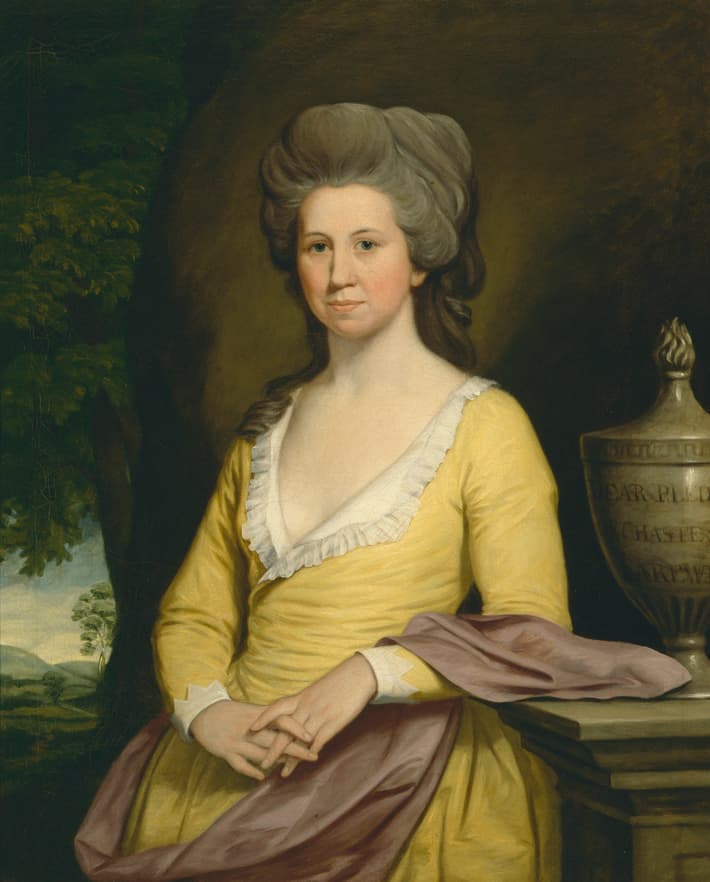
Portrait of Elizabeth Willing Powel.
The Intellectual Catalyst
Born in 1743 into the prominent Willing family of Philadelphia, Elizabeth Willing Powel would become one of the most intellectually vibrant figures in the social world of Revolutionary America. Her father, Charles Willing, was a wealthy merchant and civic leader, providing her with an environment that instilled a strong awareness of civic responsibility and social tradition from a young age.
Though she held no formal political office, her home in Philadelphia became an essential gathering place for the most important thinkers of the era. Together with her husband Samuel Powel, she cultivated a space where the intellectual future of the young republic was debated and refined. Guests included George Washington, Benjamin Franklin, John Adams, and Alexander Hamilton.
That's the ENTP signature: Ne curiosity paired with Ti precision — she didn't just host the conversation, she kept it honest.
Guests described her as lively and intellectually engaging — someone who delighted in stimulating discussion rather than controlling it. She was not merely socially charming; she was capable of asking precise and probing questions that kept conversation intellectually stimulating while maintaining the relaxed atmosphere of a social gathering.
Ne — Dominant
Powel's salon gatherings reflected the intellectual atmosphere of dominant Ne.
Rather than simply hosting formal dinners, Powel fostered an environment where ideas could circulate freely. Conversations often ranged across politics, philosophy, and the uncertain future of the young republic. This kind of open-ended intellectual environment — where the focus is on the exploration of what is possible — is strongly characteristic of Ne-dominant personalities.
Ti — Auxiliary
Supporting her curiosity was auxiliary Ti, which gave structure to her intellectual engagement.
Visitors to her home often found themselves drawn into spirited discussions where ideas were examined critically but playfully. This blend of curiosity and analytical clarity — the ability to dissect an argument while remaining in the flow of the interaction — is the signature of the ENTP.
Fe — Tertiary
Powel excelled at reading social dynamics and guiding group interaction — reflecting tertiary Fe.
Her salon was not chaotic debate but a carefully balanced social environment where influential individuals felt comfortable exchanging ideas. She used her Fe to maintain harmony during political discussions, encouraging quieter participants to join and ensuring guests felt welcomed and intellectually valued. This ability allowed her to act as a social conductor of ideas, keeping conversations lively yet respectful.
Si — Inferior
While her mind ranged freely across ideas and political speculation, Powel remained invested in the stability and success of the emerging American republic — reflecting inferior Si.
Her correspondence with figures such as George Washington suggests that she cared not only about intellectual debate but also about the preservation and flourishing of the nation itself. Even as she explored new possibilities, she was grounded by a respect for established institutions and the importance of what had been built.
Connected Figures
Further Reading
- The Founders and the Vote: How America's 1787 Convention Invented the Presidency — David O. StewartCovers the Philadelphia milieu in which Powel and Washington moved, including her reported role in persuading him to accept a second term.
- First Family: Abigail and John Adams — Joseph J. EllisIlluminates the intellectual culture of the founding generation and the women who shaped it alongside their famous husbands.
- The Women of the Republic: Intellect and Ideology in Revolutionary America — Linda K. KerberThe foundational study of how women like Powel exercised influence in the early republic through republican motherhood and salon culture.
- Founding Mothers: The Women Who Raised Our Nation — Cokie RobertsProfiles Powel and other women of the founding era whose correspondence and social influence shaped the new nation.
