 Historical Figure MBTI
3 min read
#99 · 3-9-26 · The Founding Generation of USA
Lucy Flucker Knox
Devoted partner of the American Revolution; wife of General Henry Knox.
1756 — 1824
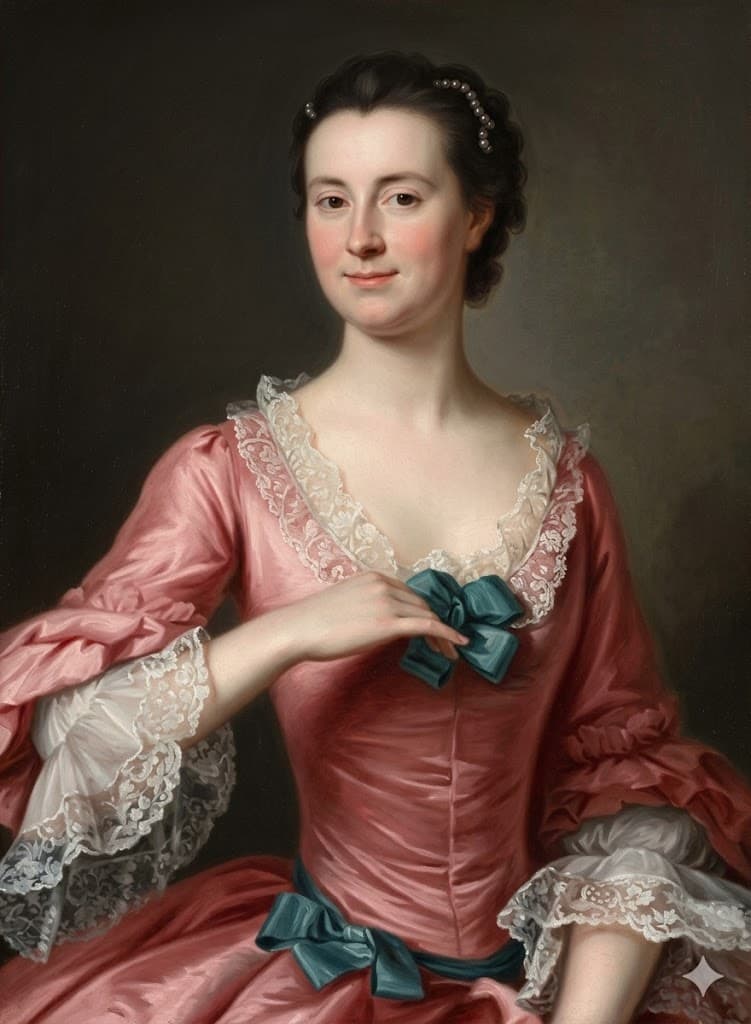
Portrait of Lucy Flucker Knox.
The Conviction Behind the Choice
Born in 1756 into one of the most prominent Loyalist families in colonial Boston, Lucy Flucker Knox was raised in a world of social privilege and political orthodoxy. Her father, Thomas Flucker, served as royal secretary of Massachusetts and belonged firmly to the Loyalist establishment.
Yet in 1774 she chose to marry Henry Knox, a bookseller from a modest background — far below her social station and firmly on the Patriot side. When the Revolution intensified and Loyalist families fled Boston alongside British forces, Lucy remained with her husband rather than returning to her parents' household. This decision effectively separated her from her family's political world and social position.
Such a choice reflects a personality driven not by social duty but by inner conviction. Once Lucy made that decision, her loyalty to Knox remained unwavering for the rest of her life.
That's the INFP signature: Fi conviction paired with Ne openness — she left everything familiar because her heart pointed somewhere her family's world could never go.
Fi — Dominant
The defining characteristic of Lucy Knox's life was her willingness to follow personal conviction even when it conflicted with social expectations — reflecting dominant Fi.
Her decision to marry Knox, remain with him during the Revolution, and essentially forfeit her Loyalist social standing all reflect an internal value system stronger than any external pressure. Fi-dominant personalities are often characterized by this exact quality: a deep, private sense of what matters that cannot be overridden by social convention.
Ne — Auxiliary
Lucy's marriage to Knox also meant embracing an uncertain life — reflecting auxiliary Ne.
Rather than remaining within the stability of Loyalist aristocratic society, she entered a world shaped by war, political upheaval, and the unpredictable fortunes of a revolutionary officer. Throughout the Revolutionary War, Lucy occasionally joined Knox during winter encampments, where officers' families helped maintain social life and morale within the army. Her willingness to follow Knox into the uncertainties of the Revolutionary era reflects an openness to possibility characteristic of Ne's exploratory outlook.
Si — Tertiary
Though her initial choice was unconventional, Lucy's life once settled became marked by consistent loyalty and deep attachment to the bonds she had formed — reflecting tertiary Si.
Contemporary descriptions of Lucy emphasize warmth, gentleness, and hospitality. Letters between Lucy and Knox reveal a marriage marked by genuine affection, with her correspondence focusing on personal relationships and emotional connection rather than public events or ideological debate. This inwardly oriented, relationally grounded style reflects Si working in support of her dominant values.
Te — Inferior
Unlike many public figures of the era, Lucy Knox left behind little evidence of administrative or organizational drive — consistent with inferior Te.
She did not manage public institutions or seek structured roles in political life. Her world was defined by the personal and intimate rather than the systematic. When external structure did emerge in her life — particularly in the later years of financial difficulty after the family moved to Maine — she endured rather than reorganized.
Connected Figures
Further Reading
- Henry Knox: Visionary General of the American Revolution — Mark PulsCovers Lucy's decision to abandon her Loyalist family for Henry Knox and her presence in his army camps.
- Liberty's Daughters: The Revolutionary Experience of American Women, 1750-1800 — Mary Beth NortonFrames the choice Lucy made in siding with the Revolutionary cause against her own Loyalist relatives.
- Founding Mothers: The Women Who Raised Our Nation — Cokie RobertsSituates Lucy among the officers' wives who shared winter encampments alongside Martha Washington.
