 Historical Figure MBTI
3 min read
#98 · 3-9-26 · The Founding Generation of USA
Henry Knox
Artillery commander of the American Revolution and first U.S. Secretary of War.
1750 — 1806
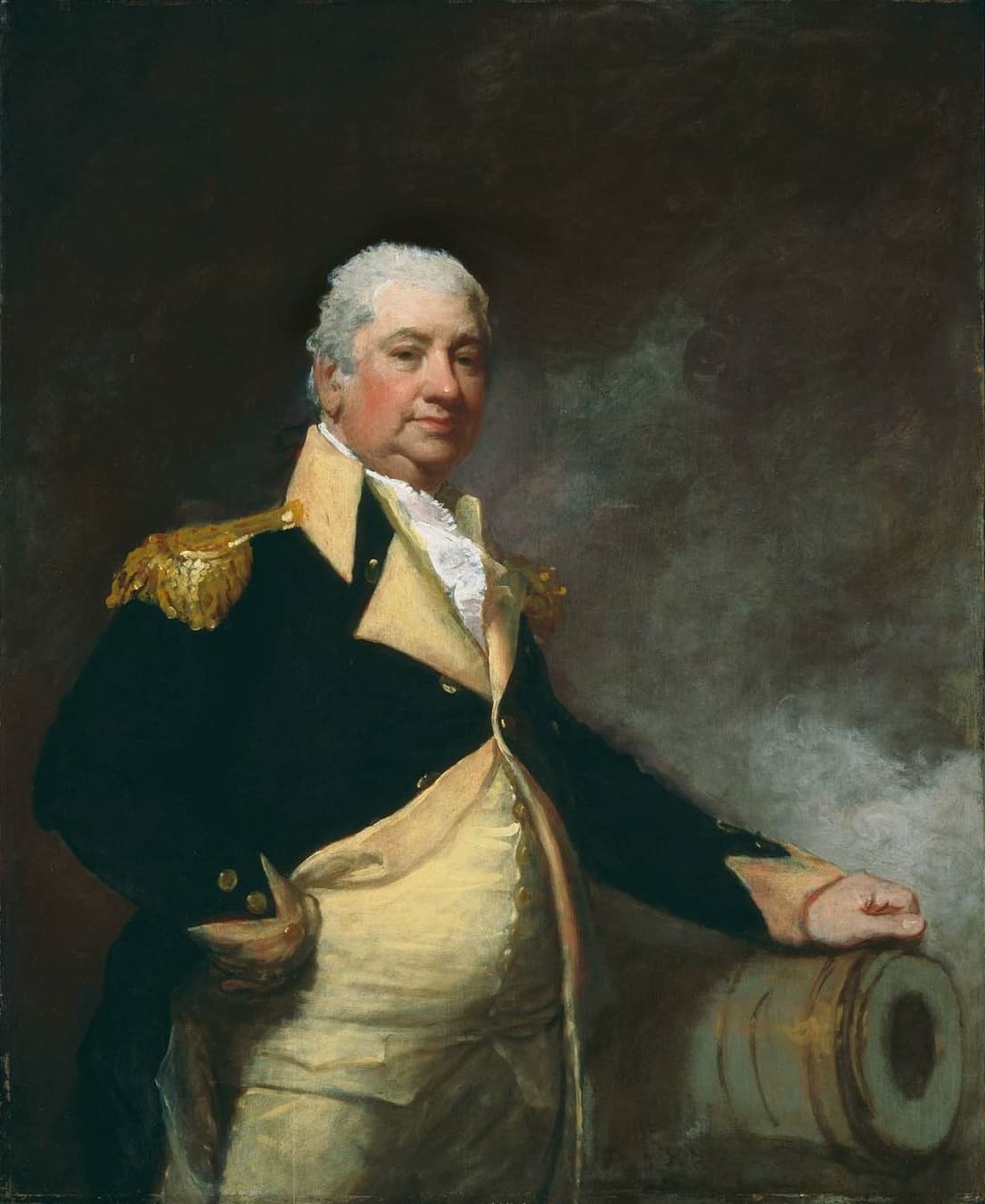
Portrait of Henry Knox.
The Beloved Officer of the Revolution
Born in 1750 in Boston, Henry Knox was one of the most beloved members of the Revolutionary leadership circle. Best known as the chief artillery officer of the Continental Army and later the first U.S. Secretary of War under George Washington, Knox combined technical competence with warmth, loyalty, and emotional presence among the officers who served with him.
Before the Revolution he worked as a Boston bookseller, educating himself extensively in military science and artillery theory. Once the Revolutionary cause began, his intellectual pursuits became focused on a single goal: helping the Continental Army succeed. His famous transport of artillery from Fort Ticonderoga to Boston during the winter of 1775–1776 demonstrated both his logistical boldness and his commitment to turning theory into action.
Contemporary descriptions of Knox reveal a leader whose personality was deeply relational and purpose-driven. One observer famously remarked that Knox had “a heart as big as his body.”
That's the ENFJ signature: Fe warmth paired with Ni purpose — Knox kept the officers together not just through strategy, but through the sheer force of his care.
Fe — Dominant
Accounts of Knox consistently emphasize his warmth and enthusiasm — reflecting dominant Fe.
Officers described him as cheerful, sociable, and emotionally expressive. Within Washington's command circle, Knox played an important role in maintaining morale and camaraderie among officers. His influence did not come primarily from rigid authority but from his ability to build trust and encourage those around him. This style of leadership — influence through emotional connection and group cohesion — is the signature of Fe dominance.
Ni — Auxiliary
Knox's life also reflects a strong sense of directed purpose — reflecting auxiliary Ni.
Once the Revolutionary cause began, Knox remained loyal to Washington throughout the war and later helped build the early military institutions of the new United States as Secretary of War. This sustained commitment to a central mission reflects Ni's tendency toward focused vision and long-term alignment.
Se — Tertiary
Knox also demonstrated a strong practical ability to act in the moment — reflecting tertiary Se.
His transport of artillery from Fort Ticonderoga to Boston required extraordinary logistical coordination across hundreds of miles of winter terrain. Rather than remaining purely theoretical, Knox showed a willingness to engage directly with the physical realities of war — terrain, equipment, and immediate operational challenges. Ideas and strategy translated into decisive action.
Ti — Inferior
Before the war Knox ran a bookstore in Boston, where he read extensively about artillery, engineering, and military theory. Despite lacking formal military training, he developed enough technical knowledge to become the Continental Army's chief artillery expert.
This intellectual curiosity and interest in understanding the mechanics behind military operations reflects the influence of inferior Ti, which often appears in ENFJs as a quieter fascination with systems and technical knowledge.
Connected Figures
Further Reading
- Henry Knox: Visionary General of the American Revolution — Mark PulsThe most focused modern biography of Knox, tracing his rise from Boston bookseller to artillery chief to Secretary of War.
- Washington: A Life — Ron ChernowThe definitive Washington biography; Knox appears throughout as one of Washington's most trusted and beloved officers.
- Founding Brothers: The Revolutionary Generation — Joseph J. EllisExplores the relationships and rivalries among Washington's circle — the political world Knox inhabited as cabinet member and trusted general.
