 Historical Figure MBTI
4 min read
#95 · 3-7-26 · The Founding Generation of USA
Joseph Alston
Planter, congressman, and governor of South Carolina during the War of 1812.
1779 — 1816
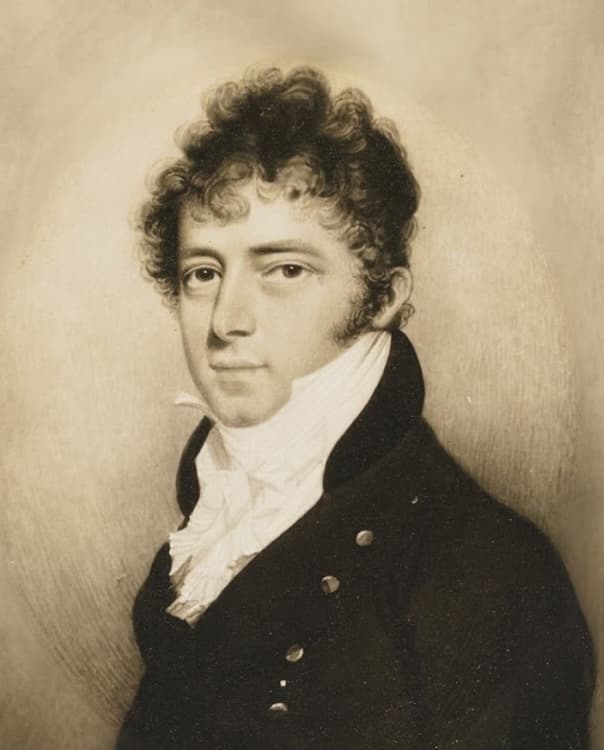
Portrait of Joseph Alston.
The Dutiful Governor
Born in 1779 into one of South Carolina's prominent plantation families, Joseph Alston grew up within the political and social elite of the early American republic. Educated at the College of New Jersey (now Princeton University), he entered public life during a period when the young United States was still defining its institutions and leadership.
In 1801 he married Theodosia Burr Alston, the highly educated daughter of Aaron Burr. Unlike his charismatic and controversial father-in-law, Joseph Alston's reputation was that of a quieter figure: serious, responsible, and deeply committed to his duties.
He served in the U.S. House of Representatives before becoming governor of South Carolina in 1812, just as the nation entered the War of 1812. His administration focused on practical governance — organizing the state militia, strengthening coastal defenses, and managing wartime pressures on the state. Contemporaries described him as steady, conscientious, and earnest, a man more interested in fulfilling his responsibilities than cultivating political spectacle.
That's the ISFJ signature: Si stability paired with Fe devotion — a man defined not by ambition, but by what he was willing to endure.
Si — Dominant
Alston's life followed the traditional trajectory of the early American planter-statesman: education, public service, and stewardship of family and community — reflecting dominant Si.
His political career reflects continuity and responsibility rather than ideological ambition. As governor during the War of 1812, his focus was practical and defensive — ensuring that South Carolina's institutions and security remained stable during wartime. This emphasis on preserving order and fulfilling obligations strongly reflects Si's orientation toward stability, continuity, and stewardship of inherited systems.
Fe — Auxiliary
Accounts of Alston consistently describe him as kind, mild in temperament, and devoted to his family — reflecting auxiliary Fe.
His marriage to Theodosia appears to have been affectionate and respectful, and he was deeply attached to both his wife and their only child. When tragedy struck — first with the death of his son in 1812 and then the disappearance of Theodosia at sea in 1813 — contemporaries noted how profoundly the losses affected him. Friends described him as emotionally devastated and increasingly withdrawn.
Ti — Tertiary
Though not known for intellectual flamboyance, Alston was educated and capable of structured reasoning — reflecting tertiary Ti.
His political career required administrative decision-making and organizational clarity, and his education at Princeton would have exposed him to classical philosophy and political thought. However, logical reasoning functioned as a supportive tool for governance and responsibility, rather than a driving intellectual pursuit.
Ne — Inferior
Unlike many political figures of his era, Alston does not appear to have been drawn to ideological experimentation or visionary political theories — consistent with inferior Ne.
His focus remained on practical administration and preservation of existing institutions, particularly during wartime. Moments of emotional crisis later in life — particularly after the loss of his family — appear to have shaken his stability, suggesting the kind of existential uncertainty often associated with inferior Ne emerging under stress.
Connected Figures
Further Reading
- Fallen Founder: The Life of Aaron Burr — Nancy IsenbergThe most thorough modern biography of Aaron Burr — essential for understanding the political world Joseph Alston married into.
- A Marriage Well Arranged: Theodosia Burr and Joseph Alston — Charles Felton PidginAn early account exploring the relationship between Theodosia Burr and her husband, though now dated in its scholarship.
- Theodosia: The First Gentlewoman of Her Times — Charles Felton PidginA biographical portrait of Theodosia Burr Alston that necessarily situates Joseph Alston within her story.
- The Papers of Aaron Burr — Mary-Jo Kline (ed.)Primary source collection that includes correspondence between Aaron Burr, Theodosia, and Joseph Alston — the richest documentary record of his inner life.
