 Historical Figure MBTI
3 min read
#136 · 3-16-26 · The Founding Generation of USA
Mary Palmer
The Keeper of the Quiet World and stabilizing presence behind a cultural pioneer.
1775 — 1866
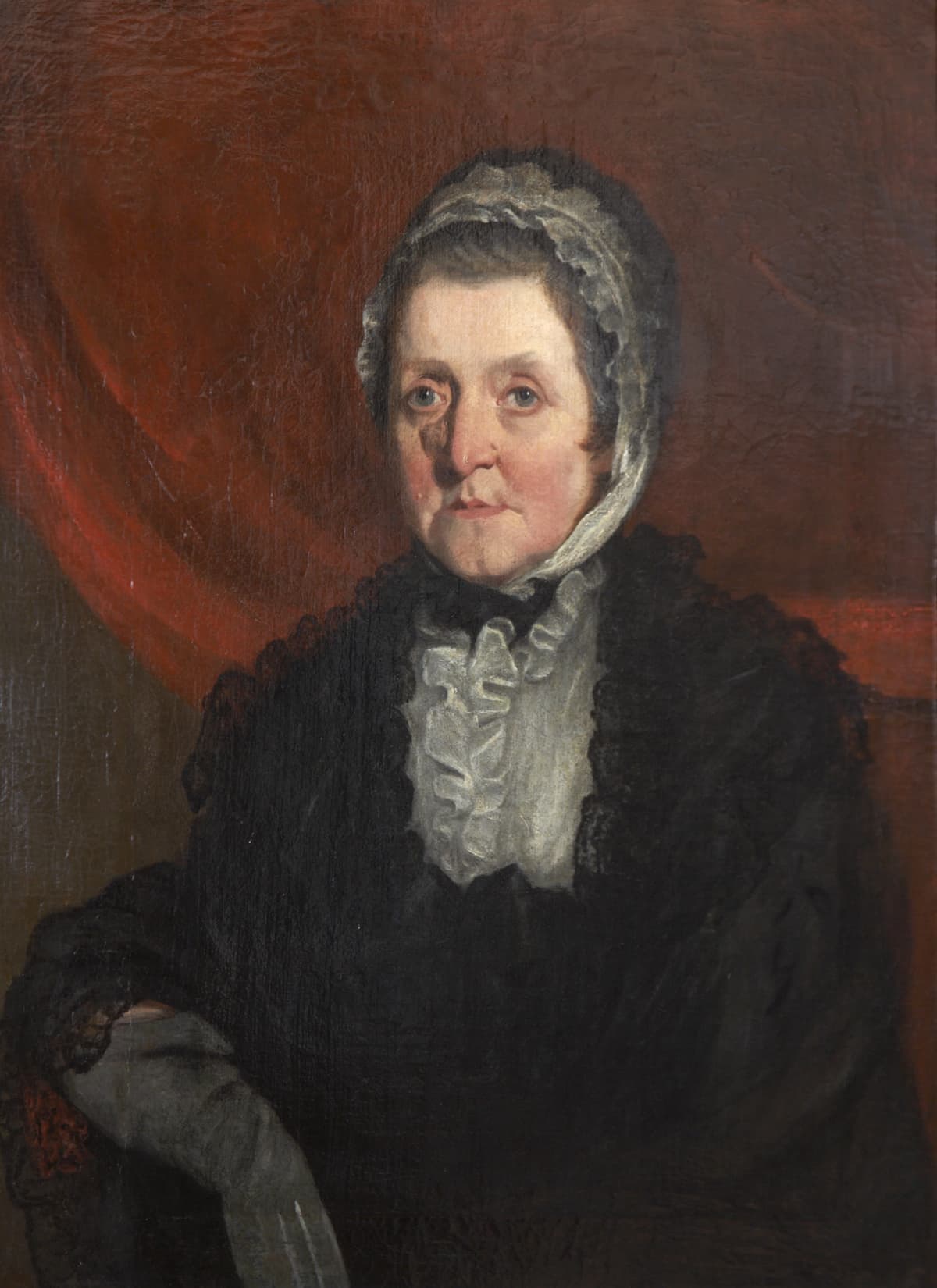
Portrait of Mary Palmer
The Keeper of the Quiet World
Mary Palmer does not appear in history as a force of disruption or transformation. She is not remembered for political theory, public ambition, or intellectual authorship. Instead, she exists in a different register — one defined by constancy, presence, and the quiet maintenance of a life shared with another.
As the wife of Royall Tyler, Palmer lived within the intimate sphere that surrounded a more publicly visible figure. What survives of her is not a legacy of ideas, but traces of character: steadiness, care, and an orientation toward relationship rather than recognition.
These are not the qualities history tends to preserve in detail. But they are the ones that sustain it.
The Psychological Verdict
Mary Palmer is best understood as an ISFJ — a type defined not by outward assertion, but by continuity, attentiveness, and a grounded sense of relational responsibility.
The available historical material is limited, and any conclusion must remain measured. Still, what can be observed — her role, her positioning, and the nature of her presence — consistently points toward a personality oriented around stability and care rather than abstraction or expansion.
Si — Dominant
Palmer’s life appears rooted in the preservation of the immediate and the familiar. She does not emerge as someone reshaping systems or seeking new conceptual ground, but as someone maintaining what already exists — relationships, routines, and a shared domestic world.
This reflects dominant Si: a focus on continuity, lived experience, and the quiet reinforcement of what is known and trusted. Not driven to reinvent, but to sustain.
Her significance is not in what she changed. It is in what she kept intact.
Fe — Auxiliary
Her orientation toward others appears central. As with many figures whose lives are documented through relationship rather than independent authorship, what stands out is not self-assertion, but relational presence — a consistent attentiveness to the needs, expectations, and emotional fabric of those around her.
This suggests auxiliary Fe: a natural inclination toward care, support, and social harmony. Not expressive in a performative or expansive way, but steady, responsive, and quietly attuned.
Ti — Tertiary
There is little evidence of overt analytical or theoretical engagement, but this does not imply its absence — only that it was not externally expressed. In ISFJ patterns, Ti often appears as an internal framework: subtle, structuring, and secondary to relational priorities.
Any reasoning here would likely have been practical and situational, not abstract or system-building.
Ne — Inferior
There is also little indication of outward exploratory drive or conceptual expansion. Palmer’s life does not suggest a pull toward possibility, novelty, or reframing — but rather a preference for the known, the stable, and the immediate.
This aligns with inferior Ne: an awareness of possibility, but not a drive toward it. Change is approached carefully, if at all.
Why not ESFJ?
Si over Fe
At a glance, her relational role might suggest ESFJ — a type also associated with care and social attunement. But ESFJs tend to be more outwardly expressive, socially active, and visibly engaged in shaping their environments. Palmer does not clearly reflect this pattern. What emerges instead is a quieter presence — less about shaping the social field, and more about maintaining it. Less outwardly directive, more inwardly steady.
Connected Figures
Further Reading
- Abigail and John: Portrait of a Marriage — Edith B. GellesCovers the Adams family circle whose daughter's broken engagement to Royall Tyler preceded his marriage to Mary Palmer.
- Founding Mothers: The Women Who Raised Our Nation — Cokie RobertsSituates Mary Palmer's diary-keeping alongside other founding-era women who documented their households.
- Adams Family Correspondence — L. H. Butterfield (ed.)The primary record of the Adams family world that Mary Palmer's husband had once nearly married into.
