 Historical Figure MBTI
3 min read
#137 · 3-16-26 · The Founding Generation of USA
John Thaxter
The Steady Hand Behind the Correspondence and trusted aide to John Adams.
1755 — 1791
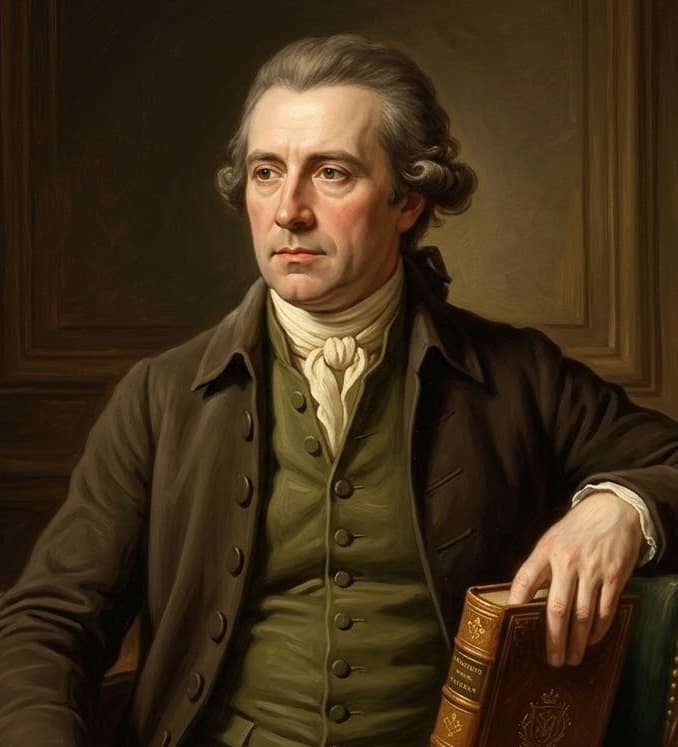
Portrait of John Thaxter
The Steady Hand Behind the Correspondence
John Thaxter is not remembered as a central architect of the American founding, nor as a voice that shaped its philosophy. Instead, he appears in the margins — as a secretary, assistant, and trusted aide to John Adams during one of the most volatile periods in early American diplomacy.
And yet, those margins matter.
Thaxter served Adams in Europe during the Revolutionary era, managing correspondence, organizing documents, and ensuring that the machinery of diplomacy continued to function. In a world defined by negotiation, uncertainty, and fragile alliances, his role was not to lead or theorize, but to maintain order — to keep things moving, accurately and reliably.
He was not the one writing history. He was the one making sure it could be written at all.
The Psychological Verdict
John Thaxter is best understood as an ISTJ — a type defined by reliability, structure, and a grounded sense of duty to systems and responsibilities.
While direct psychological material on Thaxter is limited, his role, behavior, and positioning within John Adams’s circle strongly suggest a personality oriented toward execution, precision, and consistency rather than abstraction or exploration.
Si — Dominant
Thaxter’s defining trait is continuity. His work required attention to detail, memory of prior correspondence, and the ability to maintain consistency across time — all hallmarks of dominant Si.
He was not generating new frameworks or ideas, but preserving and managing what already existed. The success of diplomatic efforts depended on accuracy, timing, and reliability — areas where Si thrives.
His contribution was not innovation. It was preservation.
Te — Auxiliary
Alongside this, Thaxter demonstrates a clear orientation toward external structure and task execution. His responsibilities required organization, efficiency, and a focus on outcomes — ensuring that letters were sent, records maintained, and processes upheld.
This reflects auxiliary Te: a practical, results-oriented approach to the external world. Not theoretical, not exploratory — but structured, accountable, and grounded in what needs to be done.
Fi — Tertiary
There is little overt expression of personal values or emotional interiority in the historical record, but this absence is consistent with tertiary Fi. In ISTJs, Fi often operates quietly — informing a sense of duty, loyalty, and personal integrity without being externally expressive.
Thaxter’s willingness to serve in a demanding and often thankless role suggests a steady internal commitment rather than a need for recognition.
Ne — Inferior
There is also little indication of exploratory or speculative thinking. Thaxter does not appear as someone drawn to possibility, novelty, or reframing systems.
Instead, his strength lies in maintaining what is already established — consistent with inferior Ne, where change is approached cautiously and structure is preferred over expansion.
Why not INTJ?
Responsibility over Vision
Given his proximity to figures like John Adams and the broader intellectual environment of the founding era, one might consider INTJ. But the distinction lies in orientation. INTJs are driven by internal vision — reshaping systems according to a long-term conceptual framework. Thaxter does not show evidence of this. He is not directing strategy or constructing ideological models; he is executing, maintaining, and supporting. This points clearly toward Si–Te rather than Ni–Te.
Connected Figures
Further Reading
- Adams Family Correspondence — L. H. Butterfield (ed.)The primary record of Thaxter's years as John Adams's private secretary and tutor to the young John Quincy Adams.
- John Adams — David McCulloughCovers the European mission on which Thaxter served, including the household Adams trusted him within.
- Abigail and John: Portrait of a Marriage — Edith B. GellesShows how deeply Abigail Adams relied on secretaries like Thaxter to keep the family's affairs running during long absences.
