 Historical Figure MBTI
3 min read
#138 · 3-16-26 · The Founding Generation of USA
Rebecca Dalton Thaxter
The Social Fabric Around the Founding and connective presence within the Adams orbit.
1764 — 1847
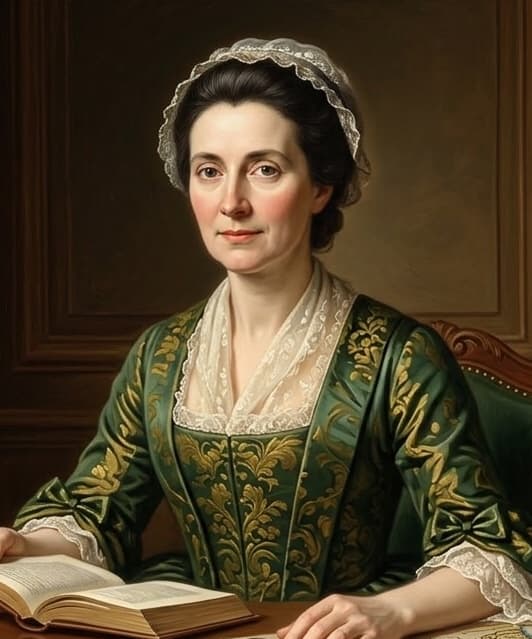
Portrait of Rebecca Dalton Thaxter
The Social Fabric Around the Founding
Rebecca Dalton Thaxter does not appear in the historical record as a political actor, writer, or public voice. Like many women of her time, her presence is felt more through proximity than authorship — through the circles she inhabited, the relationships she sustained, and the social world she helped maintain.
But those circles matter.
As part of the Adams orbit — one of the most intellectually and politically active networks of the early American republic — Rebecca lived within a culture of constant correspondence, relational negotiation, and social awareness. This was not a passive environment. It required attentiveness, adaptability, and a fluency in human dynamics that often went undocumented, but not unfelt.
She may not have shaped policy. But she existed within the web that made it possible.
The Psychological Verdict
Rebecca Dalton Thaxter is best understood, tentatively, as an ESFJ — a type defined by outward relational awareness, social participation, and a grounded role in maintaining the emotional and interpersonal fabric of a community.
The historical record on her is limited, and any conclusion must remain measured. Still, her context — particularly her embeddedness within a highly social, communicative, and politically engaged environment — suggests a personality oriented toward people, connection, and shared life rather than abstraction or detachment.
Fe — Dominant
Rebecca’s defining orientation appears to be outward and relational. Within a network like the Adams circle, participation was not optional — it was constant. Maintaining relationships, navigating expectations, and staying attuned to social dynamics would have been essential.
This aligns with dominant Fe: an active engagement with the emotional and interpersonal environment, prioritizing connection, harmony, and shared understanding.
Her presence is best understood not as isolated, but as integrated.
Si — Auxiliary
Alongside this outward engagement is a grounding in stability and continuity. Life in the late 18th century — particularly within elite New England society — was structured, tradition-oriented, and rooted in established roles.
Rebecca’s place within that world suggests a comfort with and reinforcement of those structures. This reflects auxiliary Si: an orientation toward the familiar, the reliable, and the preservation of social and cultural continuity.
Not disruptive. Sustaining.
Ne — Tertiary
There is little evidence of overt exploratory or idea-driven behavior, but tertiary Ne in ESFJs often appears subtly — in social adaptability, conversational fluidity, and the ability to navigate shifting interpersonal contexts.
In a dynamic environment like the Adams network, this would have been less about abstract possibility and more about reading situations, adjusting responses, and staying socially responsive.
Ti — Inferior
There is no strong indication of detached analytical framing or system-building. Decisions and behaviors appear more grounded in relational and contextual awareness than in internal logical structuring.
This aligns with inferior Ti — present, but not foregrounded.
Connected Figures
Further Reading
- Adams Family Correspondence — L. H. Butterfield (ed.)The record of the Adams household John Thaxter served, the orbit Rebecca entered upon marrying him.
- John Adams — David McCulloughCovers the European mission that kept Thaxter away before he returned to marry Rebecca Dalton.
- Liberty's Daughters: The Revolutionary Experience of American Women, 1750-1800 — Mary Beth NortonContext for a wife like Rebecca living at the edge of a household defined by a husband's diplomatic secretarial career.
