 Historical Figure MBTI
4 min read
#135 · 3-16-26 · The Founding Generation of USA
Royall Tyler
Playwright, lawyer, and judge who captured the spirit of the nascent American identity.
1757 — 1826
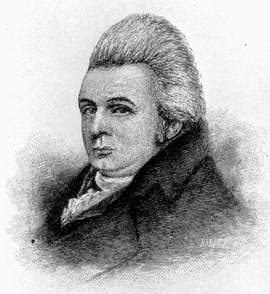
Portrait of Royall Tyler
The Playwright of a New Nation
Royall Tyler is one of those figures who sits just slightly outside the main historical spotlight — and yet, when you look closer, he feels unmistakably alive.
Born in 1757, Tyler lived through the American Revolution and into the early years of the republic, participating not only as a soldier, but as a writer, playwright, lawyer, and judge. He is best remembered for The Contrast (1787), often considered the first American comedy performed by professional actors — a work that didn’t just entertain, but actively explored what it meant to be “American” in a newly formed nation.
But what makes Tyler interesting isn’t just that he wrote. It’s how he wrote.
His voice is social, expressive, observant — tuned into people, relationships, and the subtle contradictions of identity. His work reflects a fascination not with abstract systems or rigid ideology, but with human behavior: how people present themselves, how they connect, how they perform roles in a rapidly changing cultural landscape.
He wasn’t trying to define the structure of the nation. He was trying to capture its spirit.
The Psychological Verdict
Royall Tyler is best understood as an ENFP — a type defined by external curiosity, expressive creativity, and a deep attunement to human dynamics.
While his career included more structured roles (law, judiciary), his psychological throughline is not one of order or system-building, but of exploration, expression, and social observation. His writing — particularly in The Contrast — reveals a mind oriented toward possibilities, identity, and emotional nuance rather than rigid frameworks.
Ne — Dominant
Tyler’s cognition is driven by outward exploration — not just of ideas, but of people and cultural identity. The Contrast itself is built on juxtaposition: European vs. American manners, authenticity vs. performance, appearance vs. reality.
This is classic Ne — seeing patterns across social contexts, playing with contrasts, and using those contrasts to generate insight. His creativity is not contained within a single vision (Ni), but expands outward, drawing connections between behaviors, archetypes, and emerging cultural norms.
He explores. He reframes. He plays.
Fi — Auxiliary
Beneath this exploratory energy is a strong sense of personal and cultural values. Tyler’s work is not detached satire — it carries an undercurrent of moral perspective, a sense of what feels genuine versus artificial.
His characters are often evaluated not by external status, but by authenticity. This reflects Fi: an internal value system that prioritizes sincerity, individuality, and emotional truth.
He isn’t just observing people. He’s quietly asking: who is real?
Te — Tertiary
Tyler’s ability to operate within structured systems — as a lawyer and later a judge — reflects a functional, though not dominant, Te. He could engage with institutional frameworks, make decisions, and navigate external expectations when needed.
But this was not his core orientation. Te appears as a tool, not a driver — something he could access to stabilize his life, rather than something that defined his identity.
Si — Inferior
Tyler’s relationship with tradition and stability appears more complex. While he lived within established systems, his creative work often plays with, critiques, or reinterprets social norms rather than preserving them.
This suggests inferior Si — an awareness of tradition, but not a deep attachment to maintaining it unchanged. Instead, he engages with the past as material to be reshaped, contrasted, and reimagined.
Why not ENTP?
Fi over Ti
At first glance, Tyler’s wit, satire, and creative output might suggest ENTP — a type also associated with humor and idea generation. But the tone of his work matters. ENTPs tend toward detached analysis and intellectual play, often prioritizing cleverness over emotional grounding. Tyler’s writing, by contrast, carries a clear value-oriented core. His humor is not purely analytical — it is relational, evaluative, and tied to authenticity. He’s not just asking, “Is this clever?” He’s asking, “Is this true?”
Connected Figures
Further Reading
- Royall Tyler — G. Thomas TanselleThe standard scholarly biography, tracing Tyler's literary, legal, and personal life in full.
- The Contrast — Royall TylerThe 1787 play itself — the first American comedy produced professionally, and the primary document for understanding Tyler's sensibility.
- My Dearest Friend: Letters of Abigail and John Adams — Abigail Adams and John Adams (ed. Margaret A. Hogan and C. James Taylor)Includes the Adams family's candid commentary on Tyler during his courtship of Nabby.
