 Historical Figure MBTI
#829 · 6-15-26 · The American Civil War
Preston Brooks
The Congressman Who Answered With a Cane
1819–1857
3 min read
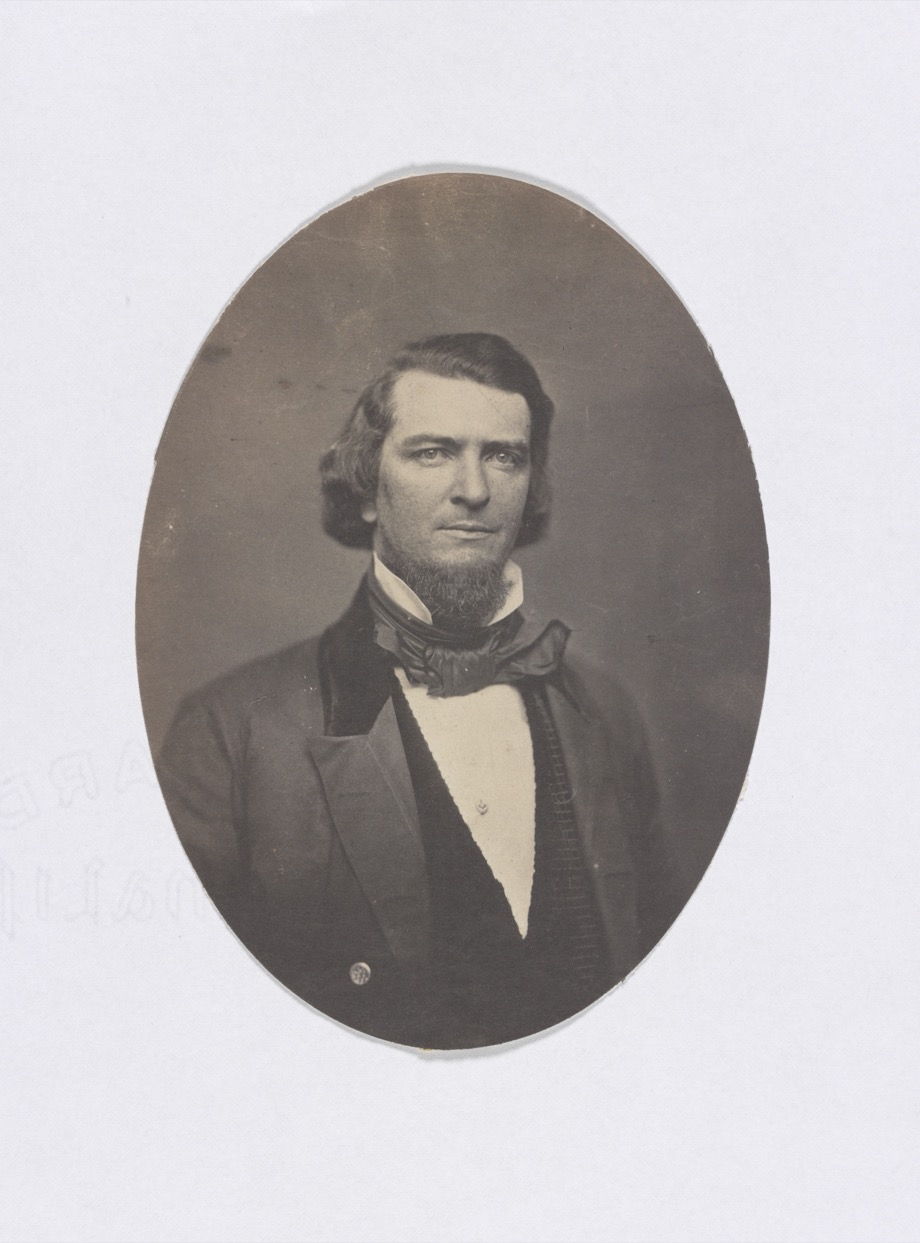
Portrait of Preston Brooks
The Cane Was the Argument
On May 22, 1856, Preston Brooks walked onto the floor of the United States Senate, found Charles Sumner seated at his desk, and beat him with a gutta-percha cane until the cane broke and Sumner lay bleeding and half-conscious on the chamber floor. The provocation was two days old: Sumner's "Crime Against Kansas" speech had mocked Brooks's elderly cousin, Senator Andrew Butler, in personal and sexual terms Brooks considered unforgivable. Brooks did not write a rebuttal, challenge Sumner to a duel, or raise the matter on the House floor. He bought a cane and used it.
That choice is the whole man. In the code of Southern honor Brooks was raised in, a duel was owed to a social equal; a cane was for a servant, an animal, or an inferior — and Brooks judged Sumner beneath the courtesy of pistols at dawn. The insult demanded an immediate, physical, public correction, delivered by his own hand, and delivered now. He gave no speech justifying the act in advance and sought no committee's blessing. He simply acted, and let the consequences — expulsion proceedings, national outrage, a folk-hero's welcome across the South — sort themselves out afterward.
Preston Brooks was ESTP down to the marrow — a mind that answered an insult with immediate physical force rather than words, and never doubted the force was the right answer.
A Verdict Written in Wood and Blood
Brooks's ESTP wiring shows most plainly in what he didn't do. He didn't deliberate for weeks, didn't draft an argument, didn't wait for a cooler moment — he read the room, judged the insult intolerable, and acted within the span of a couple of days, in the most direct medium available to him: his own arm. That is dominant Sensing turned outward (Se) at its most literal, a preference for the concrete and immediate over the abstract and delayed. His supporting logic (Ti) wasn't a philosophy of politics; it was a private code of honor, worked out to his own satisfaction, that let him distinguish a duel-worthy equal from a cane-worthy inferior and act on that distinction without a flicker of doubt.
The aftermath reveals the rest of the type. Brooks felt the pull of his community's approval (Fe, tertiary) keenly enough to accept the flood of replacement canes Southern admirers mailed him and to resign his seat and stand immediately for re-election, converting censure into vindication by public applause. What he never managed was the long view (inferior Ni): he could not, or would not, see that caning a senator half to death on the Senate floor would harden Northern opinion, accelerate the sectional break he claimed to be defending, and turn Sumner into a living martyr whose empty chair alone became an argument for the cause Brooks meant to silence. He died of croup in January 1857, not yet forty, before any of it caught up with him — a man whose signature act was pure impulse, cheered in the moment and unreckoned with to the end.
Connected Figures
Further Reading
- The Caning: The Assault That Drove America to Civil War — Stephen PuleoFull narrative account of the assault and its aftermath
- Charles Sumner and the Coming of the Civil War — David Herbert DonaldPulitzer-winning biography covering Sumner's side of the caning
- The Impending Crisis: America Before the Civil War, 1848–1861 — David M. PotterPlaces the caning within the broader sectional breakdown
