 Historical Figure MBTI
7 min read
#277 · 3-25-26 · Catherinian Russia
Pyotr Rumyantsev
Field Marshal · Zadunaisky · The Mind Behind Russia's Southern Victories
1725 — 1796
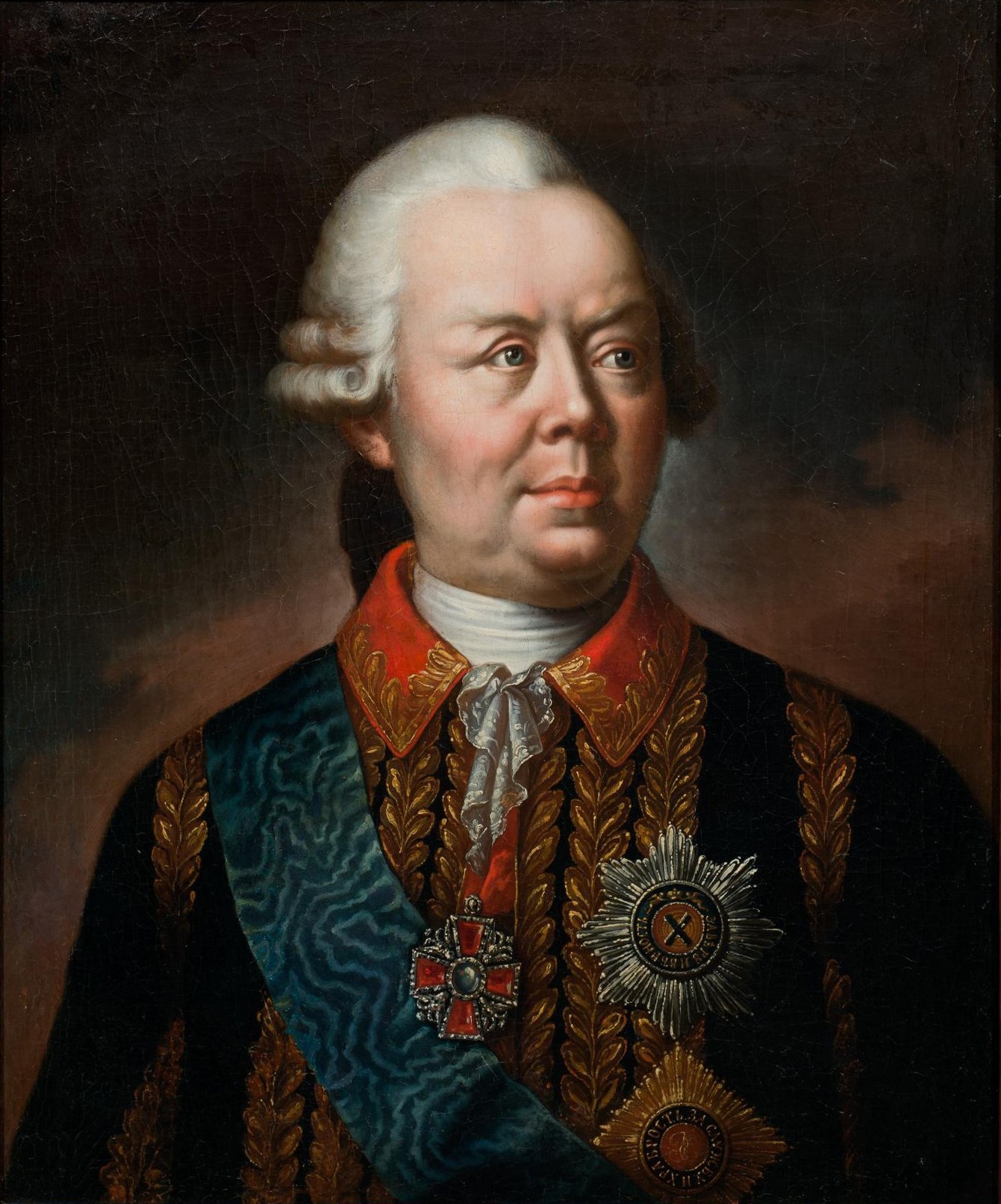
Portrait of Pyotr Rumyantsev
The Architect of Inevitable Victory
On July 21, 1770, at the confluence of the Kagul and Danube rivers, Count Pyotr Alexandrovich Rumyantsev led 17,000 Russian soldiers against an Ottoman force of 100,000 to 150,000 men. He did not hesitate or maneuver for a better position. He attacked. Within hours the Ottoman army was in full retreat, having suffered an estimated 20,000 casualties. Russian losses were approximately 353 dead. It was one of the most lopsided victories in early modern warfare, and it was not luck — Rumyantsev had prepared for this moment for years.
Where his younger contemporary Alexander Suvorov amplified Rumyantsev's innovations with explosive personal energy, Rumyantsev was always the quieter, more systematic mind — the man who redesigned the Russian army before the battles happened. His honorary title, Zadunaisky — "Beyond the Danube" — captured something of his temperament: a mind always looking past the immediate obstacle to what lay on the other side.
That's the INTJ signature: vision-driven architecture — building systems that make a certain future inevitable, then stepping back to let them work.
His marriage to Ekaterina Mikhailovna Golitsyna was strained by long absences and known infidelities. He was not a man who brought his formidable intelligence to bear on domestic harmony. This gap between strategic mastery and emotional attentiveness is, in the INTJ profile, almost definitional.
The War Before the War
Ni — introverted intuition — perceives patterns beneath the surface, compresses complexity into directional understanding, and sees not just what is happening but where it is heading. In a military strategist it manifests as the ability to understand a campaign as a unified system — to see the final outcome before the first engagement and work backward to identify the conditions that must be created to make it inevitable.
His victory at Kagul was not improvised. In the years before the First Russo-Turkish War, Rumyantsev had rebuilt the Russian army in Little Russia: reorganizing supply, creating new tactical formations, training officers in combined-arms doctrine. He had studied the Ottoman military closely enough to understand its structural weaknesses. The 9:1 numerical disadvantage at Kagul did not alter his plan because his Ni had already incorporated it — had already determined that speed, surprise, and doctrinal superiority would overcome raw numbers. He attacked not despite being outnumbered but because his completed analysis said attacking was correct.
The INTJ does not deliberate endlessly at the moment of decision because the deliberation has already happened, invisibly, in the pattern-recognition that runs beneath conscious thought. Rumyantsev's apparent confidence in the face of overwhelming odds was the expression of a completed Ni analysis he trusted more than the raw numerical evidence.
Reorganizing the Instrument of War
Te — extroverted thinking — is the INTJ's auxiliary: the systematic executor that translates Ni vision into organized external reality. Rumyantsev's Te was one of the most comprehensive military reform programs in eighteenth-century Russia. He did not theorize about how armies should be organized; he implemented the reorganization, tested it, and revised it based on results. The restructured supply chains, the new training regimens, the reformed tactical formations — all Te work.
His Instructions — military doctrine documents circulated among his officers — are precisely this: not theoretical essays but implementation guides, addressing specific failure modes of Russian armies in Ottoman terrain and prescribing operationally feasible solutions. Te does not write philosophy; it writes operating manuals.
The key distinction from Suvorov is that Rumyantsev built systems that ran without him — embedding innovation into institutional structure so thoroughly that the army would operate by his doctrines whether or not he was present. Suvorov built systems animated by personal force. This is exactly the INTJ-ENTJ divide: the introvert creates self-sustaining architecture; the extravert creates systems that require his continued presence.
The Private Conviction Beneath the Commander
Fi — introverted feeling — sits in the INTJ's tertiary position: present but not dominant. For Rumyantsev it manifested as the personal conviction animating his professional work — the sense of genuine importance, not merely institutional service. His soldiers respected him as a man who cared about the mission and about them, not in Suvorov's demonstrative way but through a commander's quiet attention to the actual conditions of his troops.
The INTJ's Fi often expresses as integrity — a consistency between internal values and external behavior, a refusal to do things that feel wrong even when convenient. Rumyantsev was not a courtier; he lacked the Fe to navigate performative court demands with ease, and the Fi that substituted was more interested in personal rectitude than social lubrication. His difficult marriage may reflect the same pattern: strong values about loyalty, inconsistently lived, and an internal conflict he could not easily process or communicate. The INTJ's emotional life is not shallow — it is largely invisible, even to those closest to them.
The Absence at the Front
Se — extroverted sensing — is the INTJ's inferior function, and its inferiority shows most clearly against Suvorov. Where Suvorov was physically in the assault at Izmail, performing invincibility for his troops, Rumyantsev commanded from a more measured distance. He preferred to let the system work rather than inject himself as its animating force.
The inferior Se occasionally produced tactical caution critics noted as a weakness: after Kagul, some felt he was slow to exploit the Ottoman collapse with pursuit. The Ni-Te mind, having achieved the strategically decisive outcome, was less drawn to improvised exploitation of a fluid tactical situation — precisely what Suvorov's more developed Se made instinctive. Under stress, inferior Se can erupt as sudden physical intensity, and there are accounts of Rumyantsev personally intervening in moments of tactical emergency. But those were exceptions. His natural mode was the map room, the training manual, the reformed supply chain — the architecture of victory, not its physical enactment.
Why INTJ Over ENTJ or INTP
Why not ENTJ?
Suvorov is the ENTJ of this generation — commanding through personal energy, presence, and theatrical force. The distinction is not about effectiveness but about the primary instrument: Suvorov's army fought better because he was there; Rumyantsev's fought better because of how it had been built. ENTJs build systems that require their continued presence; INTJs build systems that run without them. Rumyantsev's doctrinal reforms shaped Russian military practice for decades after his death — that is an INTJ legacy.
Why not INTP?
INTPs are theoretical architects who often struggle with implementation — their Ti-Ne combination produces brilliant analysis but uneven execution. Rumyantsev was an implementer of the first order. The supply chain reforms, the training protocols, the tactical reorganizations all required sustained Te follow-through against institutional resistance. The theory was in service of the outcome.
What Rumyantsev represents in the INTJ profile is the systematic builder who changes the rules so quietly that most people don't notice until they are already operating under the new ones. The vision was Ni. The building was Te. The result was an army that turned a 9:1 disadvantage into a rout.
Connected Figures
Further Reading
- Russia Against Napoleon: The True Story of the Campaigns of War and Peace — Dominic LievenPlaces Rumyantsev's doctrinal inheritance in the wider sweep of Russian military development leading to 1812.
- Catherine the Great: Portrait of a Woman — Robert K. MassieThe fullest English-language account of Catherine's reign, with substantial coverage of the Russo-Turkish wars Rumyantsev commanded.
- The Art of Victory: The Life and Achievements of Field-Marshal Suvorov — Philip LongworthChronicles Suvorov's career and the institutional inheritance he received from Rumyantsev's reforms.
