
LogoHistorical Figure MBTI

#273 · 3-25-26 · Catherinian Russia

Alexander Suvorov

Generalissimo · Never Defeated · Russia's Greatest Commander

1729 — 1800
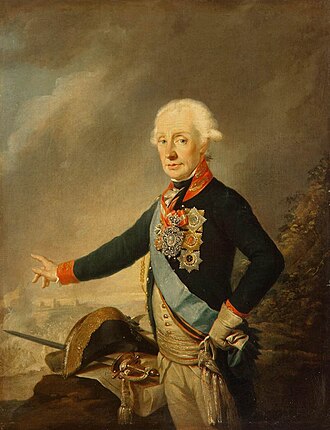
Portrait of Alexander Suvorov

Portrait of Alexander Suvorov

The Science of Victory

He crowed like a rooster at dawn. He bathed in cold water through Russian winters. He drilled alongside his troops and ate what they ate, refused parade uniforms and elaborate ceremony, wrote poetry between campaigns, and sent tender letters to his daughter from whatever muddy field he happened to be occupying. He was also, by any measure, the most successful military commander of the eighteenth century: sixty years of continuous warfare, never defeated in a single engagement, victories over armies that outnumbered him five, eight, and at Kagul nearly ten to one. Count Alexander Vasilyevich Suvorov — later elevated to prince for his Italian campaign — was not merely a brilliant general. He was the man who turned war from an art into a system, and then proved the system by breaking every opponent who tried to use the old one against him.

His career spans the full arc of Catherine's Russia: from the first Turkish wars of the 1760s through the Polish campaigns, the storming of Izmail in 1790, and the extraordinary Italian and Swiss campaigns of 1799. His colleague Pyotr Rumyantsev had laid the groundwork for Russian military reform; Suvorov carried it to its logical extreme, combining Rumyantsev's systematic approach with a personal energy and theatrical command presence that no one before or since has quite replicated. He drilled his men relentlessly in precisely those conditions they would face in combat, believed that high training costs bought cheap victories, and summarized his philosophy in a maxim that commanders still quote: "Train hard, fight easy."

That's the ENTJ signature: external thinking in service of internal vision — a man who saw victory as inevitable and then organized reality to confirm the prediction.

He was also, at various points in his career, insubordinate, eccentric, politically inconvenient, and exhausting to his superiors. Paul I exiled him for refusing to implement the Prussian-style parade-ground reforms the new tsar favored. Russia recalled him when the French started winning. He died in 1800, months after returning from the Swiss campaign, his health broken by the Alpine crossing — the last of his impossible victories. He left behind a daughter he adored, a military doctrine that reshaped European warfare, and the singular distinction of never having lost.

Te

The Science He Built from Scratch

Suvorov called his military doctrine the "nauka pobezhdat" — the science of victory. The title is perfectly Te: not the art of victory, not the philosophy of victory, but the science. Te is extroverted thinking, the dominant function of the ENTJ — a cognitive orientation that organizes external reality into systems, hierarchies, and productive structures, that tests ideas against outcomes rather than internal consistency, that values efficiency as a form of moral seriousness. Suvorov built a complete operational system from first principles, tested it against the most demanding conditions available, and revised it based on results. The result was something no European army had seen before: a force that moved at twice the normal speed, hit with concentrated violence, and expected — was trained to expect — victory.

His tactical innovations were systematic, not improvisational. He replaced the dominant linear formations of the era with column advances that sacrificed defensive spread for offensive momentum. He trained his men in bayonet combat at a time when most European armies still thought musket fire was the primary instrument of battle. He insisted on physical conditioning standards that would have been remarkable in any era. And he built all of this into training regimens so rigorous that his soldiers arrived at battles already knowing what to do — the Te optimization of eliminating confusion at the point of decision by rehearsing every decision in advance.

The storming of Izmail in December 1790 is the canonical demonstration. Izmail was considered impregnable — a vast fortress on the Danube, defended by 35,000 Ottoman troops behind walls that had been specifically designed to resist modern artillery. Suvorov arrived, studied the defenses for six days, built a replica of the walls, drilled his troops on assault techniques for two weeks, and then took the fortress in a single night attack. The Ottoman garrison was nearly annihilated. Russian losses were significant but far below what anyone had predicted as possible. This was not inspiration or bravery — it was Te applied to a problem most commanders had declared unsolvable.

Ni

Seeing the Whole Campaign from the Opening Move

The auxiliary function in the ENTJ stack is Ni — introverted intuition, the long-range pattern recognizer, the function that sees not just the current position but the direction the whole system is moving. Where Te organizes what is, Ni anticipates what will be. In a commander, this manifests as strategic vision: the ability to understand not just this battle but what this battle means for the next one, and the one after that. Suvorov had this in abundance, and it expressed itself most dramatically not in his offensive victories but in the Swiss campaign of 1799 — one of history's most celebrated retreats.

When Suvorov crossed the Alps in the autumn of 1799 — leading an army through the Saint Gotthard Pass, through snowfields and mountain gorges, under pursuit, with inadequate maps, through terrain no army had crossed in modern memory — the operation was widely regarded as a desperate improvisation. It was not. Suvorov understood that the Italian campaign had been politically compromised by Austrian interference, that the coalition was dissolving, and that the only strategically viable outcome was to preserve the Russian army intact for future operations. The Swiss crossing was not a retreat in the demoralized sense; it was a controlled withdrawal that kept 15,000 men operational when they might otherwise have been surrounded and destroyed. The Ni read — "the alliance is failing, preserve the army, the war will continue" — was correct. Every other commander in the coalition was still trying to win battles Suvorov had already grasped were strategically irrelevant.

His Ni also expressed itself in his contempt for the military conventions of his era. He did not work within the established doctrine; he saw through it, understood what it was actually optimizing for (which was often courtly prestige rather than military effectiveness), and replaced it with something that worked. The capacity to see an established system as contingent rather than necessary — to look at how things are done and ask whether this is actually the best way — is Ni at its most useful. For Suvorov, it was the difference between fighting wars as they had always been fought and fighting them as they could be won.

Se

The Body in the Battle

ENTJ is not naturally an extroverted sensing type — Se sits in the tertiary position, available but not dominant. And yet Suvorov's Se was highly developed and deliberately cultivated. He trained his body to an extreme standard: cold water baths, physical exercise, shared conditions with common soldiers, personal presence at the front of assaults. This was not coincidental. He understood, with the Te precision that governed everything else in his life, that a commander who was present in battle had a multiplier effect on troop performance that no amount of planning could fully replicate. Se in service of Te: the body as an instrument of command effectiveness.

His theatrical quality — the rooster crow, the eccentric behavior, the refusal of ceremony — served the same function. Soldiers fought harder for a commander who seemed to have transcended ordinary fear. Suvorov's performance of invincibility was not bravado but calculated psychology, a Te analysis of what actually produces fighting cohesion. He understood that armies run partly on morale, that morale runs partly on the felt presence of a commanding figure, and he cultivated that presence with the same systematic attention he brought to everything else. The eccentricity was real — he was genuinely peculiar — but its utility was not lost on him.

Tertiary Se also has a shadow dimension: the tendency toward physical excess under stress, toward dramatic gestures that can tip from inspiring into destabilizing. Suvorov's insubordination to Paul I — his open contempt for the parade-ground reformers, his refusal to implement drills he regarded as useless — carried this quality. He was right on the merits, wrong on the politics, and the result was exile at the moment when Russia most needed him. The Se impulse to act on immediate conviction, unchecked by the Fe diplomatic awareness he lacked, was his costliest recurring failure.

Fi

Suvorochka and the Sentimental Interior

The inferior function in the ENTJ stack is Fi — introverted feeling, the deep personal values and emotional interior that the Te-dominant type struggles to access cleanly. Fi inferior does not mean absent; it means that the emotional life is powerful but difficult to integrate, that it surfaces in unexpected ways, that when it does surface it tends to come out with unmediated intensity rather than the processed grace of a Fi-dominant type. Suvorov's Fi was concentrated most visibly in two places: his devotion to his daughter and his religious piety.

His letters to Natalia Suvorova — Suvorochka, his little Suvorova — are unlike anything else he wrote. The military dispatches are crisp and precise; the letters to his daughter are tender, poetic, occasionally self-revealing in ways the official documents never are. He worried about her education, her health, her happiness. He sent her advice that mixed the practical and the philosophical in ways that suggest a man trying to transmit everything he valued to the one person he most loved. This is Fi at its most genuine: deep, private, almost embarrassingly sincere, in a man whose public persona was all hard command and strategic vision.

His piety served the same function. Suvorov was genuinely, not performatively, devout — he prayed regularly, attended services, and seems to have found in Orthodox Christianity a framework for the personal values his Te could not fully organize. Fi inferior often seeks external structures to hold the emotional life that the dominant function cannot comfortably process. His religion was not superstition or political theater but genuine inner conviction, the place where the man who spent sixty years organizing violence for the state could locate something that felt like personal integrity. The ferocity he brought to battle and the tenderness he brought to fatherhood were both Fi — the same intensity, pointed in different directions.

Why ENTJ Over INTJ or ESTJ

Why not INTJ?

His colleague Rumyantsev is the INTJ of this era — a man who designed systems from internal models and preferred to let the architecture do the work. Suvorov was constitutionally incapable of that distance. He trained alongside his troops, crowed at dawn in their bivouacs, and personally led the assault columns at Izmail. INTJs command through systems; Suvorov commanded through presence. The Te was too outward-facing, too performance-oriented, too invested in the direct impact of his own energy on external reality, to fit the INTJ mold.

Why not ESTJ?

ESTJs are institutional creatures — they work within established hierarchies, follow precedent, and derive authority from correct procedure. Suvorov spent his career violating established procedure, being insubordinated, exiled for refusing to implement the military fashions of the court, and then vindicated when his approach turned out to be the only one that worked. The Ni driving his Te was visionary and revisionary; he did not maintain systems, he rebuilt them. An ESTJ Suvorov would have implemented the Prussian parade reforms and stayed out of trouble. The actual Suvorov got exiled twice for refusing to.

The distinction that matters is between ENTJ and the other T-dominant types: Suvorov was not a system-follower, a system-maintainer, or a quiet system-designer. He was a system-builder who built out loud, in public, with his body in the room. Te dominant meant that he organized reality — troops, tactics, supply lines, the very doctrine of warfare — through direct, personal, forceful engagement with the external world. Ni auxiliary meant he could see far enough ahead to know which systems were worth building. The combination produced a commander who was simultaneously more disciplined and more dangerous than anyone his era had seen.

He turned war into a science, proved it on every field he ever fought, and died months after his last impossible victory.

The System That Outlasted Him

Suvorov's military doctrine did not die with him. The emphasis on speed, offensive initiative, combined-arms coordination, and the psychological dimensions of combat became foundational to the Russian military tradition — and, through the medium of officers who studied and fought under him, to European warfare more broadly. Napoleon, who faced Suvorov's subordinates in the Italian campaign, is said to have studied his methods with close attention. The column formations, the assault doctrines, the training philosophy: all of it propagated outward from the eccentric Russian general who crowed at dawn.

His colleague Pyotr Rumyantsev had created the intellectual framework that Suvorov then refined and surpassed. Fyodor Ushakov, simultaneously building the Russian naval tradition, shared Suvorov's combination of systematic method and genuine care for his men. Together they represent the generation that made Catherine's Russia a genuine European military power — not through resources alone, which it had always had, but through doctrine and command culture, which it had lacked.

The most intimate dimension of his legacy is his daughter. Natalia Suvorova — Suvorochka — outlived him by forty-four years, the living archive of the man who could not be defeated in the field but who found in fatherhood his most unguarded territory. The letters survive. The affection survives. The science of victory was inherited by armies; the tenderness that made it bearable was inherited by one person, who carried it quietly into a different century.

Logo

Sign up for monthly insights

Monthly insights into history's most influential figures — examined through psychology, context, and cognitive pattern. Less stereotype, more structure. History, but with a mind map.

Powered by Buttondown

||Share