 Historical Figure MBTI
5 min read
#274 · 3-25-26 · Catherinian Russia
Natalia Suvorova
The General's Suvorochka · Daughter of Russia's Greatest Soldier
1775 — 1844
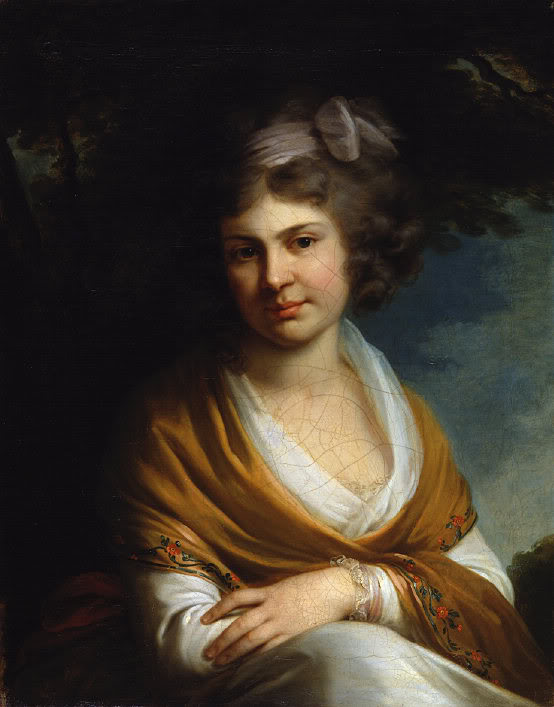
Portrait of Natalia Suvorova
The Heart He Came Home To
Among all the letters that Alexander Suvorov wrote across six decades of campaigning — dispatches to Catherine, orders to generals, verses dashed off in camp — the most tender were addressed to his only daughter. He called her Suvorochka: little Suvorova, his diminutive, his endearment for the child he saw only in fragments between campaigns. Natalia Alexandrovna Suvorova was born in 1775, the same year her father stormed the Pugachev rebel stronghold at Tatishcheva. She grew up in the long shadow of a legend, and yet the surviving record suggests she neither resented that shadow nor sought to escape it.
Her life was shaped by devotion and endurance. She married Count Nikolai Zubov in 1794, a powerful court figure and brother of Catherine's last favorite. Her father approved the match reluctantly — he distrusted the Zubov family's politics — but love for Natalia overcame his misgivings. She buried her husband in 1805, outlived her father by forty-four years, and survived long enough to see Russia transformed from Catherine's empire into something entirely new. When she died in 1844, she was the last living thread to the man who had never lost a battle.
The ISFJ signature is loyalty made structural — a life organized around the people who matter most, tended with a care that does not ask to be noticed.
Natalia Suvorova was not a figure of the court in the way that ambitious women navigated Catherine's Russia. She was, by all evidence, a woman of deep personal loyalty — to her father, to her husband's memory, to the family she sustained through successive losses. Her psychology is best understood not through what she accomplished publicly but through what she preserved privately: the letters, the connections, the continuity of affection across an era of violent change.
Memory as Ministry
The ISFJ character is built on Si — the dominant function of introverted sensing, which processes the world through accumulated personal experience, through patterns recognized in memory, through the texture of what has been lived rather than what might be imagined. For Natalia Suvorova, this manifested as an extraordinary capacity to hold and tend to relationships across time. Her father's letters from campaign — detailed, affectionate, frequently poetic — were not addressed to an abstract daughter but to a specific young woman whose moods, anxieties, and enthusiasms he tracked with close attention across the miles between them. That kind of correspondence only works if both parties invest in memory, in the accumulated record of who the other person is. Natalia was that kind of daughter.
The auxiliary function in ISFJ is Fe — extroverted feeling, directed outward toward the emotional harmony of the people around her. Where Si builds the inner archive, Fe acts on it: tending others, maintaining warmth, smoothing the frictions of social life. In the context of Catherinian Russia, where court life was fractious and alliance-driven, a woman of Natalia's position would have needed exactly this capacity. She was not a schemer — nothing in the record suggests she played political games — but she would have known how to read a room, how to sustain the relationships her family depended on, how to keep faith when faith was all that was left. After Nikolai Zubov's death in 1805, she managed the care of their children and the preservation of her father's memory without apparent bitterness.
The ISFJ's deep difficulty is that they often give more than they receive, and rarely announce the cost. Natalia lived through the death of her father — exiled by Paul I, recalled when Russia needed him again, dead within months of returning to St. Petersburg — and then through her husband's death, and then through four more decades of a Russia her father had helped to shape. The longevity itself feels like an ISFJ trait: a capacity to absorb grief, to continue, to tend the flame of memory long after the warmth of presence is gone.
Connected Figures
Further Reading
- The Art of Victory: The Life and Achievements of Field-Marshal Suvorov — Philip LongworthIncludes the tender letters Suvorov wrote to his daughter Natalia, his Suvorochka, between campaigns.
- Catherine the Great and Potemkin: The Imperial Love Affair — Simon Sebag MontefioreCovers the Zubov family Natalia married into through her husband Nikolai and brother-in-law Platon.
- Russia in the Age of Catherine the Great — Isabel de MadariagaFrames the court and military world that separated Natalia from her famous father for years at a time.
