 Historical Figure MBTI
#1192 · 8-31-26 · The Mughal Empire
Qutlugh Nigar Khanum
Timurid Princess · Mother in Exile
c. 1459–1505
3 min read
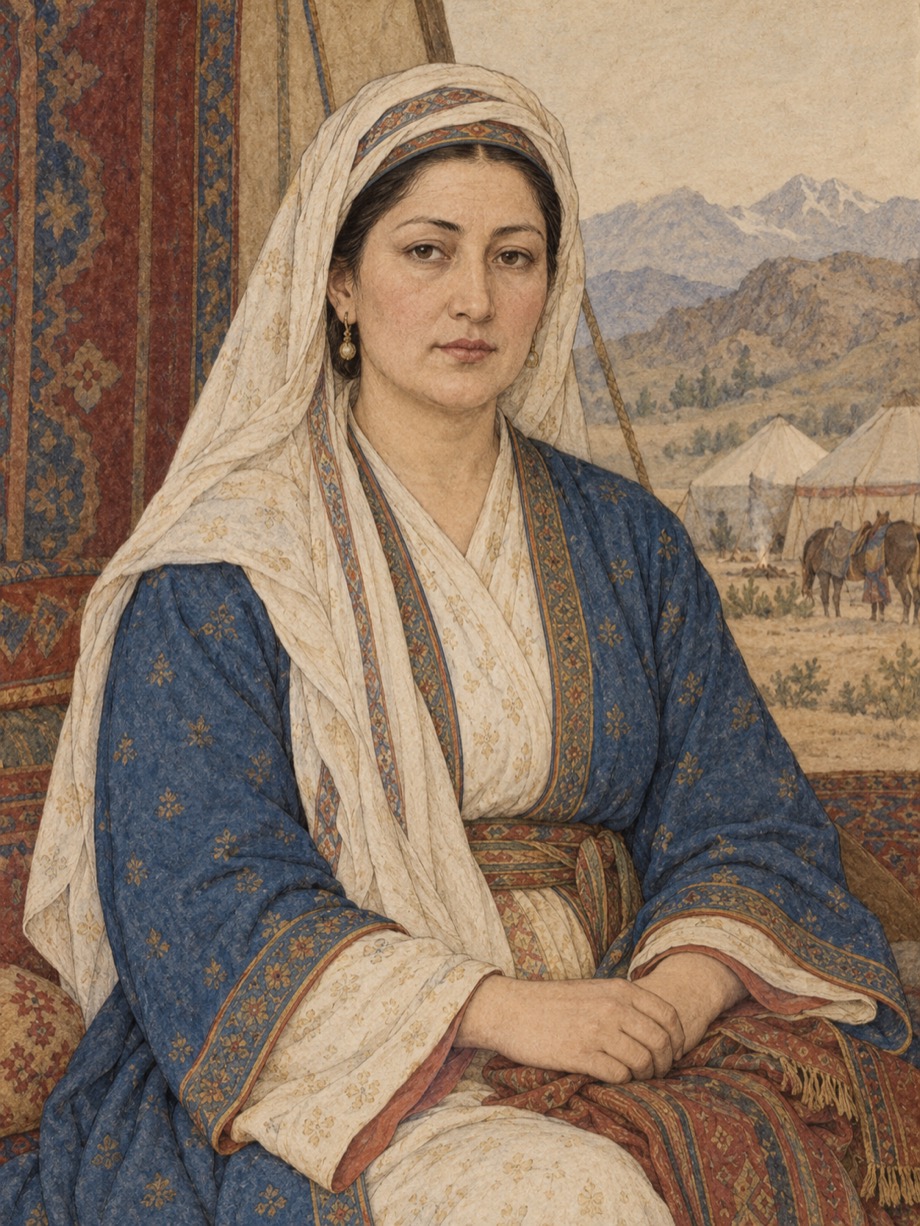
AI-assisted Portrait of Qutlugh Nigar Khanum
A dynasty on the road
Qutlugh Nigar Khanum belongs to the years before the Mughal Empire had a place on the map. Her son Babur remembered her beside him during the intervals when he had neither a secure throne nor a settled home. In a history dominated by cities taken and lost, accompanying a dispossessed prince was itself a sustained undertaking. She traveled with the person whose title could outlast his capacity to protect a household.
She was a daughter of Yunus Khan, ruler of the Chagatai Mongols, and Isan Daulat Begum. Marriage to Umar Shaikh Mirza joined that lineage to a Timurid principality in Ferghana. Their children included Babur and Khanzada Begum. The genealogy mattered politically: a mother could connect a young ruler to the relatives from whom he sought recognition and assistance. Her presence represented more than domestic comfort, although the record does not let us separate affection from dynastic obligation.
Umar Shaikh’s death in 1494 left a boy facing rival kinsmen and unreliable supporters. Babur’s subsequent attempts to possess Samarkand repeatedly unsettled his position. Qutlugh Nigar remained part of the mobile household through much of this troubled period. The familiar label of devoted mother describes a relationship; it should not conceal the insecurity of the roads, the dependence on hosts, or the repeated need to begin again.
Security arrived too late
Kabul offered a different prospect after Babur took control there in 1504. Qutlugh Nigar did not live long enough to share the next two decades of his rule. In June 1505 she fell ill with a fever and died after six days. Her son described unsuccessful treatment, then the burial: he and Qasim Kukaldash carried her to a garden associated with Ulugh Beg Mirza. The sequence is physical and restrained. The heir to competing royal lineages appears carrying his mother’s body.
Gulbadan Begum, writing later, also remembered the garden burial and recorded payment to the relatives who owned the land. The two accounts preserve care over the place of interment. Its precise location is less secure. The Smithsonian essay on Istalif discusses the possibility that this was the garden there, while acknowledging competing identifications near Kabul. An attractive setting should not be allowed to harden a hypothesis into a known grave.
Psychological verdict
Her endurance is visible; a stable personality pattern is not. Most of the evidence comes from her son and subsequent family recollection, without sustained speech or writing of her own. Traveling with Babur may indicate loyalty, practical necessity, a judgment about her children’s future, or several motives together. It cannot establish how she ordinarily took decisions outside these emergencies. Qutlugh Nigar therefore remains Untyped. Leaving the question open preserves the difference between an admired act and a recoverable inner life.
Connected Figures
Further Reading
- Baburnama — Babur; translated by John Leyden and William ErskineThe principal family testimony for her ancestry and place in Babur’s early life.
- The History of Humayun (Humayun-Nama) — Gulbadan Begum; translated by Annette S. BeveridgePreserves the later household account of her burial.
- IV. Istalif, Babur’s Favorite Garden — Elizabeth B. Moynihan; Smithsonian National Museum of Asian ArtExamines her burial and explains why the garden’s precise identification remains uncertain.
