 Historical Figure MBTI
#463 · 4-13-26 · Capetian France
Roger Mortimer
Earl of March · Isabella's Lover and Co-Conspirator
1287 — 1330
8 min read
AI-assisted Portrait of Roger Mortimer
The Man Who Escaped the Tower
On the night of 1 August 1323, a prisoner of the Crown drugged his guards at a banquet, slipped through a hole cut in the kitchen wall of the Tower of London, scaled the outer rampart, and rowed across the Thames to a waiting horse. No one had ever escaped the Tower before. Roger Mortimer, Lord of Wigmore and the most dangerous of the Marcher barons, did it on nerve and timing—and then kept going, all the way to France, where within three years he would return at the head of an army to topple a king.
He was a Welsh-border lord by blood and instinct, raised in the saddle on the lawless frontier where royal writ ran thin and a baron held what he could seize. He rebelled against Edward II and the king's grasping favourites, the Despensers; lost; was caged; broke out; and in exile became the lover and partner of Isabella of France, Edward's own estranged queen. In 1326 the two invaded England, deposed the king, and ruled the realm in all but name through the minority of the boy Edward III. For four years Mortimer was the most powerful man in England. Then he reached too far, and a teenager hanged him at Tyburn.
Mortimer was the ESTP adventurer at full throttle—Se reading the open moment and seizing it, Ti supplying the operator's cunning, and an inferior Ni so dim he never saw the boy-king's reckoning gathering in the dark.
The Gambler's Nerve
Se — dominant
Dominant Se lives in the present and acts on it without hesitation. It reads the physical situation—the unguarded wall, the drowsy sentry, the undefended coastline—and moves before the window closes. Mortimer's whole career is a sequence of seized moments rather than executed plans. The Tower escape is the purest example: not a long conspiracy but a single audacious night, opium in the guards' wine and a boat on the river, the kind of stroke that works only for a man willing to bet his neck on one throw of the dice.
The 1326 invasion was the same instinct at scale. With a few hundred mercenaries and his exiled queen, Mortimer landed in Suffolk on a gamble that Edward II was so hated the country would simply change sides—and it did. Towns opened their gates; the king's support evaporated in days; within months Edward was a captive and the Despensers were dead. A more cautious man would have waited for a larger force or a surer footing. Mortimer read that the moment was ripe and struck, trusting his nerve to carry what calculation could not guarantee.
This is the Se actor in his element: bold, opportunistic, electric under pressure, most alive when the stakes are physical and the clock is running. He did not theorize his way to power. He grabbed it with both hands the instant it came within reach.
The Operator's Cunning
Ti — auxiliary
If Se supplied the daring, auxiliary Ti supplied the mechanics. Mortimer was no mere brawler; he was a tactician who understood how the machinery of power actually worked and how to bend it. The Tower break was not luck—it required correctly judging the guards' routine, the soporific dose, the tide, the route to the coast and onward to France. Each piece had to fit. That is Ti: the cold, impersonal logic of an operator solving the problem in front of him, indifferent to how it looks and interested only in whether it works.
The same instrument served him in government. Through Edward III's minority, Mortimer ran the regency council from behind Isabella, controlling appointments, the treasury, and the levers of patronage without ever holding a formal office that would expose him. He understood that real power lay in the wiring, not the throne—and for a few years he worked that wiring with a craftsman's precision, packing offices with his men and stripping his enemies of the means to resist.
The Charm That Took a Queen
Fe — tertiary
Tertiary Fe in an ESTP is not warmth so much as magnetism—a feel for what a room wants, deployed in service of the moment. Mortimer had it. In the Paris exile he won the confidence and then the heart of Isabella, a queen of France and England both, and turned a personal alliance into the partnership that would topple her husband. That bond was genuine in its way, but it was also strategy: the lover and the queen each gave the other what neither could seize alone, a claim to legitimacy fused to a soldier's nerve.
But tertiary Fe is a fair-weather instrument. So long as Mortimer was rising, the charm held the coalition together. The moment he turned grasping—hoarding lands, titles, and quasi-royal honours—the same social radar that had drawn men to him went dark. He could read a banquet hall, but he could not feel the slow resentment curdling across an entire baronage as he elevated himself above them. Fe at the third slot wins the room and then, fatally, stops listening to it.
The Blind Spot at Nottingham
Ni — inferior
Inferior Ni is the ESTP's fatal weakness: the inability to see the long arc, to feel where the present is bending toward an inevitable end. The man who could read any immediate situation could not read the future—and Mortimer's end was written in exactly the move he could not foresee. Having deposed one king, he behaved as though the game were permanently won. He took the earldom of March, amassed estates that rivalled the Crown's, and paraded a near-royal state that shamed the very boy he was supposed to be serving.
He was almost certainly behind the murder of the deposed Edward II at Berkeley Castle—a crime that bound the regime to him but also marked him as the man who had killed an anointed king. And he sidelined Edward III without ever asking what that humiliated teenager might become. That is the inferior-Ni blind spot in its starkest form: the master of the present moment, utterly unable to imagine the reckoning maturing in the dark.
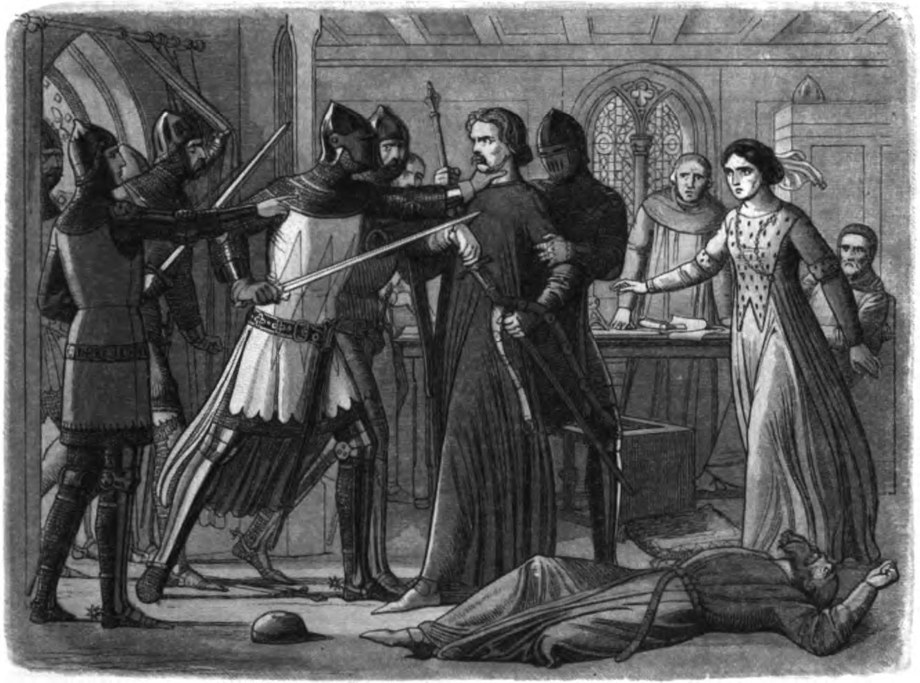
It came on the night of 19 October 1330. The seventeen-year-old king led a band of armed men through a secret tunnel into Nottingham Castle, surprised Mortimer in the queen's own apartments, and seized him before he could reach a weapon. The man who had escaped the Tower by night was taken by night, and the trap he never saw coming closed for good. Weeks later he was dragged to Tyburn and hanged like a common felon. He had flown too high, and the one thing he could not do was look up and see how far the fall would be.
Why ESTP Over ENTJ
Why not ENTJ?
The ENTJ is a strategist who builds toward a long-range vision—a campaign mapped years ahead, each move serving a structure that already exists in the mind. Mortimer rose by the opposite method: audacity and the seized moment, a Tower escape and a gambler's invasion and a midnight grab at power, none of it the product of a master plan. And where the ENTJ's dominant Ni would have war-gamed the boy-king's eventual rebellion years in advance, Mortimer was blind to it—the inferior-Ni failure that no commander with genuine strategic foresight would have made.
The distinction is between the architect and the opportunist. An ENTJ wins by seeing the whole board and steering toward a designed endgame; Mortimer won by pouncing on whatever the present handed him and trusting his nerve to do the rest. It made him magnificent in the moment and fatally short-sighted over the long one. He could take a kingdom on a single bold throw—but he could not see two moves ahead, and that is precisely why a seventeen-year-old caught him in the dark.
Connected Figures
Further Reading
- The Greatest Traitor: The Life of Sir Roger Mortimer, 1st Earl of March — Ian MortimerThe definitive modern biography — a vivid, deeply researched account of the Tower escape, the invasion, and the fall at Nottingham.
- Isabella: She-Wolf of France, Queen of England — Alison WeirThe fullest life of Isabella, charting her transformation from neglected queen to co-ruler alongside Mortimer.
- Isabella and the Strange Death of Edward II — Paul DohertyA close investigation of the deposition and the murky end of Edward II — the crime that shadowed Mortimer's regime.
