 Historical Figure MBTI
#464 · 4-13-26 · Capetian France
Louis X
King of France · The Quarreler
1289 — 1316
7 min read
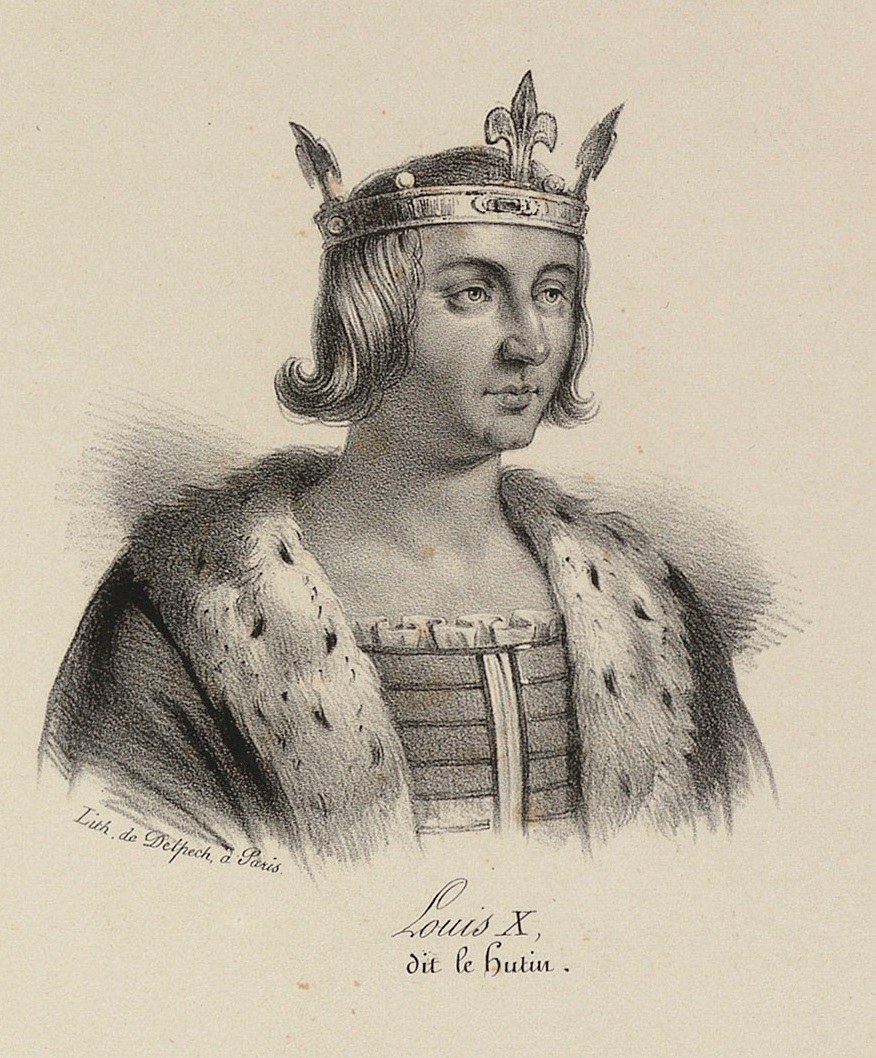
AI-assisted Portrait of Louis X
The Quarreler
They called him le Hutin — the Quarreler, the Headstrong, the hot-tempered — and the nickname has outlasted everything else he did. Louis X was the eldest son of Philip IV, the cold, controlling king who had broken the Templars and humiliated the papacy; he was the first of three brother-kings who would rule France in rapid succession and then leave it without a male heir. Where his father governed by patient, glacial calculation, Louis ruled by appetite and reflex. He reigned for less than two years, accomplished almost nothing of lasting design, and is remembered chiefly for a sex scandal, a hanging, and the freak way he died.
The reign (1314–1316) was a sequence of reactions rather than a program. It opened with his wife, Margaret of Burgundy, convicted in the lurid Tour de Nesle adultery affair and dispatched to a prison cell where she conveniently died — clearing the way for him to remarry. It continued with his capitulation to the noble leagues that had risen against his father, to whom he fed Philip's hated chief minister, Enguerrand de Marigny, on the gallows. He issued a scatter of showy, popular gestures — a decree letting serfs purchase their freedom, the readmission of the Jews expelled by his father — and then, in June 1316, he played a heated game of real tennis, drank a draught of chilled wine, and was dead within days at twenty-six. He is the ESTP on a throne: all impulse, appetite, and the moment, with no eye on the morning after.
Louis X reigned, but he did not govern. He met every crisis head-on and left no design behind it — the Se king of the present tense, settling scores and chasing the appetite of the hour, with no inferior-Ni long view to tell him where any of it led.
The King of the Present Tense
Se — dominant
Dominant Se lives in the immediate, physical, reactive world — what is in front of it right now — and Louis lived there completely. The nickname itself is the tell: a man known to his own court for quarrels, for a temper that fired before it thought. He was a king of the body and the moment, fonder of the hunt and the tennis court than of the council chamber, governed by the appetite of the hour rather than by any cooler faculty. The very manner of his death is the dominant function rendered as fate: hot and winded from a hard game of real tennis, he reached for chilled wine and drank it down. It killed him. Even his exit was an act of physical impulse with no thought for consequence.
His statecraft had the same texture. Faced with the noble revolt he inherited, he did not strategize his way out of it — he reacted, and gave the leagues what they were shouting for. His freedom-for-serfs decree and his readmission of the Jews were gestures of the immediate moment: things that played well in the room, that bought goodwill or cash today, rather than steps in any larger architecture. Se reads the present situation with vivid clarity and responds to it directly. What it does not do is build. Louis met each day as it came and answered it with the nearest available move.
Settling the Score
Ti — auxiliary
Auxiliary Ti gives the Se king a private internal logic — a sense of what squares and what does not, of accounts to be balanced — that he applies in sharp, local bursts rather than across a grand design. In Louis it surfaced as the instinct to settle scores and clear the board. Marigny, his father's indispensable financial brain, was exactly the kind of figure a patient ruler keeps and exploits; Louis instead let the man be tried on trumped-up charges and hanged, because the nobles wanted blood and because it resolved a tension in front of him. The logic was real but narrow: it answered the immediate problem cleanly and asked nothing about what destroying his father's administration would cost the crown.
The same cold practicality ran through his first marriage's end. Margaret's disgrace in the Tour de Nesle affair was a catastrophe, but it was also a solution: a wife convicted of adultery and shut away could be quietly removed from the equation, leaving him free to marry again and pursue the male heir the dynasty needed. Ti in tandem with Se is tactically shrewd in the small frame — it sees the move that resolves the present knot — without the long structural reasoning that would have asked where the pieces landed once they fell.
The Crowd-Pleasing Gesture
Fe — tertiary
Tertiary Fe in an Se-dominant ruler shows up as a feel for what a crowd wants to hear and a taste for the popular gesture — warmth pitched outward, in service of the moment's applause. Louis had it. His decree permitting serfs to buy their liberty was wrapped in high-sounding language about all men being born free, and his readmission of the Jews his father had expelled played as a stroke of royal generosity. These were Fe gestures: moves calibrated to the mood of the room, designed to be liked, to soften a rocky accession and court the goodwill of subjects and nobles alike.
But tertiary Fe is the gesture without the depth, the performance of magnanimity rather than its patient substance. The serf decree raised more revenue than freedom; the readmission of the Jews came hedged and conditional and would not outlast the immediate need. Louis could read what would please a faction and hand it over — he capitulated to the leagues for exactly this reason — without any durable commitment underneath. The applause was the point, and the applause was the moment, and the moment passed.
No Eye on the Morning After
Ni — inferior
Inferior Ni is the missing long view — the faculty that reads where the present is heading, that holds a single design across years — and in Louis it is most visible by its absence. He lurched from crisis to crisis: the scandal, the revolt, the hanging, the second marriage, the popular decrees, each handled on its own terms with no thread running through them. There was no Capetian project here, no patient consolidation of the kind his father had pursued for decades. Louis governed forward one day at a time and trusted the future to take care of itself.
The future did not. He died suddenly at twenty-six leaving a pregnant second queen and no living son. The posthumous child, John I, was born a king and lived five days. With the male line of the direct heir extinguished, the crown passed to Louis's brother, Philip V, who moved to bar Louis's surviving daughter from the succession — manufacturing the precedent that later hardened into the Salic law and shaped French royal inheritance for centuries. It is the inferior function's revenge in its purest form: the king who never looked past the next move left behind, as his single largest historical consequence, an accidental succession crisis he did nothing to design and could not have foreseen.
Why ESTP Over ESTJ
Why not ESTJ?
His own mother, Joan I of Navarre, was the ESTJ in the family: a reigning queen who defended her territory and built institutions. An ESTJ king governs — he imposes order, constructs systems, and administers with disciplined command. Louis did the opposite. He was reactive where an ESTJ is constructive, ruling by temper and the move of the moment rather than by any standing structure, and he left behind no reform that held. That is Se-Ti improvisation, not the methodical Te command of the ESTJ.
The distinction is the difference between reigning and governing. An ESTJ takes a disordered realm and builds it into a working system; Louis took a difficult accession and answered each problem with the nearest gesture, never assembling the pieces into anything. He settled scores, played to the crowd, and chased the appetite of the hour, a king fully alive to the present and blind to its consequences. He wore the crown for two years and changed almost nothing about France except, by dying at the wrong moment, who would inherit it.
Connected Figures
Further Reading
- The Reign of Philip the Fair — Joseph R. StrayerThe definitive study of the father's reign — essential for understanding the consolidated, debt-ridden kingdom Louis inherited and failed to manage.
- Capetian France 987–1328 — Elizabeth Hallam & Judith EverardThe standard English survey of the dynasty, with clear treatment of the succession crisis Louis's heirless death set in motion.
- The Capetians: Kings of France 987–1328 — Jim BradburyA readable dynastic history that places le Hutin's brief, turbulent reign in the long arc of the house he helped bring to its end.
