 Historical Figure MBTI
#456 · 4-13-26 · Capetian France
Philip IV
King of France · The Iron King Who Broke the Templars and the Pope
1268 — 1314
13 min read
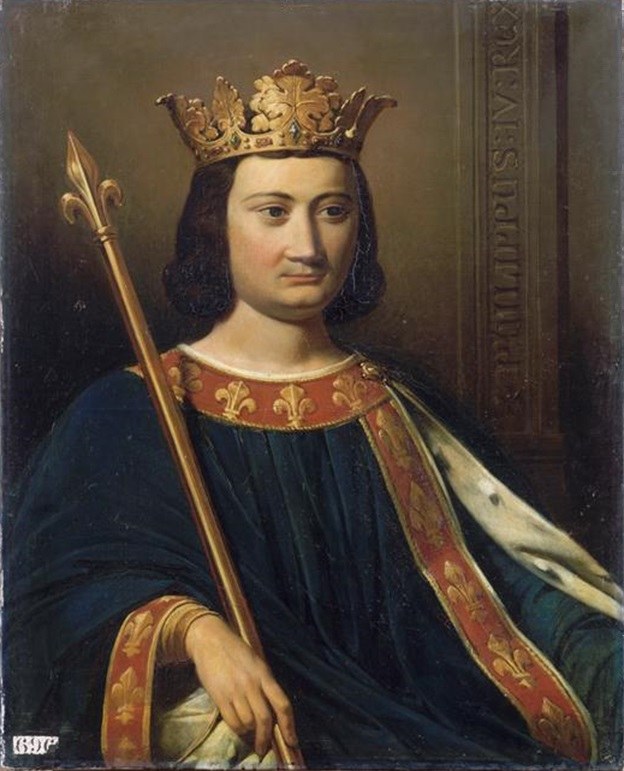
AI-assisted Portrait of Philip IV
The Statue on the Throne
His own bishop, Bernard Saisset, said the most damning thing anyone ever said about him: “He is neither a man nor a beast. He is a statue.” Philip IV of France — called le Bel, the Fair, for a famously beautiful face that never told you anything — reigned for twenty-nine years and remained, to the people who stood closest to him, perfectly opaque. He did not rage. He did not explain. He let the lawyers talk while he watched, and then the thing he had decided long before simply happened. By the time you understood what Philip wanted, it was already done, and the institution that had stood in his way — the papacy, the Knights Templar, the great feudal nobility, the moneylenders of his own realm — was on the ground.
He was born around 1268, grandson of Louis IX, the crusading saint-king who washed lepers' feet and dispensed justice beneath an oak at Vincennes. Philip inherited the throne in 1285 and made it into something his grandfather would not have recognized: a cold engine of centralized power, run by a cadre of professional lawyer-bureaucrats, financed by whatever could be seized, taxed, debased, or extorted. The saint had ruled by moral authority. The grandson ruled by the law as an instrument — bent to whatever end the crown required, and applied without mercy or hurry. Where Louis sought to be loved by God, Philip sought to be obeyed by everyone, and he pursued that single end with a patience that looked, from the outside, like a kind of inhuman stillness.
That stillness is the key to the man. Behind it ran one of the most relentless and far-sighted political programs of the Middle Ages — a vision of total royal supremacy over every rival power in France, conceived early, concealed completely, and executed in cold sequence over decades. He is the INTJ in the seat of a medieval king.
Philip IV was the INTJ as sovereign — a single hidden vision of total royal supremacy, masterminded behind an unreadable face and executed through lawyers and ledgers with a patience that contemporaries mistook for the stillness of stone.
The Vision No One Was Allowed to See
Ni — dominant
Dominant Ni is a single converging vision of how things must end, held privately and pursued underground until the world is forced to catch up with it. Philip's vision was as simple to state as it was vast to execute: in France, there would be no power above or beside the king. Not the Church, which claimed authority over kings. Not the Templars, a sovereign military order answerable only to Rome. Not the feudal magnates, with their private jurisdictions. Not even money itself, which Philip treated as another rival to be mastered rather than a resource to be respected. Everything — spiritual, military, financial — was to be subordinated to the crown. He never published this program, never argued for it in a manifesto. He simply lived inside it and moved toward it, year after year, as if the outcome were already settled and he were merely waiting for events to confirm it.
The secrecy was not incidental; it was the method. Ni works best unobserved, because a vision announced is a vision that can be resisted. Contemporaries found him literally unreadable — hence the “statue.” He let councils debate, let his legists frame the arguments, let the papacy and the nobles believe they were negotiating with a conventional king, and all the while the real decision had been made somewhere they could not see. When the blow fell it had the quality of something inevitable. The arrest of every Templar in France on a single morning in October 1307 was not an improvisation; it was the visible surfacing of a plan that had been assembled in silence, sealed orders sent weeks ahead to royal agents across the realm with instructions not to open them until the appointed dawn. The whole machinery of a kingdom moved at once, and almost no one had known it was coming.
What makes this Ni rather than mere ruthlessness is the time horizon and the singularity of the aim. The war on Pope Boniface VIII, the destruction of the Templars, the expulsion of the Jews, the relentless squeezing of the coinage — to his contemporaries these looked like separate quarrels with separate enemies. They were not. They were facets of one idea, pursued across decades by a mind that saw the end state long before anyone else could even perceive the design. Philip did not react to the medieval order; he had a picture of what should replace it, and he spent his life quietly walking the world toward that picture.
Rule by Lawyers and Ledgers
Te — auxiliary
If Ni held the vision, auxiliary Te built the apparatus that imposed it. Philip ruled less through the sword than through the document, the procedure, the audit, and the court. He surrounded himself with a new kind of servant — the légiste, the trained Roman-law jurist with no feudal stake and total loyalty to the crown — and turned the royal administration into the most sophisticated machinery of state in Europe. Men like Guillaume de Nogaret and Enguerrand de Marigny were not companions; they were instruments, chosen for competence and used until they had served their function. Through them Philip professionalized taxation, expanded the Parlement of Paris into a working supreme court, and gave the abstraction of royal sovereignty a permanent bureaucratic body. This is Te in its purest political form: power exercised through systems rather than personal charisma, so that the king's will outlived any single confrontation.
The destruction of the Templars shows the method whole. Philip did not simply seize the order by force — he prosecuted it. He had the legal apparatus manufacture a case: arrests on a charge of heresy, confessions extracted under torture, a paper trail of depositions, and finally the machinery of Church and state grinding the order out of existence with the appearance of due process. The wealth flowed to the crown; the Grand Master, Jacques de Molay, went to the stake in 1314. Against Boniface VIII it was the same instinct: where an earlier king might have raised an army, Philip convened assemblies, marshaled legal arguments about the limits of papal authority, and dispatched Nogaret to Anagni to seize the pope's very person and put him on trial. The aged Boniface died of the shock weeks later. Then, rather than fight Rome again, Philip simply engineered the election of a compliant French pope, Clement V, and drew the papacy itself onto French soil at Avignon — the beginning of the roughly seventy-year exile that later writers would call the Church's “Babylonian Captivity.”
The same coldly instrumental logic governed his treatment of money. Chronically at war with Flanders and chronically broke, Philip expelled the Jews of France in 1306 and confiscated their property and the debts owed to them; he repeatedly debased the coinage to conjure revenue, devaluing the currency so severely that it wrecked confidence across the realm and earned him a place in Dante's verse as a counterfeiter, “the one who falsifies the coin.” To Philip these were not moral questions but engineering problems — inputs to be optimized in service of the crown's solvency and the crown's supremacy. Te does not ask whether a lever is decent. It asks whether it works, and Philip pulled every lever the law and the treasury could offer him.
The Private Conviction Behind the Mask
Fi — tertiary
The temptation is to read Philip as a pure cynic — a man who wielded heresy charges and holy war as bald instruments while believing in nothing. The evidence resists that. Tertiary Fi gave Philip a real and unusually rigid inner conviction: a deep, almost devotional belief in the sacred dignity of the French monarchy and in his own role as its instrument. He was personally pious in the austere style of his grandfather, given to fasts and relics; he seems genuinely to have believed that the king of France held a holiness of his own, answerable to God directly and not through Rome. When he attacked Boniface, he did not experience it as sacrilege. He experienced it as defending a higher right. That is the signature of tertiary Fi — not warmth toward people, but an intense private certainty about what is right, sealed away inside and rarely justified to anyone outside.
This is what made him so much more dangerous than a mere opportunist. A cynic can be bargained with; a man convinced of his own rectitude cannot. Philip pursued the Templars with a relentlessness that went beyond their gold, prodding the proceedings forward even when his own pope tried to slow them, as though he were sincerely persuaded of their guilt and of his duty to purge them. The coldness others read as emptiness was, more likely, the opposite: a value system held so far inward, and guarded so completely, that no contemporary could reach it or read it. The statue was not hollow. It was sealed.
Fi in the tertiary position is also brittle, and Philip's rigidity could shade into something darker. The famous Tour de Nesle affair late in his reign — in which his daughters-in-law were accused of adultery and their alleged lovers were tortured, flayed, and executed with extraordinary savagery — reads as inferior Fi striking out: a violation of the royal family's sacred honor met not with cool statecraft but with personal, almost vengeful cruelty. The private code that justified breaking a pope could also turn ferocious when it felt itself profaned.
The World He Could Not Feel
Se — inferior
Inferior Se is the blind spot of the visionary strategist: a weak grip on the concrete present — on how things land in the immediate, physical, human world. Philip lived so far inside his long design that he was strangely deaf to its texture as people actually experienced it. The coinage debasements are the clearest case. As an abstraction they balanced the books; as a lived reality they impoverished his subjects, shattered trust in the currency, and provoked riots in Paris so violent that the king had to take refuge in the Temple — the Templars' own fortress — while the mob raged outside. He had optimized the numbers and missed the street. He could foresee the end of an institution decades out, yet repeatedly failed to feel the present-tense fury his methods generated in the men and women living through them.
The same deafness shaped how he was remembered. Philip won nearly every confrontation and was loved in none of them. He left France larger, more centralized, and more modern — and left himself a figure of dread rather than affection, a king his own people associated with torture, broken faith, and bad money. The inferior function exacts that price: total mastery of the strategic horizon, near-blindness to the human surface. He could see the shape of the future state with uncanny clarity, and could not read the room he was standing in.
Then there is the legend, which captures the inferior-Se reckoning better than any chronicle. As the flames took him in 1314, Jacques de Molay is said to have summoned both Philip and Clement V to God's judgment within the year. Both were dead before it ended — Clement in April, Philip in November, thrown from his horse in a hunting accident, brought down at last by the brute physical world he had spent a lifetime trying to govern from behind a screen of paper. His three sons each took the throne in turn and each died without a surviving male heir, extinguishing the direct Capetian line within fourteen years. The statue had mastered everything except the one thing inferior Se never lets the visionary fully control: the unscripted, bodily, contingent present, where horses throw their riders and bloodlines simply end.
Why INTJ Over ENTJ or INTP
Why not ENTJ?
The ENTJ is the obvious read for a king this commanding, and it is wrong in one decisive respect: orientation. The ENTJ commands outward — fills the room, argues the case, leads visibly from the front. Philip did the opposite. He was silent, inward, and famously unreadable, masterminding through others — Nogaret made the legal arguments, Marigny ran the administration, the assemblies did the talking — while the king himself sat behind the screen and revealed his hand to no one. That is the Ni-dominant who works underground, not the Te-dominant who takes charge in the open. A “statue” is not an executive presence; it is a vision withheld.
Why not INTP?
The INTP shares the inwardness and the cold detachment, but stops at analysis — it maps a system and observes where it fails, content to be right in private. Philip did not observe. He executed. The vision was relentlessly imposed on the real world: popes broken, an order liquidated through manufactured trials, a currency re-engineered, a whole administrative state stood up and made permanent. That drive to actualize the idea through procedure, force, and institution-building is auxiliary Te, not the detached Ti of the analyst. The INTP critiques the order; Philip rebuilt it.
The distinction that settles it is the pairing of a hidden vision with merciless execution. The ENTJ would have shown his hand; the INTP would have kept his hand and done nothing with it. Only the INTJ holds a private, long-range certainty about how the world must end — and then quietly builds the machinery, over decades, to force the world into that shape. Philip saw the end of the medieval balance of power in France long before anyone else could perceive the design, told no one, and spent his reign walking the kingdom toward it through lawyers and ledgers. That is the INTJ in a crown.
Connected Figures
Further Reading
- The Reign of Philip the Fair — Joseph R. StrayerThe standard English study — definitive on the administrative state Philip built and the legists who ran it.
- The Trial of the Templars — Malcolm BarberThe authoritative account of the 1307 arrests, the tortured confessions, and the destruction of the order.
- Philippe le Bel — Jean FavierThe major French biography — comprehensive on the politics, the finances, and the man behind the mask.
- The Monarchy of Capetian France and Royal Ceremonial — Elizabeth A. R. BrownEssential essays on Philip's kingship, the royal cult, and the meaning of his sacral image of monarchy.
