 Historical Figure MBTI
#455 · 4-12-26 · Capetian France
Louis VIII
King of France · The Lion Who Reigned Three Years
1187 — 1226
6 min read
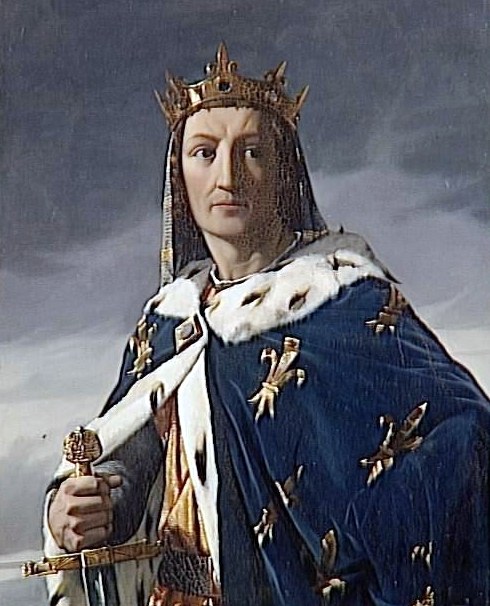
AI-assisted Portrait of Louis VIII
The Lion in a Three-Year Reign
He was king of France for thirty-eight months, and in that span he came nearer to a second crown, drove the monarchy deeper into the south, and changed the map of his kingdom more than men who reigned for decades. They called him Louis the Lion, and the name was earned in the field rather than the council chamber. Born in 1187, the only son to survive of the great Philip II Augustus, he spent his adulthood as a soldier in his father's long war against the Plantagenets, and when he finally took the throne in 1223 he treated kingship as a continuation of that war by other means.
His most audacious act came before he was ever crowned. In 1216 the rebel barons of England, in open revolt against King John, offered Louis their crown; he sailed across the Channel, was proclaimed king in London, and at his high-water mark held more than half of England. The throne slipped away within the year, and he renounced the claim in 1217. As king of France he poured the same martial energy into the Albigensian Crusade, marching armies into Languedoc against the Cathars and bringing much of the south under royal control before dysentery killed him in 1226, at thirty-nine, leaving the kingdom to a twelve-year-old boy. He was the ESTJ on campaign: a commander executing an inherited program with force, method, and almost no hesitation.
Louis VIII did not invent a vision; he enforced one. He took the openings handed to him — a rebel crown, a holy war, a father's unfinished conquests — and pressed each by main force. That is Te commanding and Si holding the line: the tireless operator of a design already drawn.
The Crown Asserted by Force
Te — dominant
Dominant Te reads the world as a set of objectives and the resources available to meet them. Louis VIII's career is a sequence of such calculations carried out without flinching. When the English barons turned against King John and the throne came into reach, he did not theorize about whether a French prince could rule England; he raised a fleet, landed at Sandwich, and marched on London. The campaign was a logistical and military undertaking, run like one. When it failed — the death of John removed the barons' grievance, and the English rallied to John's boy-king — Louis cut his losses and negotiated his withdrawal. Te does not cling to a lost position out of pride; it tallies the account and moves on.
As king he turned that same instrument southward. The Albigensian Crusade had ground on for years under barons and legates; Louis made it a royal enterprise and prosecuted it with a general's efficiency, taking town after town across Languedoc and folding the conquests directly into the crown's domain. The point was never doctrinal subtlety — it was control: territory, fortresses, and the submission of the southern lords to Paris. Even his death reads in character. He fell ill on campaign and kept the army moving rather than turn back, dying with the work in hand.
What marks the dominant Te is the absence of drama in any of it. The English adventure, the crusade, the steady annexation of the Midi — each was approached as an executive problem with a forceful solution and pursued until it yielded or proved unwinnable. He was a king who governed by doing.
His Father's Program, Continued
Si — auxiliary
If Te supplied the drive, auxiliary Si supplied the template. Louis did not have to imagine what a strong French monarchy looked like; he had grown up inside one. Philip II Augustus had spent a long reign wresting Normandy, Anjou, and the bulk of the Plantagenet holdings from King John, multiplying the royal domain and tightening the machinery of administration. Louis inherited that program whole and simply kept it running. His southern conquests were the same project — the expansion of the crown's lands and authority — pointed at a new frontier.
Auxiliary Si is loyalty to a proven method. Louis worked the established institutions of kingship rather than reinventing them, honored the precedents his father had set, and continued the dynastic patience that had built Capetian power one acquisition at a time. His most consequential domestic act, an ordinance regulating the debts owed to moneylenders, was administrative housekeeping in the conventional medieval mode — governance as the maintenance of an existing order. He was the dutiful heir who took a working system and pressed its advantages, not the innovator who tears it up.
The Opening Seized
Ne — tertiary
Tertiary Ne in an ESTJ is not a wellspring of grand schemes; it is an opportunism — the ability to recognize a possibility when events hand it over and to act on it before the moment closes. The English invasion is the clearest case. Most heirs to the French throne would have left the rebel barons' offer where it lay, a tempting but impractical prize. Louis saw a real opening — a divided England, a hated king, a claim he could dress in his wife's Plantagenet descent — and gambled on it.
But tertiary Ne is a supporting player, and its limits showed. The English gambit was a seized chance, not a sustained strategy; when the political ground shifted, he had no deeper design to fall back on and withdrew. The crusade in the south was likewise an opportunity exploited — an existing war he could turn to the crown's profit — rather than a vision conceived from nothing. Louis was alert to the openings the age offered him; he was not the man who dreamed up new ones.
Conviction Beneath the Armor
Fi — inferior
Inferior Fi surfaces in the ESTJ as a small set of fixed personal commitments held with unexamined intensity — a few things that simply are not negotiable. Louis's appeared as a flinty, conventional piety. The crusade against the Cathars was a campaign of conquest, but it was also pursued with the genuine, uncomplicated conviction that heresy was an enemy to be destroyed; there is no sign he troubled himself with the moral weight of the killing. His marriage to Blanche of Castile was, by the standards of dynastic unions, a genuinely loyal partnership, and he trusted her judgment enough that the realm passed naturally into her regency at his death.
What inferior Fi does not produce is introspection or doubt. Louis seems never to have weighed whether his ambitions were just or his methods defensible — the questions a more developed feeling function might have raised. His values were inherited, fixed, and rarely interrogated: the rights of his crown, the duty of orthodoxy, the loyalties of blood and marriage. They drove him hard, but from beneath the surface, where the ESTJ keeps the convictions it does not discuss.
Why ESTJ Over ENTJ
Why not ENTJ?
The ENTJ is the strategist — the commander who conceives a new design and bends events toward it. Louis VIII did the reverse: he executed an inherited program by force and convention, extending the conquests his father had begun and seizing the openings the age handed him — a rebel crown, a holy war already underway — rather than originating a grand vision of his own. His decisive frame was Si, the proven method continued, not Ni, the long-range design imagined. He was a powerful operator of an existing system, not its architect.
The distinction is between the king who draws the map and the king who marches across it. Philip Augustus drew the map — the strategic project of dismantling the Plantagenet empire and building a centralized French crown was his. Louis inherited that finished design and pressed it with relentless Te and dutiful Si, conquering, annexing, and consolidating with formidable energy but no fresh conception. That is the ESTJ at his most effective: not the visionary, but the force that makes the vision real.
Connected Figures
Further Reading
- Capetian France 987–1328 — Elizabeth Hallam & Judith EverardThe standard narrative survey of the dynasty — situates Louis VIII's brief reign between the achievements of Philip Augustus and Louis IX.
- The Capetians: Kings of France 987–1328 — Jim BradburyA reign-by-reign account of the line; strong on how each Capetian extended the crown's lands and power.
- Saint Louis — Jacques Le GoffThe definitive biography of Louis VIII's son — illuminating on the realm and regency the Lion left behind.
