 Historical Figure MBTI
#447 · 4-12-26 · Capetian France
Louis IX
King of France · Saint · The Crusader Who Died for Jerusalem
1214 — 1270
10 min read
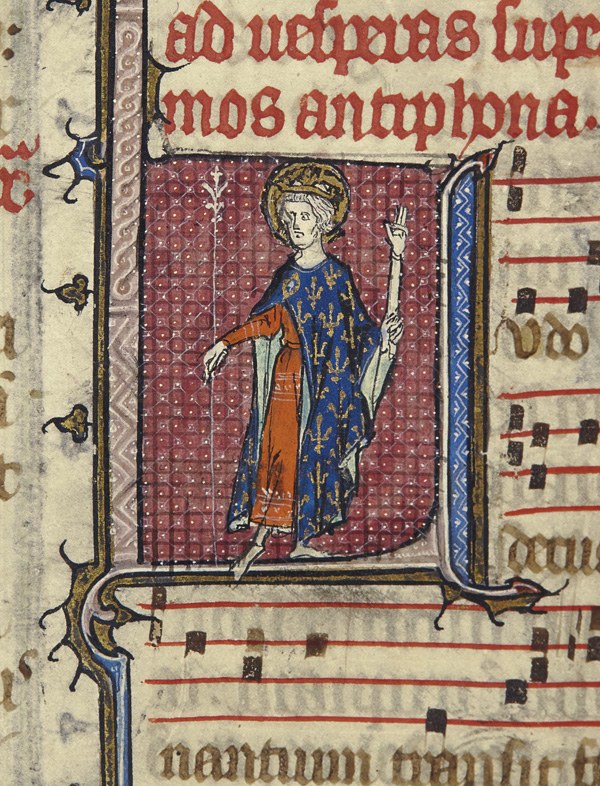
AI-assisted Portrait of Louis IX
The King Who Made Holiness a Throne
Of the sixty-odd men who wore the crown of France across a thousand years, exactly one was made a saint. Louis IX came to the throne in 1226 as a boy of twelve, under the iron regency of his mother Blanche of Castile, and by the time he died of dysentery before the walls of Tunis in 1270 he had become something medieval Christendom had been waiting centuries to see: the ideal Christian king made flesh. He heard several masses a day, wore a hair shirt beneath his robes, fasted until his body broke, and washed the feet of lepers with his own hands. He also reformed the royal courts, banned trial by ordeal, sent investigators across the realm to punish his own corrupt officials, and dispensed justice in person beneath an oak tree at Vincennes — so that rival monarchs, when they could not settle their quarrels, asked him to arbitrate.
What is striking is not the contradiction but its absence. The piety and the governance were the same impulse: a superhuman fidelity to an inherited ideal of what a king was supposed to be. Where another ruler might have treated Christian kingship as a useful fiction, Louis took it as a literal job description and performed every clause of it with the conscientiousness of a man who could not bear to leave a duty half-kept. He bankrupted himself buying the Crown of Thorns from the desperate Latin emperor in Constantinople and raised the jewel-box Sainte-Chapelle in Paris to house it. He led two crusades and was captured on the first, ransomed for a sum that staggered his treasury, and died on the second. He embodied the rule; he did not reinvent it.
Louis IX was the ISFJ raised to the pitch of sainthood — a man who took the inherited ideal of the Christian king and kept its every concrete observance with a conscientious fidelity so total it consumed his body, his fortune, and finally his life.
The Faith of Habit and Hands
Si — dominant
Dominant Si lives in the concrete, the repeated, and the inherited. It does not seek a private vision of the divine; it keeps the practices it was given, and it keeps them exactly. Louis's religion was almost entirely a religion of observance. He heard the canonical hours and several masses every day, no matter the campaign or the council waiting on him. He fasted on the prescribed days and then beyond them. He recited his prayers at fixed intervals, had himself woken in the night for matins, and wore the hair shirt and the discipline of self-mortification that the ascetic tradition had handed down. This was not theology; it was practice — faith expressed as a fixed, bodily, daily routine that never varied and never lapsed.
The same Si runs through his charity, which was relentlessly hands-on rather than administrative. He fed beggars at his own table and sometimes carved their meat for them; he visited hospitals and tended the sick in person; he washed the feet of lepers, the most physically repellent act of humility the age could imagine, and did it as ordinary discipline rather than spectacle. When he acquired the Crown of Thorns, he carried the relic into Paris barefoot and bareheaded. The relic itself is the Si instinct in its purest form: faith anchored to a physical, tangible object handed down through the centuries, the past made present and touchable. He spent a king's ransom on a thing precisely because it was concrete and continuous with sacred history.
And it governed how he ruled. Louis treated the office of king as an inherited trust to be guarded exactly as received, not improved or reimagined. His reforms — the enquêteurs sent out to hear complaints and punish corrupt royal agents, the abolition of judicial duel and trial by ordeal, the curbing of private war among his nobles — were not the projects of a visionary remaking society. They were the conscientious housekeeping of a man determined that the realm entrusted to him should be administered justly and cleanly, down to the last bailiff. He sat under the oak at Vincennes and heard ordinary subjects' cases himself because a good king was supposed to be accessible, and Louis kept the rule.
The Crown of Thorns is the dominant-Si instinct made visible: faith fastened to a concrete object continuous with the sacred past, carried barefoot into Paris and housed in a building raised for no other purpose than to hold it.
The Justice of a Tender Heart
Fe — auxiliary
Auxiliary Fe gives Si a direction beyond the self: a deep, active care for the welfare of others and a sense that the community's good is a duty laid on the one who governs it. Louis's charity was not only Si's habit but Fe's feeling. Contemporaries describe a man visibly moved by suffering, who could not pass the poor without giving, who founded hospitals and houses for the blind and for reformed prostitutes, and who kept lists of the needy he supported. The hundreds of beggars fed daily in his household were not an abstraction to him; he knew that a king stood in a relationship of obligation to the least of his people, and he honored it personally.
His celebrated justice was Fe institutionalized. Louis cared about fairness in a felt, human way — he wanted his subjects, even the humblest, to be heard and protected against the powerful, including his own officials. The enquêteurs existed so that a peasant wronged by a royal bailiff had somewhere to turn; the reforms of the courts existed so that a litigant's fate did not hang on whether he could survive a duel or grip a red-hot iron. That his reputation for even-handedness was so complete that the King of England and his barons, and warring princes across Europe, submitted their disputes to his arbitration is the social fruit of Fe: people trusted him to weigh their interests honestly because his concern for right relations among men was manifestly genuine.
The warmth was real in his closest bonds too. With Margaret of Provence, the wife who bore him eleven children and who sailed with him to the East, and with intimates like Jean de Joinville, the seneschal whose affectionate Life preserves Louis at his most human, he was capable of tenderness, humor, and loyalty. Joinville's Louis teases, worries over his men, weeps at their deaths, and asks his companions hard moral questions at supper. The Fe is unmistakable: a man oriented, always, toward the bonds and obligations that held his world together.
The Logic of the Law
Ti — tertiary
Tertiary Ti gives the ISFJ a real capacity for orderly, principled reasoning — not the restless system-building of a thinker-dominant, but a steady ability to bring structure and consistency to the practical world. In Louis it shows most clearly in his approach to law and administration. He did not merely feel that justice was good; he reorganized the machinery that produced it. Banning judicial duel and the ordeal meant replacing irrational procedure with rational inquiry into evidence and testimony. Establishing a regular appellate role for the royal court, standardizing the conduct of his officials, regulating the coinage — these are the acts of a mind that wanted the realm to run on coherent, defensible rules rather than custom and whim.
The same faculty made him a formidable moral interlocutor. Joinville records Louis posing sharp, almost scholastic questions — would you rather be a leper or commit a mortal sin? — and pressing his companions on the consistency of their answers. He thought carefully about the obligations of his office, drew fine distinctions about when a king might justly act, and left his heir a written set of Enseignements, instructions on how to rule justly, that read as a reasoned code of conduct rather than mere pious sentiment. Ti in service of Si and Fe: the structure exists to protect the tradition and the people, never as an end in itself.
The Single Vision and Its Shadow
Ne — inferior
Inferior Ne is the ISFJ's weak point: a difficulty entertaining alternative frameworks, a resistance to possibilities that fall outside the inherited certainty. When the dominant Si holds an ideal as absolute and the inferior function cannot imagine that the ideal might be incomplete or wrong, the result is conviction with no escape hatch. Louis's holiness had a hard, even cruel, edge, and it grew from exactly this place. Certain that there was one true faith and that his duty was to defend and extend it, he could not conceive of the legitimacy of those outside it. He persecuted the Jews of his kingdom, expanded the wearing of the identifying badge, presided over the burning of the Talmud after the Paris disputation of 1240, and lent the crown's full weight to the Inquisition against heresy. He reportedly said that a layman should answer a blasphemer not with argument but with the sword. The same conscientiousness that made him wash a leper's feet made him incapable of doubting that intolerance was a sacred duty.
Inferior Ne shows up again in his crusading, where it took the form of strategic tunnel vision. The Seventh Crusade (1248–1254) was meticulously prepared — Louis built the port of Aigues-Mortes, stockpiled supplies for years, planned every logistic — and then collapsed into catastrophe because the enterprise itself rested on an idea he would not question. The army took Damietta and pushed toward Cairo; at Mansurah his impetuous brother Charles of Anjou's fellow commanders charged into a trap, disease swept the camp, and Louis, refusing to abandon his men, was captured and held until a ruinous ransom was paid. Sixteen years later, undeterred, he sailed again — the Eighth Crusade of 1270 — this time inexplicably toward Tunis, on faint hopes of converting its emir, and died of dysentery in the camp before the city walls. Twice the most careful king in Europe poured everything into a venture whose premise he could not bring himself to re-examine. The Si did the preparation flawlessly; the inferior Ne could not ask whether the goal was sound.
Why ISFJ Over INFJ or ESFJ
Why not INFJ?
The saintly king is often imagined as a visionary, which pulls toward INFJ — but Louis did not generate a novel inner picture of the divine and bend the world toward it. He lived out an ideal he had inherited whole, through tradition, observance, and concrete practice: the masses, the relics, the fasting, the hands-on charity. Even his crusading was not a private prophetic mission but the established pious duty of a Christian king, pursued with extreme conscientiousness rather than original vision. That is Si holding fast to the given, not Ni reaching for the unseen.
Why not ESFJ?
Louis shares the ESFJ's Si–Fe warmth and devotion to community, but his religion was inward, ascetic, and self-disciplined in a way the extraverted Fe-dominant rarely is. The hair shirt, the private fasting, the nighttime prayers, the self-mortification — these are not the acts of a man whose faith is oriented outward toward social harmony and approval, but of one whose devotion was a solitary, interior discipline he imposed on himself first. The introverted dominant Si fits the contemplative, austere self-governance; the warmth came second, in service of it.
The distinction that settles it is the source of the ideal. Louis did not invent his vision of sanctity or argue his way to it; he received it, intact, from the tradition of the Church and the office of the Most Christian King, and then kept it with a fidelity so concrete and so total that he became its perfect specimen. The greatness and the cruelty both flow from the same dominant Si: a man who held the inherited certainty as absolute, observed its every clause in his own body, and could not imagine that the ideal itself might need questioning. He was not a prophet of a new holiness but the most conscientious guardian the old one ever had.
Connected Figures
Further Reading
- The Life of Saint Louis — Jean de Joinville (trans. Caroline Smith)The indispensable eyewitness portrait — a friend's intimate memoir of the king on crusade and at home, our closest access to the man.
- Saint Louis — Jacques Le GoffThe monumental modern biography, equal parts life and meditation on whether a 'true' Louis can be recovered behind the sainthood.
- Louis IX and the Challenge of the Crusade — William Chester JordanThe authoritative study of the Seventh Crusade and how the ordeal reshaped Louis's kingship and the governance of France.
- Joinville and Villehardouin: Chronicles of the Crusades — ed. Caroline SmithPairs Joinville's Louis with Villehardouin's Fourth Crusade — the essential primary-source companion to the crusading age.
