 Historical Figure MBTI
#452 · 4-12-26 · Capetian France
Jean de Joinville
Seneschal of Champagne · The Friend Who Wrote the Saint's Life
1224 — 1317
8 min read
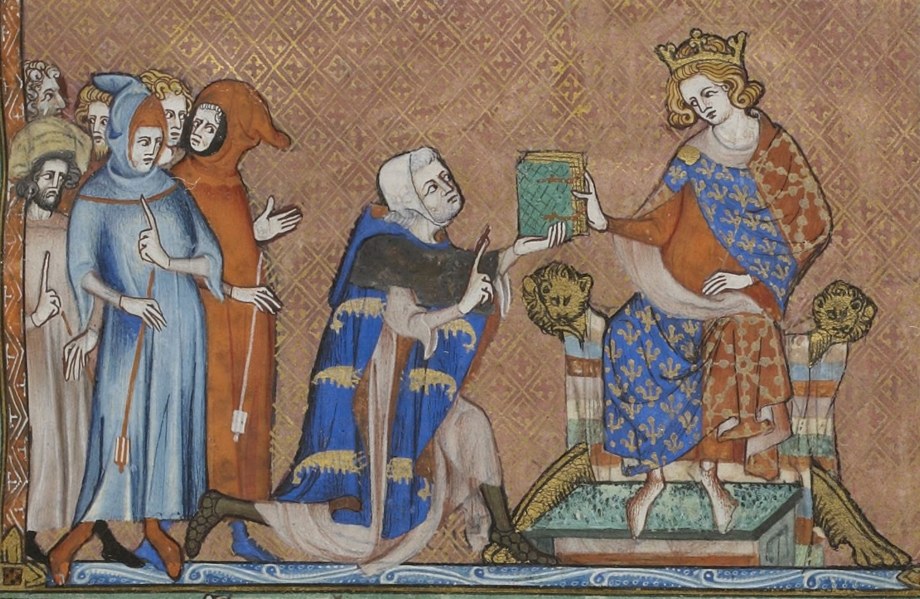
AI-assisted Portrait of Jean de Joinville
The Man Who Remembered the Smell of the Sea
Most of what survives from the thirteenth century is stone and parchment—cathedrals, charters, the bloodless Latin of chroniclers who wrote as though no one had ever been seasick or afraid. Then there is Jean de Joinville, Seneschal of Champagne, who in his eighties sat down to write the life of his dead friend the king and could not stop telling you what it actually felt like: the lurch of the boat, the terror before battle, the dysentery in the Egyptian camp, a joke Louis told, the exact words of a quarrel. His Life of Saint Louis (c. 1309) is one of the warmest and most human books the Middle Ages produced—not a saint's legend but a portrait drawn from the inside, by a man who loved his subject and refused to varnish him.
Joinville was a great nobleman of Champagne, born around 1224, who joined Louis IX's Seventh Crusade in 1248 and spent the better part of six years at the king's side— in Egypt, in captivity, in the Holy Land—before returning home in 1254. He outlived almost everyone, dying around 1317 past the age of ninety. What makes him unforgettable is not the office he held but the eye and voice he turned on the world: concrete, candid, funny, and bound to the king by an affection he never bothered to disguise. He is the ESFP as memoirist—the man who remembered everything because he had been so fully present for it.
That is the ESFP signature: Se paired with Fi—a storyteller who lives inside the physical moment and reports it without filter, and whose loyalty is personal, warm, and entirely his own.
The Eye That Missed Nothing
Se — dominant
Dominant Se is the function of the vivid present—of sensation, action, and physical fact taken in directly, before it is abstracted into a lesson. Joinville's whole book runs on it. Where another chronicler would record that the crusaders suffered hardship, he tells you that the men's gums rotted and the barber-surgeons had to cut away dead flesh so they could eat, and that you could hear the cutting across the camp. He remembers the Greek fire arcing through the night sky “like a great dragon,” and how the army fell to its knees each time it came. He remembers being so frightened he could not move, and he says so. No medieval writer reports his own fear, his own seasickness, his own small comforts with such unembarrassed exactness.
Se is also the function of the engaged participant rather than the detached observer. Joinville did not watch the crusade from a tent; he led men, was wounded, nearly died of fever, and was taken captive with the king. His account is full of the texture of being there—the food, the heat, the negotiations, the faces—because he was alwaysin the scene, not above it. Even his digressions are sensory: he cannot mention the Nile without the ginger and rhubarb the locals said floated down it from Paradise, nor describe a man without describing how he moved. This is Se memory—not the chronological skeleton of events but the living grain of them, stored as sight, sound, taste, and fear, and recalled seventy years later as if it were yesterday.
Loyal on His Own Terms
Fi — auxiliary
Auxiliary Fi gives the ESFP's sensory engagement a private moral center—a set of personal loyalties and convictions that are deeply felt, unargued, and unmistakably the individual's own. Joinville's love for Louis is the warm heart of the book, and it is entirely personal rather than dutiful. He admires the king not as an institution but as a man he knew—his fairness, his courage, his odd severities, his kindness. When he writes of Louis's death he does not reach for theology; he says he wept, and that he still dreams of him. The canonization that made Louis a saint mattered to Joinville chiefly because it confirmed what his own heart already knew about his friend.
But Fi loyalty is selective, and this is where Joinville becomes most himself. He loved Louis—and still refused, flatly, to follow him on the Eighth Crusade in 1270. Pressed to take the cross a second time, he said his duty lay with his own people and his own lands, who had suffered in his long absence on the first crusade and would be ruined by a second. He would not go simply because the king and the court were going. It was an act of conscience against the grain of every social pressure—and it was vindicated absolutely: Louis died of disease at Tunis, and the expedition collapsed. Joinville mourned the king he had warned, and he never pretended the refusal had cost him anything but the king's company.
That combination—unfeigned devotion and an immovable inner no—is pure Fi. His affection was real, but it never overrode his own sense of what he owed and to whom. He followed his heart, and his heart did not simply follow the crowd.
The Seneschal Who Could Run Things
Te — tertiary
Tertiary Te is the ESFP's practical competence—the ability to organize people and resources and get a concrete job done, deployed in the service of the present moment rather than some long master plan. Joinville was a working magnate, not a dreamer. As Seneschal of Champagne he held a real administrative office, and on crusade he commanded a company of knights he had to feed, pay, and lead—he tells us, with a steward's precision, exactly what it cost him and how he managed the money when it ran short. He is good at the logistics of a hard situation: how to ransom captives, how to keep men together, how to deal with a Saracen emir across a negotiating table.
You see Te most clearly in how briskly he gives the king blunt, practical counsel. When Joinville thinks Louis is being foolishly stubborn—risking himself, or staying too long—he says so plainly, in the language of consequences. His refusal of the second crusade is itself a Te judgment as much as an Fi one: he had run the numbers on his own estates and his own people and concluded the venture was unaffordable folly. But Te sits third in the stack, and it shows: his competence is real but reactive, marshaled for the problem in front of him rather than organized around any grand strategy. He manages magnificently; he does not architect.
The Past Caught Whole, Late
Ni — inferior
Inferior Ni is the ESFP's weakest and strangest faculty—the pull toward a single hidden meaning beneath the surface of things, toward pattern, foreboding, and the long view. For most of his life Joinville lived in the bright foreground of Se and showed little appetite for it; he is suspicious of grand symbolic schemes and happiest among particulars. When he does gesture at the larger meaning of events, he tends to fall back on conventional piety—misfortune as God's test—rather than any vision of his own. Prophecy and abstraction are not his native country.
And yet inferior Ni surfaces, as it so often does, late and powerfully. The whole Life of Saint Louis is in a sense an Ni achievement reached the long way round: an old man near ninety, looking back across seventy years, finally seeing the shape of a life and a friendship whole. The book is shot through with the awareness that a world has passed— that the king is a saint now, that the men he sailed with are gone, that he alone is left to say what it was really like. There is even a flicker of the prophetic in his account of the second crusade: he had sensed it would end badly, and it did. But the dominant note is retrospection, not foresight. Joinville did not foresee the meaning of his life; he lived it in full color and only at the very end turned around to find the pattern—and then, with the present finally behind him, he wrote it all down.
Why ESFP Over ESFJ
Why not ESFJ?
An ESFJ's warmth runs through Fe—tuned to the group, to consensus, to what the community feels and expects. Joinville's warmth was the opposite: intensely personal and self-honest, an Fi loyalty to one man and one conscience. The decisive evidence is his refusal of the Eighth Crusade. An Fe-led courtier, with the king and the whole nobility taking the cross around him, would have found it nearly impossible to say no; Joinville weighed it against his own people and his own judgment and refused outright, against every social current. That is Fi standing its ground, not Fe falling in line.
The other tell is where his mind lives. An ESFJ chronicler would likely have organized the story around duty, order, and the proper roles people played; Joinville organizes it around what he saw, tasted, and felt—the vivid sensory present of dominant Se, not the socially-attuned framing of Fe. His memoir is great precisely because it is candid and particular rather than dutiful and consensual: a man reporting his own experience, his own fear, and his own affection, exactly as he found them. That is the ESFP—present to the world and true to himself—not the ESFJ, present to the group and true to its expectations.
Connected Figures
Further Reading
- The Life of Saint Louis — Jean de JoinvilleThe primary text itself — an old crusader's vivid, candid, often funny firsthand memoir of his king, and one of the great human documents of the Middle Ages.
- Joinville and Villehardouin: Chronicles of the Crusades — trans. Caroline SmithThe standard modern English translation, pairing Joinville with Villehardouin and supplying the historical apparatus to read him well.
- Saint Louis — Jacques Le GoffThe definitive modern biography of Louis IX, which weighs Joinville's testimony against the record and reconstructs the king and his world in full.
