 Historical Figure MBTI
#449 · 4-12-26 · Capetian France
Margaret of Provence
Queen of France · Wife of Saint Louis
1221 — 1295
8 min read
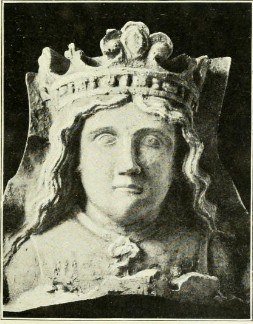
AI-assisted Portrait of Margaret of Provence
The Queen Who Held the Line
In the spring of 1250 the army of the Seventh Crusade collapsed in the Nile Delta. King Louis IX was captured at Mansurah; his soldiers were dying of dysentery; and the crusaders' last foothold in Egypt, the port of Damietta, stood half-empty and ringed by enemies. Inside it, heavily pregnant and within days of giving birth, was the queen. Rather than flee, Margaret of Provence took charge of the city's defense, extracted an oath from a knight to behead her sooner than let her fall into Muslim hands, kept the Italian merchants from abandoning the port by buying their grain stores herself, and negotiated to hold the position until her husband could be ransomed. It was one of the boldest acts of any medieval queen—and it was entirely in character.
Born around 1221, the eldest of the four daughters of the Count of Provence—each of whom would marry a king and become a queen—Margaret was married to Louis in 1234, when she was about thirteen. Over the next four decades she bore him eleven children, followed him to the Holy Land, and was the warm, attentive emotional center of a royal household that her formidable mother-in-law tried to deny her. Intelligent, brave, devoted, and long-suffering, she spent her life pouring herself outward—into her marriage, her children, her people—and asking, in return, only to be allowed to love them openly.
Margaret was the ESFJ consort in full: a warmth that organized itself around the people she belonged to, expressed as loyalty, vigilance, and an unbreakable instinct to hold the family together—even from inside a besieged city, even against the woman who ran her own house.
The Warmth That Held a Family
Fe — dominant
Dominant Fe orients a person outward, toward the emotional reality of the people they are bound to. Margaret's whole life took the shape of that orientation. She was, by every contemporary account, devoted to Louis with a love that was personal and warm rather than merely dynastic—the chronicler Jean de Joinville, who knew them both, describes a queen whose feeling for her husband was the organizing fact of her existence. She wanted his company, grieved his absences, and built her identity around being his partner and the mother of his children. Eleven of them. The household, the marriage, the bond—these were not duties she tolerated but the very substance of who she was.
Fe is also a mobilizing function: it reads a room, senses what people need, and acts to hold the group together. Damietta is the extreme case. A purely dutiful consort might have waited to be rescued; Margaret, sensing the panic around her and the fragility of the crusaders' position, took the emotional and practical weight of the city onto herself. She steadied the frightened merchants, kept the foothold from dissolving, and negotiated to preserve what her captured husband could not. That is Fe under maximum pressure—the instinct to protect the people and the cause one belongs to, translated into command.
The same warmth governed her later years. After Louis died on his final crusade in 1270, Margaret did not retreat into widowhood. She stayed politically engaged on behalf of her children, pressing the interests of her family with the same outward, relational energy she had always shown. The object of her care shifted from husband to sons and daughters, but the underlying motion never changed: love, expressed as action, on behalf of the people who were hers.
The Constant Consort
Si — auxiliary
Auxiliary Si grounds the ESFJ's warmth in continuity, role, and remembered obligation. It is the function that keeps faith—that holds a position year after year because that is what the position requires. Margaret occupied the role of Queen of France for thirty-six years, and she occupied it with a constancy that never wavered through war, captivity, childbirth, exile abroad, and decades of friction at home. She knew what a queen was supposed to be, and she was it, steadily, for an entire lifetime.
Si is also memory—and Margaret's memory was long, especially where she had been wronged. Her years of subordination to her mother-in-law left a residue she did not forget; even after Louis came into his own, the queen guarded the standing and the affection she had been made to fight for. This is the conservative, faithful side of the ESFJ: not innovation but preservation, the careful keeping of a household, a marriage, a remembered sense of how things ought to be done. The radical courage at Damietta and this quiet tenacity at court were the same trait viewed from two angles—a woman who, once committed to something or someone, simply did not let go.
The Resourceful Improviser
Ne — tertiary
Tertiary Ne gives the ESFJ a flash of improvisational range—a capacity, in a crisis, to see the angles and reach for an unexpected solution. In ordinary times it stays in the background, subordinate to Fe and Si; under genuine pressure it can surface with surprising force. Damietta is where it shows. Confronting a situation no rule of consortship had ever prepared her for—a captured king, a panicking garrison, a port about to be abandoned by its own suppliers—Margaret did not freeze. She generated options. Buying out the merchants' grain to keep them from leaving was not a textbook move; it was a quick, lateral piece of problem-solving from a woman thinking on her feet.
That same nimbleness served her in the long political game after Louis's death, where advancing her children's interests required reading shifting alliances and finding leverage where she could. But tertiary Ne is a junior partner, not a governing one. Margaret was no schemer or visionary; her improvisation was always in service of the people and the household her Fe was built to protect. The ideas came when she needed them, and then receded.
The Feud She Could Not Win
Ti — inferior
Inferior Ti is the ESFJ's blind spot: cold, detached, impersonal logic—the ability to step outside the web of relationships and analyze a problem on purely structural terms. It is exactly the capacity an ESFJ is least equipped to deploy, and it surfaced as the great frustration of Margaret's life in her struggle with Blanche of Castile. Blanche—the iron-willed queen mother who governed France during Louis's minority and never truly relinquished control of his household—was a player of a colder, more strategic order. She kept the young couple apart, monitored their time together, and treated Margaret's influence over the king as a threat to be managed.
Against this, Margaret's Fe was helpless. The thing that wounded her—being denied open access to her own husband, having her natural warmth treated as a political liability—was precisely the kind of power struggle her temperament could neither comprehend nor counter. She could love, endure, and remember; she could not out-maneuver a tactician on the tactician's own terms. The rivalry gnawed at her for as long as Blanche lived, and only the older woman's death in 1252 finally freed Margaret to be the wife and queen she had always wanted to be. The inferior function names the limit of a personality, and Blanche of Castile stood squarely on Margaret's.
Why ESFJ Over ISFJ
Why not ISFJ?
Margaret shares the SFJ's warmth, loyalty, and devotion to role—and her husband, fittingly, reads as a quieter ISFJ. But the introverted variant is retiring and self-effacing, more comfortable serving from the background than stepping forward. Margaret did the opposite. At Damietta she did not wait to be protected; she took command of a city, mobilized frightened men, bought off wavering merchants, and negotiated on her own authority. That is outward, people-moving energy under fire—extraverted Feeling leading, not the inward-facing dutifulness of the ISFJ.
The distinction is one of direction. Both types are built around devotion to the people they love and the duties they hold; the question is which way the warmth flows. The ISFJ guards quietly and from within. Margaret's care was active, engaged, and mobilizing—she managed a vast household, fought a decades-long contest for her place in it, organized a besieged port, and kept fighting for her children long after her husband was dead. Hers was warmth that took charge. That outward motion—love that organizes, protects, and commands—is the signature of the ESFJ.
Connected Figures
Further Reading
- The Life of Saint Louis — Jean de Joinville (trans. Caroline Smith)The essential eyewitness account — Joinville knew the queen personally and records her nerve at Damietta and the warmth of the royal marriage.
- Saint Louis — Jacques Le GoffThe definitive modern biography of Louis IX; indispensable for the court, the crusade, and Margaret's place within both.
- Marguerite de Provence: Une reine au temps des cathédrales — Gérard SivéryThe standard scholarly life of Margaret herself, reconstructing her marriage, her crusade, and her long struggle with Blanche of Castile.
