 Historical Figure MBTI
#448 · 4-12-26 · Capetian France
Blanche of Castile
Queen of France · Twice Regent · The Iron Mother
1188 — 1252
8 min read
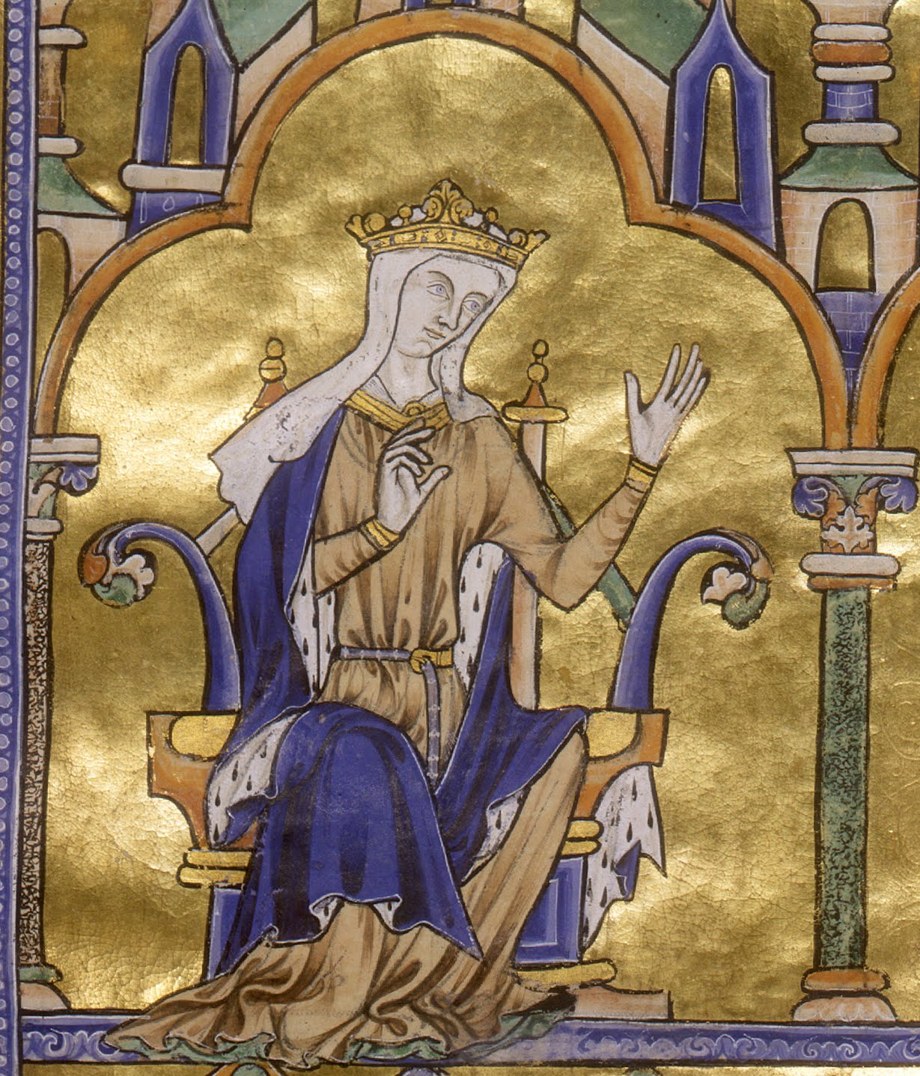
AI-assisted Portrait of Blanche of Castile
The Woman Who Held a Kingdom
In November 1226 a Castilian-born queen of thirty-eight stood beside the coffin of her husband and the throne of her twelve-year-old son, and France was for the taking. Louis VIII was three weeks dead of dysentery. The great barons of the realm—men with private armies, ancestral grudges, and an English king ready to back them—saw a foreign widow and a boy and assumed the Capetian century was over. They were wrong. Within months Blanche of Castile had her son crowned at Reims, bought off the men she could buy, marched on the men she could not, and broken the coalition piece by piece. She would rule France twice, hold it against every challenger, and hand it intact to the son who became Saint Louis.
A granddaughter of Eleanor of Aquitaine, Blanche (1188–1252) had inherited the family talent for power and refined it into something colder and more relentless. She was devout to the point of ferocity—she reportedly told Louis she would rather see him dead than guilty of a mortal sin—but her piety never softened her grip. She was the first regent (1226–1234) during her son's minority and the second (1248–1252) when he left for the Seventh Crusade, and in both she governed not as a placeholder but as a sovereign in fact. The throne her son inherited had nearly collapsed; she is the reason it did not.
Blanche of Castile was the ENTJ as queen-regent—a commanding will that out-thought and out-marched a hostile nobility, seized total control of a kingdom in crisis, and bent a realm, a dynasty, and a saint to the shape of her own iron strategy.
The Regent Who Commanded
Te — dominant
Dominant Te organizes the world by force of will: it identifies the objective, marshals the resources, and moves. Faced in 1226 with a baronial revolt led by the count of Brittany and financed from England, Blanche did not deliberate or appease—she acted on every front at once. She rushed the coronation through to make her son the anointed king before the rebels could install a rival. She pawned and spent to raise troops. She split the coalition with money and marriage where she could and crushed it with armies where she could not, taking the field herself when the situation demanded a queen in the saddle. The chroniclers, who expected a regent to be managed by the men around her, found instead that she managed them.
The hallmark of her Te was total command over the machinery of state. She controlled the treasury, the appointments, the great seal, the negotiations with Rome and with England. She concluded the Treaty of Paris in 1229 that ended the Albigensian crusade and folded the south toward the crown—a settlement that did more to enlarge Capetian France than any battle. When the barons rose a second and third time, she beat them each time, until by the mid-1230s the lesson had taken: the woman would not be dislodged. Even after Louis came of age she remained the dominant figure in his government, and when he sailed for the crusade in 1248 he left the realm in the only hands he trusted to hold it—hers.
What made it specifically Blanche's Te, and not merely competence, was the appetite for control as a personal good. She did not delegate power she could keep. She did not share rule she could exercise alone. The kingdom was a thing to be run, and she ran it—decisively, publicly, and without apology for being a woman doing a king's work.
The Dynasty Seen Whole
Ni — auxiliary
If Te supplied the command, auxiliary Ni supplied the long sight. Blanche did not merely win the crises in front of her; she understood what they were crises about. The barons were not a series of disconnected revolts but a single recurring threat to the principle of Capetian succession, and she fought every one of them as a campaign in the same long war: the survival of the dynasty. Where a lesser regent might have negotiated each rebellion on its own terms, Blanche treated the throne as a generational project and refused any settlement that weakened it for the future, however convenient in the moment.
That foresight is most visible in the marriage she arranged for Louis. In 1234 she wed him to Margaret of Provence, a match that reached toward the south and the empire and tightened the very network the Albigensian settlement had opened. The crusade regency of 1248 reveals the same pattern: with the king and the army gone to Egypt, she governed for four years as though the absence might last forever, holding revenue, order, and loyalty so that whatever came home would come home to an intact kingdom. She did not live to see Louis return; she died in 1252 with the realm steady. The foresight had been sound.
She fought no single battle for its own sake. Every rebellion crushed, every treaty signed, every marriage arranged was a move in one continuous game whose prize was a century—the Capetian throne, secure, handed forward.
The Queen in the Saddle
Se — tertiary
Tertiary Se in an ENTJ shows up as a readiness to meet the physical moment—to be where the action is, to use presence and tactile decisiveness as instruments of power. Blanche did not govern from behind a curtain. When the barons gathered their forces she rode out to confront them, and the contemporary accounts make a point of her appearing in person, mustering relief columns, lifting sieges, showing the rebels a sovereign who would come to them. The famous episode in which Parisians turned out to escort the young king to safety turns on Blanche's instinct to act in the open and let the realm see its queen unafraid.
The same concreteness ran through her piety and her court. Her devotion expressed itself not only in feeling but in works—foundations, charity, the visible practice of a hard faith. And her grip on Louis was physical as much as moral: she kept her son close, managed his household, and arranged the very rooms of his marriage. Se gave her Te its immediacy; she did not theorize control so much as reach out and hold things—armies, treasuries, a son—in her hands.
The Love That Could Not Let Go
Fi — inferior
Inferior Fi is the ENTJ's blind spot: a private store of values and attachment that runs deep but emerges crudely, often as possessiveness mistaken for love. Blanche's devotion to Louis was real and absolute—and it curdled, in the place where it touched his marriage, into something close to tyranny. The contemporary accounts describe a queen-mother who could not bear to share her son with his wife, who kept the young couple apart, and who is said to have had servants warn them so they could pretend to be at prayer when she approached. The strategist who could grant the south to the crown could not grant her son an hour alone with Margaret.
Her morality showed the same intensity narrowed to a point. “I would rather see you dead,” she is reported to have told Louis, “than guilty of a mortal sin”—a sentence that is at once the deepest expression of her love and its most frightening form. Inferior Fi does not modulate; it overwhelms. Blanche could read a kingdom with perfect clarity and misjudge the single human heart she most wanted to keep. The values were genuine. The expression was a clamp. It is the classic shape of the ENTJ's inner life—a fierce, inarticulate devotion that comes out as control, because control is the only language the dominant function fully speaks.
Why ENTJ Over ESTJ
Why not ESTJ?
The ESTJ is the dutiful administrator of an established order—the executive who keeps a working system running by rule, precedent, and the loyal application of force. That was Blanche's husband, Louis VIII, not Blanche. She did not inherit a functioning order to maintain; she inherited a collapsing one and had to re-found it against men who outranked and outgunned her boy. Re-founding takes more than diligence: it takes the strategic imagination to see which fights are really one fight, and the nerve to gamble the treasury and the crown on a single long aim. That Te–Ni reach—saving the order rather than tending it—is what separates her from the ESTJ.
The distinction is the difference between a steward and a strategist. An ESTJ in Blanche's chair would have defended the throne competently and lost it slowly, fighting each baron as a discrete problem of order. Blanche fought all of them as a single problem of the future, and so she did not merely hold the line—she enlarged it, folding the south toward the crown and handing her son a France stronger than the one her husband left. She was not the keeper of the Capetian order. She was the woman who saved it when it was nearly lost, which is the ENTJ's signature and not the ESTJ's.
Connected Figures
Further Reading
- Blanche of Castile, Queen of France — Lindy GrantThe definitive modern scholarly biography in English — authoritative on her two regencies, her government, and her power.
- Saint Louis — Jacques Le GoffThe landmark life of her son; indispensable on Blanche's grip over Louis and the kingdom she handed him.
- Blanche of Castile — Régine PernoudA vivid narrative portrait of the queen-regent and her age from a leading medievalist.
