 Historical Figure MBTI
#453 · 4-12-26 · Capetian France
Philip III
King of France · The Dutiful Son Between Two Giants
1245 — 1285
8 min read
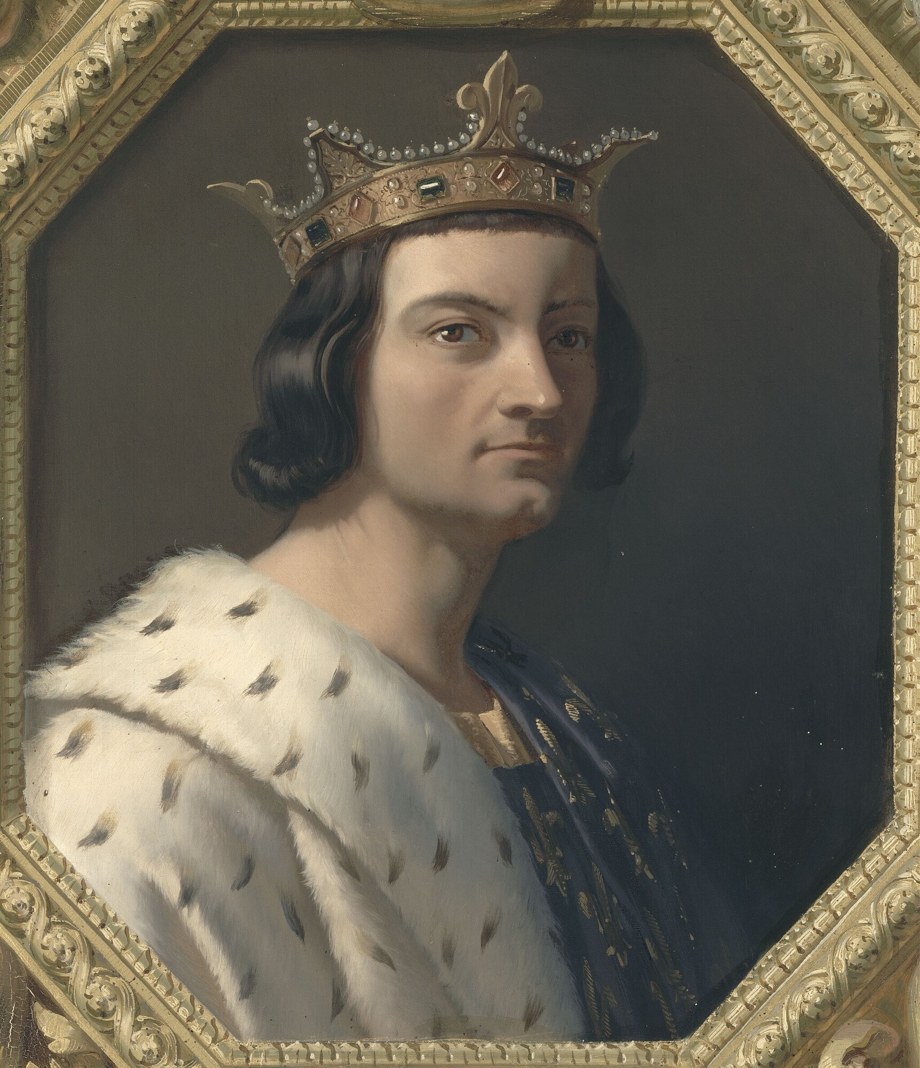
AI-assisted Portrait of Philip III
The Dutiful Son Between Two Giants
Philip III of France has the misfortune of standing exactly halfway between two of the most formidable men of the Middle Ages. His father was Louis IX—the crusader who would be canonized as Saint Louis, the model of the Christian king. His son was Philip IV, “the Fair,” the cold-eyed despot who would crush the Templars, humiliate a pope, and bend the French state to his will. Between the saint and the iron king sits Philip the Bold: pious, dutiful, conventional, and almost entirely overshadowed.
He came to the throne in 1270 in the worst possible circumstances—proclaimed king at Tunis, on crusade, while his father lay dead of disease in the camp around him. He inherited the courage of his line, and the nickname “le Hardi,” the Bold, was earned honestly on the battlefield. But personal bravery and the capacity to rule are different things. As a king, Philip was led: by his chamberlain Pierre de la Brosse, by his powerful uncle Charles of Anjou, and by his second wife, Marie of Brabant. He governed for fifteen years largely by continuing his father's policies, and his reign ended where it began, in disaster on crusade—the failed invasion of Aragon in 1285, from which he retreated only to die of dysentery on the road home.
Philip III is the ISFJ on a throne too large for him: a dutiful keeper of inherited ways, governing by precedent and deference rather than vision, steered by every strong personality who stood close enough to take the reins.
The Keeper of the Inherited Way
Si — dominant
Dominant Si rules by precedent. It trusts what has been established, what worked before, the proven path of those who came first—and it is deeply reluctant to strike out on its own. Philip's entire reign reads as an act of continuation. He kept his father's ministers in place, maintained Saint Louis's pious tone at court, and pursued the canonization of Louis with filial devotion. Where his father had legislated and reformed, Philip largely administered what he had received. He was not a builder of new things; he was a careful steward of old ones.
This conservatism was not laziness but temperament. The Si dominant feels safest inside a known framework, and Philip had inherited the most prestigious framework in Christendom—the sanctity of his father, the precedent of crusade, the slowly expanding patrimony of the Capetian crown. The great territorial gain of his reign, the reversion of the vast lands of his uncle Alphonse of Poitiers to the royal domain in 1271, fell to him largely by inheritance and law rather than by any bold initiative of his own. He did not seize; he received, and he held.
Even his crusading instinct was inherited rather than invented. The disastrous Aragonese expedition of 1285 was a papally sanctioned holy war, blessed by Rome and framed in the familiar language of his father's crusades. Philip took up the cross because it was what a Capetian king, and especially a son of Saint Louis, was supposed to do. The trouble was that the script he was following had been written for a far stronger man.
The King Who Was Steered
Fe — auxiliary
Auxiliary Fe orients toward people—toward harmony, deference, and the expectations of those one loves and respects. In a strong ruler it produces a gift for reading a room and binding a court together. In a weak one it produces a man who can be led by whoever holds his trust. Philip was the second kind. He governed less through his own judgment than through his attachments, and the men and women he was attached to governed him in turn.
The pattern repeats across his reign. Early on he leaned heavily on his chamberlain Pierre de la Brosse, a low-born favorite raised up by royal affection, who used his intimacy with the king to accumulate enormous influence—until the court turned against him and he was hanged in 1278, in part on the strength of accusations Philip was persuaded to believe. His towering uncle, Charles of Anjou, steered French policy toward his own Mediterranean ambitions and drew Philip into the Sicilian quarrel that would kill him. And his second wife, Marie of Brabant, became a power at court in her own right, the center of the faction that brought down de la Brosse.
This is Fe without a counterweight of independent conviction: a relationship-driven king who wanted, above all, to be a good son, a good Christian, and a good keeper of his inheritance, and who let the strong personalities around him define what “good” required. He was not cruel and not foolish; he was deferential, and deference, in a medieval king, is a kind of vacancy that other people rush to fill.
Competence Without Vision
Ti — tertiary
Tertiary Ti gives the ISFJ a real but limited capacity for analysis: enough to handle the machinery of administration, to weigh a legal claim, to keep accounts and honor obligations—but rarely enough to generate independent strategy or to question the premises handed down to it. Philip's government was, by the dim standards of his slender personal reputation, competently run. The institutions of the Capetian state continued to grow under him, and the royal domain expanded. The apparatus worked.
But Ti in the third position is a tool, not a compass. It can execute within a framework it has been given; it struggles to evaluate whether the framework itself is sound. When Charles of Anjou and the papacy presented Philip with the case for invading Aragon—a neat legal and religious justification for seizing a crown on behalf of his son—he had the competence to mount the expedition but not the strategic clarity to see that it was a trap. The reasoning sounded correct; he accepted it, and marched.
The Crusade He Could Not See Through
Ne — inferior
Inferior Ne is the ISFJ's blind spot: the weakness for imagined possibility, especially when a trusted authority dangles it. The Si-dominant mind, so sure-footed on the proven path, becomes strangely credulous when someone paints a bright picture of an untried one. It cannot easily war-game the branching ways a bold scheme might go wrong, because generating those alternative futures is precisely the function it lacks. So it tends either to refuse novelty outright—or to swallow a seductive vision whole.
The Aragonese Crusade was Philip's inferior Ne in catastrophe. Pope Martin IV had deposed Peter III of Aragon for seizing Sicily after the rebellion known as the Sicilian Vespers, and offered the Aragonese crown to Philip's son. Urged on by Charles of Anjou and the Church, Philip embraced the grand design—a holy war that would crown his family in a new kingdom—without the imaginative caution to foresee the obvious disaster. The campaign of 1285 collapsed: the fleet was destroyed, the army wracked by disease, the mountain passes a death trap. Philip retreated and died of dysentery at Perpignan, undone by a bright possibility he had neither the vision to conceive nor the vision to doubt.
Why ISFJ Over ISTJ
Why not ISTJ?
The ISTJ shares Philip's Si-dominant respect for precedent and duty, and it is the obvious alternative for a conventional, rule-following king. But the ISTJ governs through impersonal procedure and self-directed judgment—the dutiful administrator who decides by the book and is hard to sway once the rule is clear. Philip was not that man. He was gentle, deferential, and visibly led by his relationships: by a favorite he loved, an uncle he revered, and a wife whose faction he let prevail. That is warm, conforming Fe, not cool, impersonal Te. He wanted to be good in the eyes of the people he was attached to, and was steered accordingly.
The distinction is one of motive. An ISTJ holds the line because the line is correct; an ISFJ holds it because the people he honors expect it of him. Philip III continued his father's ways less out of administrative conviction than out of filial devotion and a need to be seen as a worthy son of a saint. His weakness was not stubbornness but pliability—the relationship-driven, approval-seeking nature of an ISFJ who lacked the iron self-direction that would, one generation later, define his son.
Connected Figures
Further Reading
- Saint Louis — Jacques Le GoffThe definitive biography of Philip's father — essential for understanding the saint-king's reign and the inheritance Philip received.
- Capetian France 987–1328 — Elizabeth Hallam & Judith EverardThe standard narrative survey of the dynasty, with a clear-eyed account of Philip III's reign in its institutional and territorial context.
- The Reign of Philip the Fair — Joseph R. StrayerOn the son who succeeded him — illuminating, by contrast, just how different the iron king was from his deferential father.
