 Historical Figure MBTI
#460 · 4-13-26 · Capetian France
Jacques de Molay
Last Grand Master of the Knights Templar · Burned at the Stake
c. 1243 — 1314
8 min read
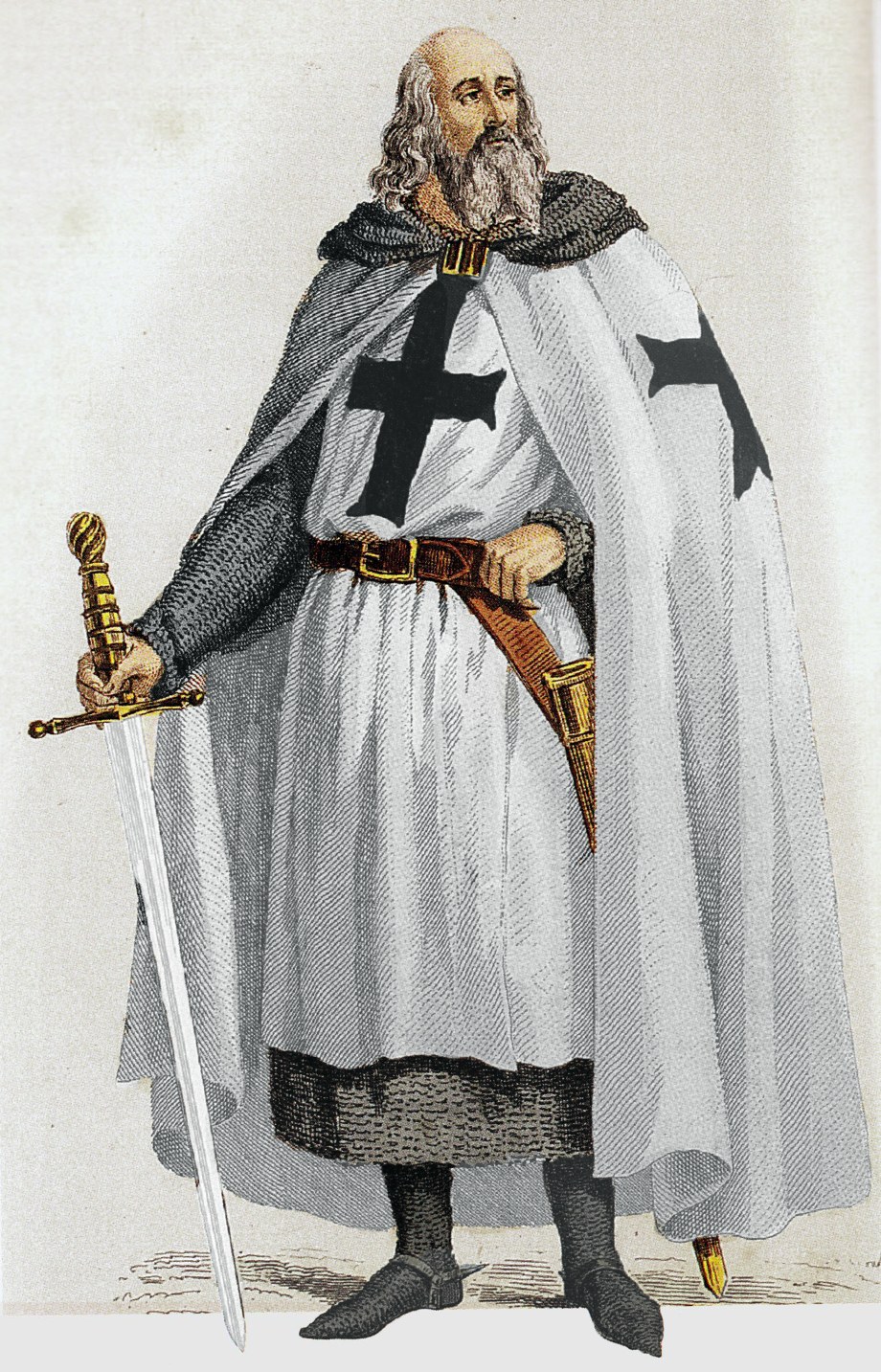
AI-assisted Portrait of Jacques de Molay
The Old Soldier Who Outlived His Order
Jacques de Molay was not a brilliant man, and he would not have claimed to be. He was something the late Middle Ages valued more highly and the modern world barely remembers how to honor: a faithful one. Born around 1243 into the minor Burgundian nobility, he entered the Order of the Temple as a young man and spent his entire adult life inside its Rule—a warrior-monk bound by vows of poverty, chastity, and obedience, soldiering for the Cross in the dying years of the Crusader states. By 1292 he had risen to become the twenty-third and, as it turned out, the last Grand Master of the Knights Templar, an order nearly two centuries old, the most formidable fighting brotherhood in Christendom and one of the richest institutions in Europe.
He was a conservative to his marrow—he resisted proposals to merge the Temple with its rival order, the Hospitallers, from a conviction that the Order's Rule and independent tradition were worth keeping exactly as received. He fortified its discipline, audited its finances, and prepared for a war he assumed would resemble the last one. He did not see the real threat coming, because it came from a direction no Templar Rule had ever anticipated: not a Saracen army but a Christian king with empty coffers and a lawyer's instinct for paperwork. On Friday, 13 October 1307, every Templar in France was seized in a single dawn sweep on the order of Philip IV. Molay was broken under torture and made to confess to heresy—then, years later with nothing left to lose, he took it all back. The man who had spent seventy years obeying ended his life in a single act of defiance, and reclaimed at the stake the honor that confession had cost him.
Molay was the ISTJ in full: the dutiful guardian of an institution, loyal to the Rule and the oath above all else — a man who could be made to lie, but who in the end could not live having lied.
The Keeper of the Rule
Si — dominant
Dominant Si is the cognitive home of the guardian: a deep, almost physical loyalty to what has been established, tested, and handed down. It experiences the past not as history but as obligation. For Molay that inherited thing was the Order itself—the Rule of the Temple, drafted in part by Bernard of Clairvaux, with its hundreds of articles governing everything from how a knight wore his beard to how he charged into battle. To an Si dominant, such a code is not bureaucratic clutter; it is the very substance of belonging. You keep it because it was kept before you, and keeping it is who you are.
This is why he set himself against the merger proposals so stubbornly. Fusing the Temple and the Hospitallers was, from outside, a sensible rationalization of two shrinking institutions; to Molay it asked him to dissolve a distinct tradition into something untried, and every instinct recoiled. He produced a formal memoir against the union, leaning on precedent and two centuries of separate identity—the burden of proof lay on change, and change had not met it. The same conservatism shaped his whole tenure: he toured the holdings, tightened observance, and tried to restore the brotherhood to the standard he believed it had drifted from. But it made him a poor reader of novel danger. The catastrophe that destroyed him was not a deviation from precedent he could correct—it was a wholly new kind of attack, and the Si dominant's great weakness is precisely the thing that has never happened before.
The Administrator in Armor
Te — auxiliary
If Si told Molay what was worth preserving, auxiliary Te told him how: through structure, command, and the orderly management of men and money. The Grand Master was not only a soldier but the chief executive of a continent-spanning organization—a network of fortified commanderies and a banking operation so trusted the kings of France had kept their treasury in the Paris Temple. Running it demanded exactly the Te competence of the ISTJ: hierarchy, audit, logistics, the steady hand that makes a vast machine function without drama.
Te is impersonal and procedural, and Molay governed that way—and even his fatal misjudgment wore the same character. When the first whispers of Philip's accusations reached him, his response was procedural confidence: he asked the Pope for a formal inquiry, certain an orderly investigation would clear an Order that had nothing to hide. He trusted the system, never grasping that it had already been captured by Guillaume de Nogaret and a king who meant to use law itself as the weapon. And yet that same structural cast of mind supplied his final strength. When he recanted before the cardinals in 1314 he offered no theologian's subtle defense, only a fact: the confessions were false, extracted by torture, and the Order was innocent. It was Te in its barest form—the assertion of what is simply, verifiably true, regardless of cost. The administrator who had kept the books his whole life refused, at the end, to let the worst entry in them stand.
The Honor He Could Not Sell
Fi — tertiary
Tertiary Fi in an ISTJ is a quiet, private spine—an inner sense of personal integrity that rarely announces itself but, when pressed past a certain point, will not bend. It is not the warm, outward-facing morality of a feeling-dominant type; it is a buried conviction about what one can and cannot live with. For most of Molay's life this function stayed subordinate, folded into duty: his honor and the Order's honor were the same thing, and serving the institution was all the moral expression he needed.
The trial pried the two apart. Under torture Molay confessed to the charges, as nearly all the Templars did, and a confession could be rationalized as duty of a kind—it might spare the brothers or buy the Order time. But the lie sat inside him for years of imprisonment, and tertiary Fi does not forget a violation of the self. When the Order was dissolved by Pope Clement V in 1312 and Molay was brought out in 1314 to hear his life sentence pronounced on the strength of that confession, the buried function surfaced with terrible force. He could accept death. He could not accept dying as a man who had sworn to a lie about the thing he had served his whole life.
For seventy years his honor and the Order's honor were one thing. The trial forced him to choose between them — and at the very end, tertiary Fi chose: better to burn as a true Templar than to live as a false one.
The Trap He Never Imagined
Ne — inferior
Inferior Ne is the ISTJ's blind spot: a weak grip on unprecedented possibility, on the branching what-ifs a more intuitive mind throws off without effort. The Si-dominant reasons forward from what has happened before; when the future rhymes with the past he is unbeatable, and when it does not he is exposed. Molay's whole catastrophe lives in that gap. He had no imaginative apparatus for a Christian king turning the machinery of the Church against a crusading order on charges of heresy, blasphemy, and idol worship—it had never been done, so he did not believe it could be. In the months before October 1307, as Philip's lawyers assembled their dossier and the trap was visibly laid, a more suspicious leader might have scattered the brothers or fled France. Molay instead came to Paris and served as a pallbearer at a royal funeral days before the arrests, walking into the closing jaws because his cognitive world had no room for the shape of the attack. The dutiful man trusts the rules will hold; inferior Ne cannot conceive of the opponent who has decided to break them all.
There is a final, strange turn. According to the chroniclers, as the flames rose on the island in the Seine, Molay summoned both his persecutors—Philip IV and Pope Clement V—to answer for their crime before God within the year. Both men were dead within months. Whether or not he ever spoke the words, the legend is a kind of eruption of the inferior function under ultimate stress: the literal-minded guardian, stripped of every worldly instrument, reaching at the very last for a vision of a future justice he could not otherwise secure. The man who could not imagine the trap died imagining the reckoning.
Why ISTJ Over ISFJ
Why not ISFJ?
The ISFJ shares Molay's dutiful Si and his deep loyalty, which makes it the obvious alternative—but it leads with Fe, a warm, person-centered care that organizes life around the wellbeing of particular people. Molay's allegiance was not to persons but to an institution: to the Rule, the tradition, and the honor of the Order as a thing in itself. His resistance to the merger was structural and procedural, not pastoral, and his final defiance was a flat assertion of truth and broken oath—the Si-Te signature of the ISTJ, not the relational tenderness of an ISFJ. He died for the integrity of the Order, not for the people inside it.
The distinction comes down to what the loyalty is for. An ISFJ's guardianship is felt through relationships—the brothers protected, the bonds honored, the human cost weighed first. Molay's was felt through the institution: he conserved a Rule, defended a privilege, audited an estate, and at the stake corrected the record. His honor and the Order's honor were a single impersonal thing, and when he chose to burn rather than let a lie about it stand, he was defending the truth of the thing, not the comfort of any person. That is duty in its hardest, most structural form—Si paired with Te, the loyal old soldier of the institution. It is the ISTJ.
Connected Figures
Further Reading
- The Trial of the Templars — Malcolm BarberThe definitive scholarly account of the arrests, interrogations, and dissolution — the essential book on Molay's downfall.
- The Last Templar: The Tragedy of Jacques de Molay — Alain DemurgerThe leading modern biography, reconstructing Molay's career and trial from the surviving record.
- The New Knighthood: A History of the Order of the Temple — Malcolm BarberThe standard history of the Templars from foundation to fall, situating Molay within the Order's two-century arc.
