 Historical Figure MBTI
#461 · 4-13-26 · Capetian France
Pope Boniface VIII
Pope · The Pontiff Humbled at Anagni
c. 1230 — 1303
8 min read
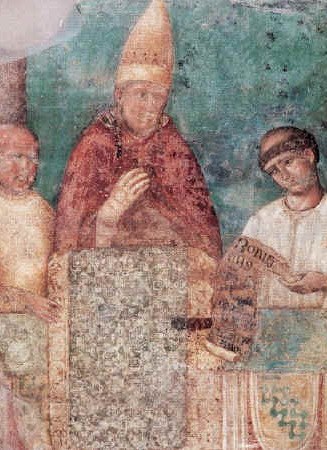
AI-assisted Portrait of Pope Boniface VIII
The Pope Who Would Rule Kings
Benedetto Caetani came to the throne of St. Peter in 1294 already old, already rich, and already certain that the office he had won was the highest power on earth—higher than any emperor, any king, any prince of any realm. As Boniface VIII he spent his nine-year pontificate proving it, and the proving destroyed him. He was a canon lawyer of formidable gifts and a temper to match: proud, imperious, combative, worldly, and so convinced of his own supremacy that he is said to have appeared at a jubilee dressed in imperial regalia, crying, “I am Caesar, I am emperor.” Whether or not he spoke the words, they capture the man.
His reign was the high noon of the medieval papacy—and its sunset. He proclaimed the first Jubilee of 1300, drawing pilgrims to Rome in their hundreds of thousands and indulgences with them. He crushed the Colonna, the great Roman family who dared question the legality of his election, razing their stronghold of Palestrina to the ground. And in his bull Unam Sanctam (1302) he issued the most absolute claim any pope had ever made: that it is “altogether necessary to salvation for every human creature to be subject to the Roman pontiff.” No medieval theory of papal monarchy reached higher. None had further to fall. He is, in every imperious decree and every doomed ultimatum, the ENTJ on the throne of Peter.
Boniface was the ENTJ pontiff at the limit of his reach—a commanding Te that ruled by decree and force of will, fused to an Ni vision of the Church standing above every crown on earth. He built a theory of universal authority so total it could only break, and it broke.
Rule by Decree
Te — dominant
Dominant Te governs the external world by command. It does not persuade where it can order, does not negotiate where it can compel, and treats authority as something to be exercised rather than merely held. Boniface was a Te machine in tiara and cope. Trained as a canon lawyer and steeped for decades in the machinery of the Curia, he understood power as a structure of jurisdictions, precedents, and decrees—and he wielded it with a lawyer's precision and a tyrant's confidence. When he wanted a thing done, he issued a bull. When a king displeased him, he issued an ultimatum.
The pattern runs through the whole pontificate. The Colonna cardinals challenged the legitimacy of his election—his predecessor Celestine V had abdicated, an act without precedent, and the Colonna whispered that the abdication, and therefore Boniface's succession, was void. Boniface did not argue the point in the schools; he excommunicated the family, stripped them of their offices and lands, preached a crusade against them, and leveled Palestrina. When Philip IV of France began taxing the French clergy to fund his wars, Boniface answered with the bull Clericis laicos (1296), forbidding any layman to tax the Church without papal consent on pain of excommunication. It was a command issued to a king as though to a subordinate—and that, precisely, was how Boniface understood the relationship.
He did not reason with kings; he commanded them. Every great act of the reign—the crushing of the Colonna, the taxing bulls, the thunderous ultimatums to Paris—was Te asserting jurisdiction by decree, as if the whole of Christendom were a docket and the pope its sole judge.
One Sword Above All Swords
Ni — auxiliary
If Te supplied the will to command, auxiliary Ni supplied the single, totalizing vision that command served. Ni reduces a tangled world to one governing principle and then drives toward it with tunnel-vision intensity. Boniface's principle was the oldest and grandest claim of the medieval Church carried to its absolute logical terminus: that all authority, spiritual and temporal alike, flows from God through the pope, and that every earthly ruler holds his crown only as a delegate of the See of Rome.
Unam Sanctam is that vision frozen into law. Drawing on a century of canonist and theological argument, it set out the doctrine of the two swords—the spiritual and the temporal—and insisted that both belong to the Church, the temporal sword wielded by kings but at the will and sufferance of the priest. The spiritual power, it declared, institutes and judges the earthly power; the pope can be judged by God alone. It closed with the sentence that became the high-water mark of the whole medieval papacy: subjection to the Roman pontiff is necessary for salvation. This was not administration; it was a metaphysics of world order in which the pope sat at the apex of all creation—and Boniface believed it so completely that he was willing to stake the papacy itself on its enforcement against the most powerful monarch in Europe.
The Theater of Power
Se — tertiary
Tertiary Se in an ENTJ shows up as a taste for spectacle and a hunger to see authority made visible in the physical world—in gold, in stone, in ceremony, in display. Boniface had it in abundance. The Jubilee of 1300 was Se married to Te and Ni: a vast act of theater that converted the abstract claim of papal supremacy into a sensory fact, filling the streets of Rome with pilgrims and the basilicas with crowds come to receive his indulgence. He commissioned statues of himself in such number that critics accused him of idolatry. He surrounded himself with the trappings of empire and, by some accounts, paraded in imperial dress.
This appetite for the tangible could tip into the worldliness his enemies never tired of citing—the nepotism that enriched the Caetani, the lavish building, the sheer relish for grandeur. But tertiary Se also explains the recklessness of his confrontations. He met challenges head-on and in the present, by force, in the moment—razing Palestrina, hurling excommunications, escalating each clash with Philip rather than maneuvering around it. He preferred the decisive blow to the patient siege, and that preference would, in the end, place his own aged body within reach of armed men.
The Wound at Anagni
Fi — inferior
The ENTJ's inferior Fi is the buried, underdeveloped sense of personal value and inner conviction—the function the type least understands in itself and most often disregards in others. In Boniface it surfaced as a near-total blindness to how he was perceived and how far he could push before the structures he commanded simply gave way. He could not feel the difference between a king who would yield and a king who would not. He read Philip IV as one more subordinate to be brought to heel by decree, never registering the cold, patient, ruthless will on the other side of the contest.
The misreading was fatal. In September 1303, as Boniface prepared a bull excommunicating Philip, the king's minister Guillaume de Nogaret rode into the papal town of Anagni with an armed band and the king's Colonna allies at his side. They seized the pope in his own palace, held him prisoner, and—by the bitterest tradition—struck the aged man across the face. The townspeople freed him after three days, but the “Outrage of Anagni” had broken something no army could mend. The pope who had claimed to stand above every crown on earth had been manhandled by a king's clerk and could do nothing. Boniface returned to Rome a shattered man and died within weeks, in October 1303. Dante, who loathed him, did not even wait for his death to consign him to the Inferno—reserving a place in the circle of the simoniacs for the pope who, in the poet's eyes, had made the Church a thing of this world.
Why ENTJ Over ESTJ
Why not ESTJ?
The ESTJ would have administered the Church superbly—enforcing canon law, managing the Curia, defending established prerogatives with brisk competence. But the ESTJ's Si keeps it tethered to precedent and the concrete order of things; it conserves and runs the institution as it finds it. Boniface did not merely defend the Church's standing rights. He advanced a sweeping, world-ordering theory of papal supremacy over every king on earth, pushing the doctrine of Unam Sanctam past anything precedent required and staking the papacy on an abstract vision of universal authority. That visionary overreach is Ni driving Te, not Si steadying it.
The distinction is the difference between a manager and a prophet of power. An ESTJ pope would have measured each move against what the office had always claimed and stopped at the edge of the achievable. Boniface could not stop, because his Ni had fixed on a single absolute—the Church above the crown, the pope above all—and his Te would enforce it against any resistance, regardless of cost. It was a grander conception than mere administration and a far more dangerous one: it left no room to bend, and so, when it met Philip's colder and more patient strategy, it did not bend. It shattered.
Connected Figures
Further Reading
- Boniface VIII — T. S. R. BoaseThe standard English-language biography — measured, thorough, and especially clear on the canon-law mind behind the man.
- The Reign of Philip the Fair — Joseph R. StrayerThe definitive study of Boniface's antagonist and the rising French state that outmaneuvered the papacy.
- The Crisis of Church and State, 1050–1300 — Brian TierneyCollects the key documents — including Unam Sanctam — and traces the long argument over papal and royal power that culminated at Anagni.
