 Historical Figure MBTI
3 min read
#156 · 3-17-26 · The Young Republic of USA
Sarah Yorke Jackson
Not the force. But the harmony that let it function.
1803 — 1887
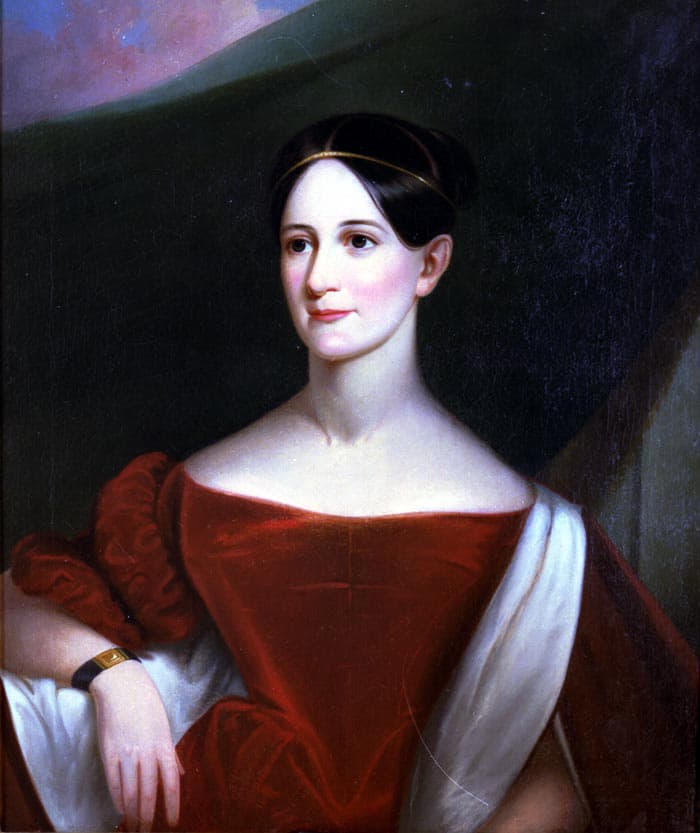
Portrait of Sarah Yorke Jackson
The Acting First Lady
Sarah Yorke Jackson did not simply marry into history.
She stepped into it—and held it together.
Born in 1803, Sarah entered the Jackson family through marriage to Andrew Jackson Jr., but her role would expand far beyond the private sphere. After Rachel Jackson's death, the White House lacked a traditional hostess, and it was Sarah—alongside Emily Donelson—who assumed that role, becoming a central social figure during Andrew Jackson's presidency.
This was not a ceremonial position. It was a social one—requiring presence, coordination, and an acute awareness of how relationships shaped political reality. The White House was not just a seat of power; it was a living network of alliances, tensions, and perception. And Sarah moved within it with clarity.
She did not define policy. She defined the atmosphere in which policy lived.
The Psychological Verdict
Sarah Yorke Jackson is often described through her role—hostess, family figure, social presence—but when we look at how she engaged with that role, a clear pattern emerges.
Her cognition reflects outward social coordination, relational attentiveness, and active maintenance of group harmony—hallmarks of Fe–Si.
She was likely an ESFJ.
Fe — Dominant
Sarah's defining trait was her engagement with people. As acting First Lady, she took on a highly visible social role—hosting, managing interactions, and ensuring that the White House functioned as a cohesive social environment. This required more than politeness; it required leadership within the social sphere.
She was not simply present. She was orchestrating.
This is dominant Fe: aligning people, managing emotional dynamics, and maintaining group cohesion in real time.
Si — Auxiliary
Her approach was grounded in tradition and propriety. The role she stepped into came with established expectations—how to host, how to present, how to uphold the dignity of the office. Sarah did not reinvent these norms; she embodied them, reinforcing continuity within a rapidly shifting political environment.
This reflects Si: reliance on what is known, appropriate, and socially validated.
Ne — Tertiary
While not exploratory in nature, Sarah showed a capacity to adapt within her role. She navigated a complex and often tense social landscape—particularly in the aftermath of the Petticoat Affair—responding to shifting dynamics without losing her grounding in tradition.
This suggests tertiary Ne: flexible when needed, but not driving.
Ti — Inferior
Sarah's orientation was not analytical or detached. Her decisions were not based on abstract logic, but on relational harmony and social coherence. She did not step outside the system to critique it—she worked within it to maintain balance.
This reflects inferior Ti: logic is secondary to people.
Why not ISFJ?
Fe over Si–Fe (not ISFJ)
ISFJs also value care and tradition, but their expression is more private and stabilizing. Sarah's role was public and active. She did not remain behind the scenes maintaining a household—she stepped into a visible position, coordinating social life at the highest level. This outward engagement and leadership in the relational sphere point to dominant Fe, not auxiliary.
Connected Figures
Further Reading
- American Lion: Andrew Jackson in the White House — Jon MeachamCovers Sarah's role as acting First Lady alongside Emily Donelson after Rachel Jackson's death.
- The Petticoat Affair: Manners, Mutiny, and Sex in Andrew Jackson's White House — John F. MarszalekDetails the social crisis Sarah had to navigate as she managed the White House's fractured social calendar.
- The Life of Andrew Jackson — Robert V. ReminiTraces the Hermitage household Sarah ran alongside her husband, Andrew Jackson Jr.
