 Historical Figure MBTI
3 min read
#163 · 3-18-26 · Ancient Athens
Xenophon
Not the philosopher. Not the architect. The one who brought them home.
c. 430 BCE — 354 BCE
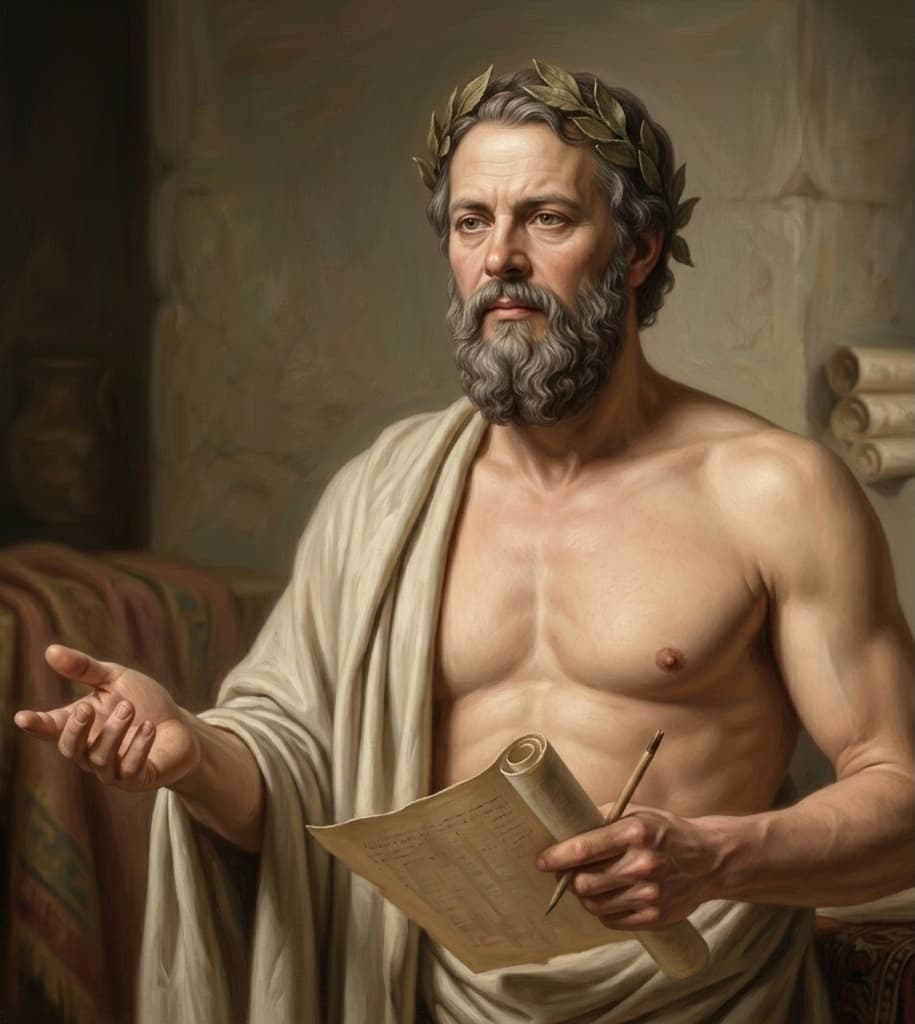
AI-assisted portrait of Xenophon
The Leader Who Brought Them Home
Born around 430 BCE in Athens, Xenophon lived not as a distant thinker, but as a man shaped by instability, war, and responsibility. He came of age during the Peloponnesian War, when order could collapse overnight and survival depended less on theory than on cohesion.
Though associated in youth with Socrates, Xenophon did not follow him into abstraction. In 401 BCE, he joined a Greek mercenary expedition into Persia. When it failed and its leadership was destroyed, Xenophon became one of the figures who helped guide ten thousand stranded soldiers home.
Recorded in Anabasis, this was not just a journey. It was a test of what keeps people together when everything else breaks.
Across his life—as soldier, exile, landowner, and writer—Xenophon remained consistent in one respect: he was concerned with how people function together. Not in theory, but in practice.
The Psychological Verdict
Xenophon is often read as ENFJ—given his leadership, speeches, and moral concern.
But he does not reinterpret reality into vision. He organizes it into function. That distinction points more convincingly to ESFJ.
Fe — Dominant
Xenophon is fundamentally relational. He centers morale, cohesion, responsibility, and the state of the group. In Anabasis, he does not simply lead—he stabilizes. He speaks when morale falters, restores confidence, and binds individuals into a shared identity.
In Memorabilia, he portrays Socrates not as an abstract thinker, but as someone useful—a man who improved others’ lives. He is not asking: “What is truth?” He is asking: “What keeps people functioning?”
Si — Auxiliary
His thinking is grounded in structure and continuity. Across his works—discipline, order, roles, and repeatable behavior remain central. In Oeconomicus and Cyropaedia, leadership and life are systems—maintained through consistency.
Even his writing reflects this: clear, direct, and reinforcing. He does not reinterpret; he preserves and teaches.
Ne — Tertiary
He adapts when needed. In crisis, he can reframe, adjust, and propose alternatives—but always in service of keeping the group moving. His flexibility is controlled, not exploratory.
Ti — Inferior
He shows little interest in internal logical refinement. Unlike Socrates or Plato, he does not deconstruct ideas or build systems of thought. He focuses on what works, what holds, and what sustains. Logic is applied, not pursued.
Xenophon remembered what worked. He preserved a Socrates who was practical, ethical, and useful. He recorded leadership as practice, not theory. He turned survival into instruction.
Why not ENFJ?
ENFJs reshape reality through vision—using Ni to reinterpret events into deeper meaning or future direction. Xenophon does not reinterpret. He reinforces, clarifies, and instructs. His leadership is not visionary; it is stabilizing. He does not ask: “What could we become?” He asks: “How do we keep going?”
Why not ISTJ?
He shares ISTJ structure—but not its center. An ISTJ maintains systems. Xenophon maintains people within systems. He does not lead from an internal standard to execution, but from group need to structure. He organizes not for order itself, but so that others do not fall apart.
Connected Figures
Further Reading
- The Ten Thousand: A Study in Social Organization and Action in Xenophon's Anabasis — W. K. PritchettA close military and social reading of the retreat of the Ten Thousand.
- Xenophon: A History of My Times (Hellenica) — Xenophon, tr. Rex WarnerPenguin Classics translation — Xenophon's own account of Greek history following the Peloponnesian War.
- The Persian Expedition (Anabasis) — Xenophon, tr. Rex WarnerThe primary source: Xenophon's account of the march of the Ten Thousand through Persia.
- Xenophon: His Life and Works — J. K. AndersonA scholarly biography covering Xenophon's career as soldier, exile, and writer.
