 Historical Figure MBTI
#1155 · 8-25-26 · The Fall of the Han
Zhang Fei
Terrifying, Drunk, and Cleverer Than He Looks · The Bridge at Changban
d. 221 CE
9 min read
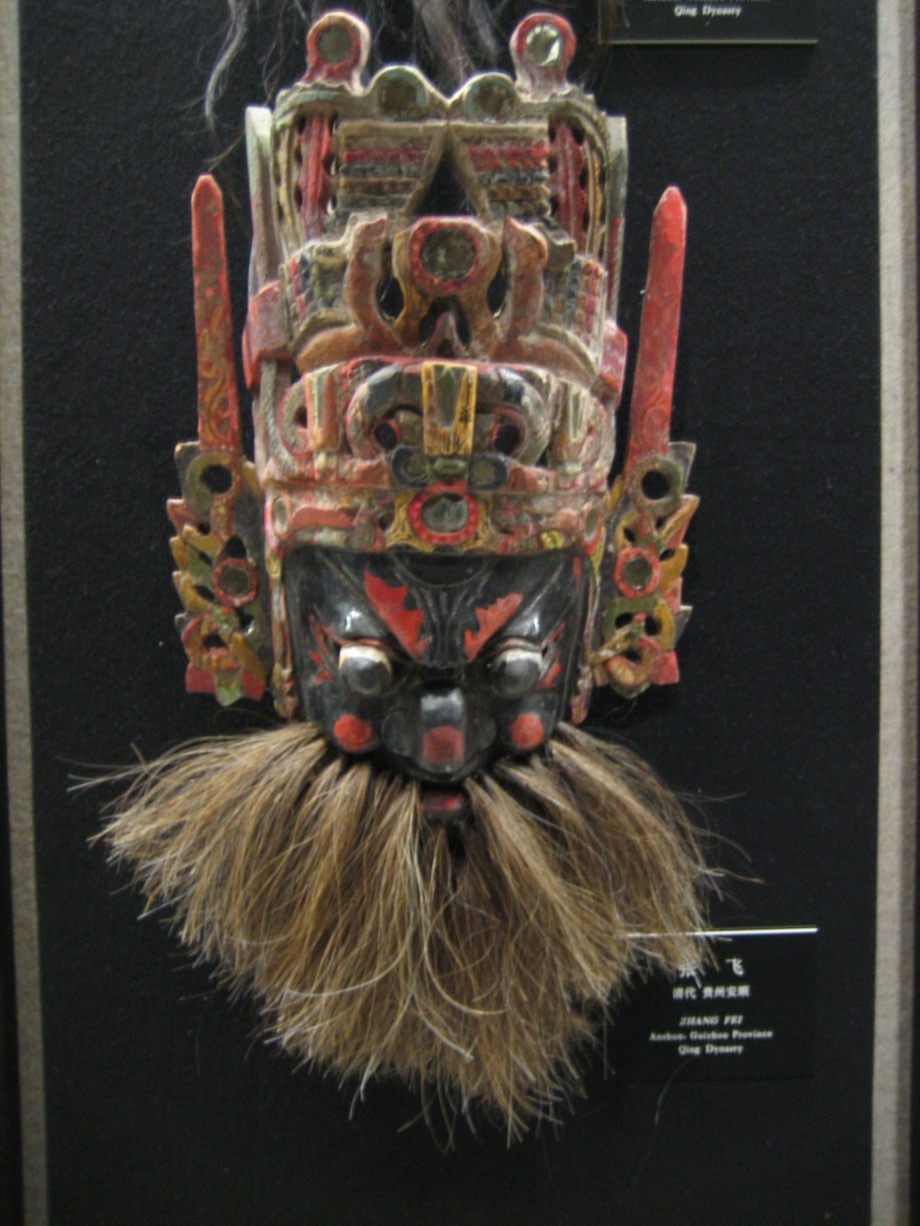
Portrait of Zhang Fei
A Man Who Solved Every Problem by Standing in Front of It
There is a version of Zhang Fei that lives entirely inside a single afternoon at a river crossing. Cao Cao's cavalry is closing on a column of refugees and broken soldiers; Liu Bei, the lord Zhang Fei swore brotherhood to two decades earlier, is somewhere ahead with too few men to fight and nowhere left to run. Zhang Fei takes twenty riders, strips the trees along the bank to kick up dust and make his handful look like an ambush, plants himself alone at the near end of the Changban Bridge, and roars a challenge across the water with such total, unhedged conviction that the pursuit simply stops. One enemy commander, by the near-contemporary account, is so unsettled that his horse bolts under him; the legend that grew up afterward has him falling dead on the spot, felled by nothing but the sound of a man who meant it. Either way, the effect was the same — Cao Cao's army held its breath long enough for Liu Bei's people to get away.
That is the Zhang Fei worth remembering, and it is also, uncomfortably, the same Zhang Fei who could not stop beating his own officers. The ferocity that made him invaluable on a bridge made him a liability in his own tent, where there was no enemy to burn it off on — only subordinates, wine, and a temper that never learned to idle. Liu Bei warned him about it more than once, in terms specific enough to survive in the record: that a man who flogged his soldiers and then slept surrounded by them was inviting exactly the death he eventually got. Zhang Fei heard the warning every time and changed nothing, because the part of him that could act instantly and fearlessly was never paired with a part that could sit still and reconsider itself.
Zhang Fei is what ESTP looks like with no ceiling on the intensity — Se dominance so total it wins him a bridge and loses him his life in his own sleeping quarters.
One Bridge, One Man, No Plan
The stand at Changban is not a tactic in any conventional sense — there was no fallback position, no reserve, no second line if the bluff failed. It is dominant Se distilled to its purest form: a total, unmediated read of the immediate physical moment, and a willingness to act on that read with everything he had, instantly, in front of the person he was betting against. Zhang Fei did not calculate the odds that Cao Cao's general would flinch. He read the man's face, the pace of the pursuit, the exhaustion in his own small band, and produced the loudest, most convincing possible answer to all three in the same breath he took to shout across the water.
That same immediacy runs through every account of him in camp and on campaign — the general who is always where the fighting is worst, never the one drafting the approach from a hill in the rear. It is also, without a break in the pattern, the same faculty that turned on his own men. Se dominance reads and reacts to what is directly in front of it; when what was in front of Zhang Fei was a soldier who had disappointed him rather than an enemy across a river, the response came with identical speed and identical force, because the function itself does not distinguish between a battlefield and a barracks. The bridge and the flogging post are the same organ working exactly as built.
The Trick With the Dust
What separates Zhang Fei from a man who simply had nerve is the small, cold piece of engineering underneath the roar. Before he ever opens his mouth at the bridge, he has his twenty riders drag branches through the dry ground behind the treeline, throwing up a wall of dust meant to read, from a distance, as a much larger force massing for an ambush. That is not instinct — it is a private, internally-tested piece of reasoning about how Cao Cao's scouts will interpret a visual signal, built and executed in the seconds before the confrontation and never explained to anyone.
This is auxiliary Ti operating exactly where it belongs in an Se-dominant mind: not as a philosophy or a system, but as a quick, private check on whether an instinctive plan will actually hold together, applied and then discarded the instant it has done its job. It shows up again in the bare structural logic of the stand itself — one man, one point of maximum leverage, everyone else hidden — which is a genuinely well-built piece of tactics dressed up as pure bravado. Zhang Fei was never credited by his contemporaries with subtlety, but the men who actually fought beside him kept finding it anyway, buried one layer beneath the shouting.
Loyalty as the Only Fixed Point
The one bond Zhang Fei never wavered on was the oath sworn in the peach garden, and it is the clearest window onto a tertiary Fe that is real but underdeveloped — present as raw devotion, not as social skill. He followed Liu Bei through two decades of defeats, exile, and false starts without ever once weighing whether the cause was still winning, because for Zhang Fei the group bond itself, not its outcomes, was the value that mattered. When Guan Yu was killed by Wu, Zhang Fei's demand to march immediately for revenge was not strategy — Liu Bei's own advisors argued against the timing — it was the tertiary function insisting, with the same force it always used, that the debt to the brotherhood be paid in full and paid now.
But tertiary Fe reads the room in only one direction — toward the people it has already decided to protect — and goes almost blind toward everyone else, including the men under his own command. Zhang Fei could feel the collective ache of losing a sworn brother more sharply than most people ever feel anything, and in the same season fail entirely to register that his own officers were approaching a breaking point. The warmth was genuine and the harm was genuine, and neither one taught him anything about the other.
The Warning He Could Never Hold Onto
Inferior Ni in Zhang Fei does not disappear — it surfaces exactly once, in Liu Bei's repeated warnings about where the flogging and the drinking were leading, and Zhang Fei is able to hear the forecast perfectly clearly in the moment it is spoken. He simply cannot hold it as a live thread against the next immediate provocation. Ni asks a mind to project a pattern forward through time and let that projection outweigh what is right in front of it; for a dominant-Se personality that faculty is present only faintly, at the very bottom of the stack, and it loses every contest with the present tense.
The result is the single most legible tragedy in the Three Kingdoms canon: a man told, explicitly and more than once, exactly how he was going to die, who could not translate that knowledge into a changed relationship with the officers sleeping in his own tent. In 221, mustering for the war against Wu he had demanded, two of those officers — pushed past whatever they had left — killed him where he slept and carried his head south. The bridge had proven what total presence in the moment could do against an enemy. His own quarters proved, just as completely, what it could not do against himself.
Why ESTP Over ISTP
Why not ISTP?
An ISTP reading would want Zhang Fei to be a quiet technician — someone who solves problems with skill and prefers to work unnoticed, letting competence speak for itself. Nothing about the bridge is quiet. Zhang Fei does not ambush Cao Cao's army from concealment; he plants himself in plain view and manufactures the loudest possible confrontation, because being seen and being feared is the entire mechanism. That same need to be the visible, dominant presence in the room follows him into his own camp, where his aggression toward his officers was never hidden or calculated — it was performed at full volume, in front of everyone, every time. That is extraverted Se seeking maximum external impact, not an introverted specialist working a problem alone.
The gap between ESTP and ISTP is really a gap between a man who needs an audience and one who doesn't, and every surviving account of Zhang Fei puts him firmly on the side that needs to be watched — by his enemies at the bridge, by his brothers around the campfire, and, fatally, by the men he ruled through fear rather than respect. He was never trying to disappear into the work. He was trying to be the loudest fact on the battlefield, and for two decades that was exactly enough.
Connected Figures
Further Reading
- A Biographical Dictionary of the Later Han to the Three Kingdoms — Rafe de CrespignyThe standard modern reference entry on Zhang Fei, sorting documented fact from later embellishment.
- Sanguozhi (Records of the Three Kingdoms), Book of Shu — Chen ShouThe primary source biography, written within living memory of Zhang Fei's death.
- Three Kingdoms — Moss Roberts (trans.)The classic historical novel that built the legend of the solitary roar at the Changban Bridge.
