 Historical Figure MBTI
#1154 · 8-25-26 · The Fall of the Han
Guan Yu
Absolute Loyalty, Fatal Pride · The Sworn Brother Who Became a God
d. 220 CE
9 min read
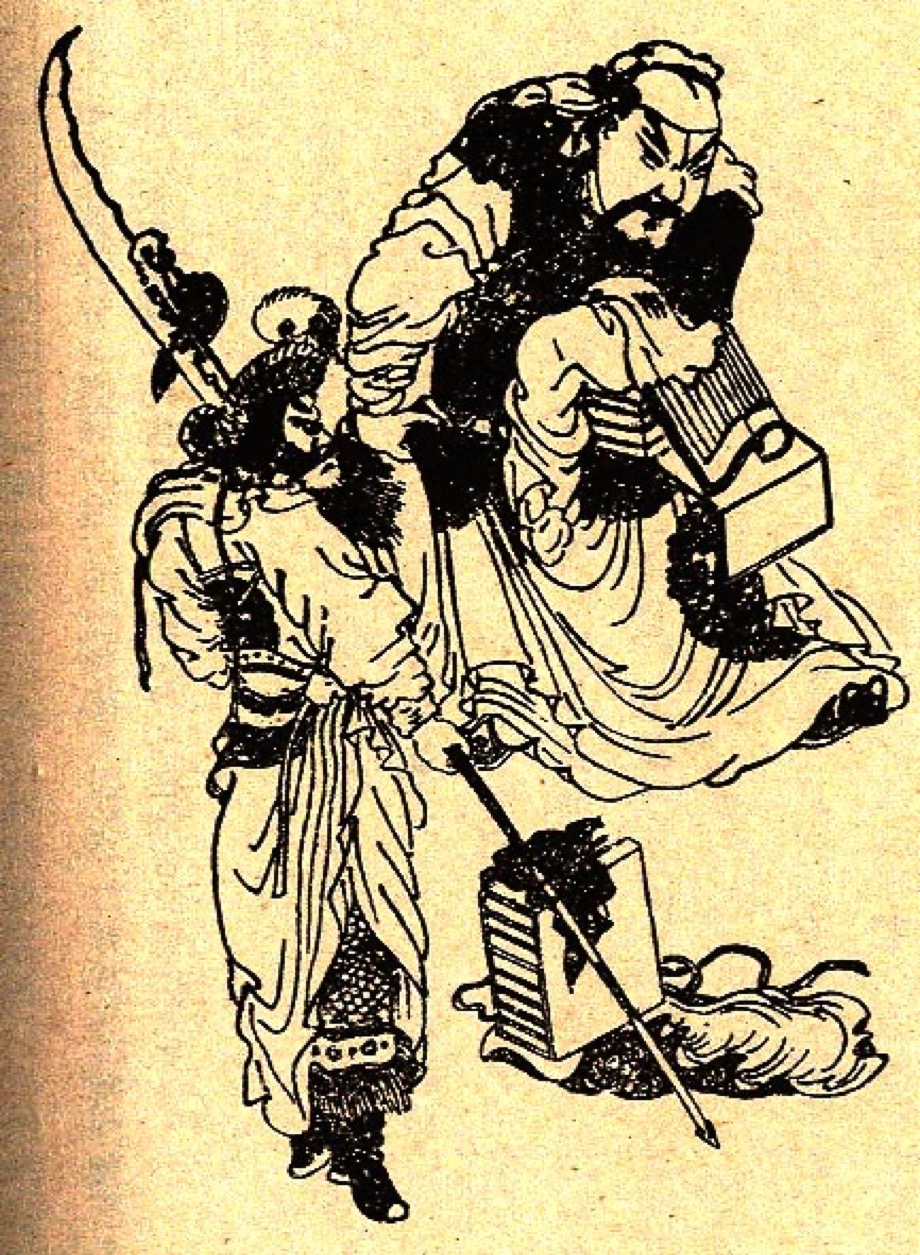
Portrait of Guan Yu
The Gifts He Left Sealed
Every dynasty that has told this story has reached first for the same image: a man riding away from a fortune he refused to touch. Cao Cao, having captured Guan Yu after Liu Bei's forces scattered in 200 CE, did not treat him as a prisoner. He gave him rank, gold, fine horses, a marquisate — the full weight of what the most powerful warlord in the north could offer a soldier he wanted badly enough to keep. Guan Yu accepted all of it, used none of it as leverage, and the moment word reached him of where Liu Bei had gone, walked out of Cao Cao's service and fought his way back to his brother, leaving the gifts behind, reportedly sealed exactly as they had been given to him.
That single act tells you almost everything about how Guan Yu's mind worked, and it is the reason this entry does not read him as clever, adaptable, or visionary — three things the historical record never once shows him being. It reads him as a man who had internalized one fact — I am bound to Liu Bei — so completely that no offer, however lavish, and no argument, however reasonable, could touch it. The same steadiness carried him through the single-combat glory at Boma, where he rode into an enemy formation to kill the general Yan Liang and rode back out again, and it carried him, years later, straight into the disaster at Fancheng, where the same refusal to reconsider a settled judgment — this time about Sun Quan, whom he held in open contempt — cost him his army, his province, and his life.
Guan Yu is not the general who out-thought his enemies. He is the man who, having decided what loyalty required of him, never once asked the question again — an ISTJ whose dominant Si made the Oath of the Peach Garden a fact as fixed as the ground he stood on.
A Fact That Does Not Move
Dominant Si does not experience an oath the way a feeling type does — as something to be renewed, felt, or continually re-chosen. It experiences it as a stored, literal commitment: something sworn once, filed away, and then simply true, in the same register as a date or a debt. The Oath of the Peach Garden, however much later legend embroidered it, describes exactly this kind of mind — Guan Yu, Liu Bei, and Zhang Fei binding themselves to a fixed obligation and then treating that obligation as a closed question for the rest of their lives. Guan Yu never revisits it, never weighs it against a better offer, never asks whether circumstances have changed enough to justify reconsidering. That is what makes the walk out of Cao Cao's camp so striking: it is not a dramatic struggle of conscience, it is closer to a man settling an unpaid account.
The same faculty shows up in how literally Guan Yu holds his own conduct to standard once he sets it. He accepted Cao Cao's honors because accepting a gift graciously and repaying a debt of loyalty were, to him, two entirely separate ledgers — and he kept both with total precision, down to leaving the seals on the gifts unbroken so that no one could say he had taken anything he had not earned by service already rendered. There is no Ne here casting forward to ask what new alliance might be worth exploring, and no Fi here softening the ledger into something negotiable on sentiment. There is only a stored precedent, applied without revision.
It is also why Guan Yu's later command at Jing province reads as fundamentally conservative in temperament even at its most militarily spectacular. Breaking Yu Jin's army by exploiting the seasonal flooding of the Han River in 219 was not an improviser's gamble — it was Guan Yu reading terrain and precedent he already understood intimately and trusting that understanding completely, the same trust in known, internalized fact that had governed every other major decision of his life.
The Drowned Camp
Where Si supplied Guan Yu's fixed sense of what was owed and to whom, auxiliary Te supplied the instrument for acting on it: a blunt, results-first competence that measured success in captured armies and secured ground, not in reputation managed or relationships tended. The 219 campaign against Cao Cao's general Yu Jin is Te at its most effective — Guan Yu recognized that the summer floods along the Han River could be turned into a weapon, waited for the water to rise, and drowned an entire relief army in its own camp, capturing both Yu Jin and Pang De and briefly putting Wei's heartland within reach. It is a plan built entirely on exploiting an external, measurable condition, executed without hesitation once the condition arrived.
But auxiliary Te run by a mind this committed to a single settled judgment is also a narrow instrument — it drives hard at the objective directly in front of it and has little bandwidth left for objectives it has already dismissed as beneath consideration. Guan Yu's single-minded push on Fancheng, and his willingness to strip his rear of attention while doing it, is the same Te that won at the Han River applied without the flexibility to notice that the goalposts of the war had moved. He was organizing men and resources toward a fixed external target with total efficiency; he was not asking whether that target was still the right one.
A Pride No One Was Allowed to Touch
Tertiary Fi in Guan Yu does not read as introspection — there is no surviving record of him agonizing over competing loyalties or examining his own motives. It reads instead as a private, unshakeable sense of his own worth and honor that he refused to have appraised by anyone else, and it is the register in which his famous pride lived. He served Cao Cao's household with visible discomfort at being anyone's guest rather than his own man, and he treated men he judged beneath his own standing — garrison officers under his own command, most consequentially — with a curtness that cost him dearly when those same officers, resentful and unprotected, surrendered his rear to the enemy rather than warn him of it.
That same private, non-negotiable self-regard is what makes the refusal of Sun Quan's marriage proposal for his daughter so characteristic rather than merely tactless. Guan Yu did not weigh the alliance as a strategic question at all — he answered it as an insult to a private standard of who was worthy of kinship with him, reportedly with open scorn, and closed the matter. It is Fi functioning exactly as it should for an ISTJ: quiet, firmly held, and almost entirely invisible until it is crossed — at which point it does not negotiate, it simply ends the conversation, whatever the strategic cost of ending it happens to be.
The Threat He Would Not Imagine
Inferior Ne is where this psychology finally breaks, and it breaks in exactly the place the record says it did: Guan Yu could not seriously entertain that Sun Quan, a power he had already sized up and dismissed, might act against his stated interests in a way that required reimagining the entire strategic picture. Ne's job, when it is available, is to generate alternative readings of a situation — what else could this mean, what is this person actually likely to do next, what am I not seeing. Guan Yu, driving every resource toward Fancheng, treated Wu as a settled quantity rather than a live variable, and so when the Wu general Lü Meng disguised his troops as merchants and slipped upriver to seize Jing province from behind him, it landed as something close to unimaginable rather than merely unwelcome.
The betrayal by his own garrison commanders compounds the same blind spot rather than existing apart from it: a mind more fluent in Ne would have run the scenario of disgruntled subordinates left exposed to enemy pressure and hedged against it. Guan Yu, cut off, encircled, and abandoned by the men meant to hold his rear, was captured and executed by Sun Quan's forces in 220 — the single greatest reversal of the era, and one that a slightly more speculative cast of mind, willing to hold two possibilities open at once, might well have avoided entirely.
Why ISTJ Over ISFJ
Why not ISFJ?
An ISFJ reading would want to hear warmth in Guan Yu's loyalty — quiet, self-effacing caretaking of the people he was close to. The record shows almost the opposite temperament: a man remembered as proud, openly contemptuous of those he judged beneath him, and commanding rather than nurturing toward the officers under him, several of whom he treated harshly enough that they abandoned him when it mattered most. What holds his loyalty together is not gentle attachment but a rigid, almost legalistic code of honor and obligation, backed by Te's drive to act on it — applied identically to a beloved brother and to a captor he respected but would not stay with, and to a rival he refused without a flicker of diplomatic softening.
That is the same trait doing two different jobs. It is what makes the walk away from Cao Cao's sealed gifts the most famous act of loyalty in the era's literature, and it is what makes the dismissal of Sun Quan's marriage offer the hinge on which his death turns — not two contradictory sides of Guan Yu, but one fixed, Si-anchored code of duty and self-worth, applied with total consistency to a world that did not hold still long enough to reward it.
Connected Figures
Further Reading
- A Biographical Dictionary of the Later Han to the Three Kingdoms — Rafe de CrespignyThe standard scholarly entry on Guan Yu, sorting documented fact from later legend.
- Sanguozhi (Records of the Three Kingdoms), Book of Shu — Chen ShouThe primary source biography, written within living memory of Guan Yu's death.
- Superscribing Symbols: The Myth of Guandi, Chinese God of War — Prasenjit Duara, Journal of Asian Studies (1988)On how a Han-dynasty general was progressively remade into a state and folk deity.
- Three Kingdoms — Moss Roberts (trans.)The classic novel that cemented the sealed-gifts legend and Guan Yu's popular image.
