 Historical Figure MBTI
#1129 · 8-21-26 · The Fall of the Han
Zhang Jiao
Faith Healer · Yellow Turbans · The Rebellion He Preached Into Being
d. 184 CE
8 min read
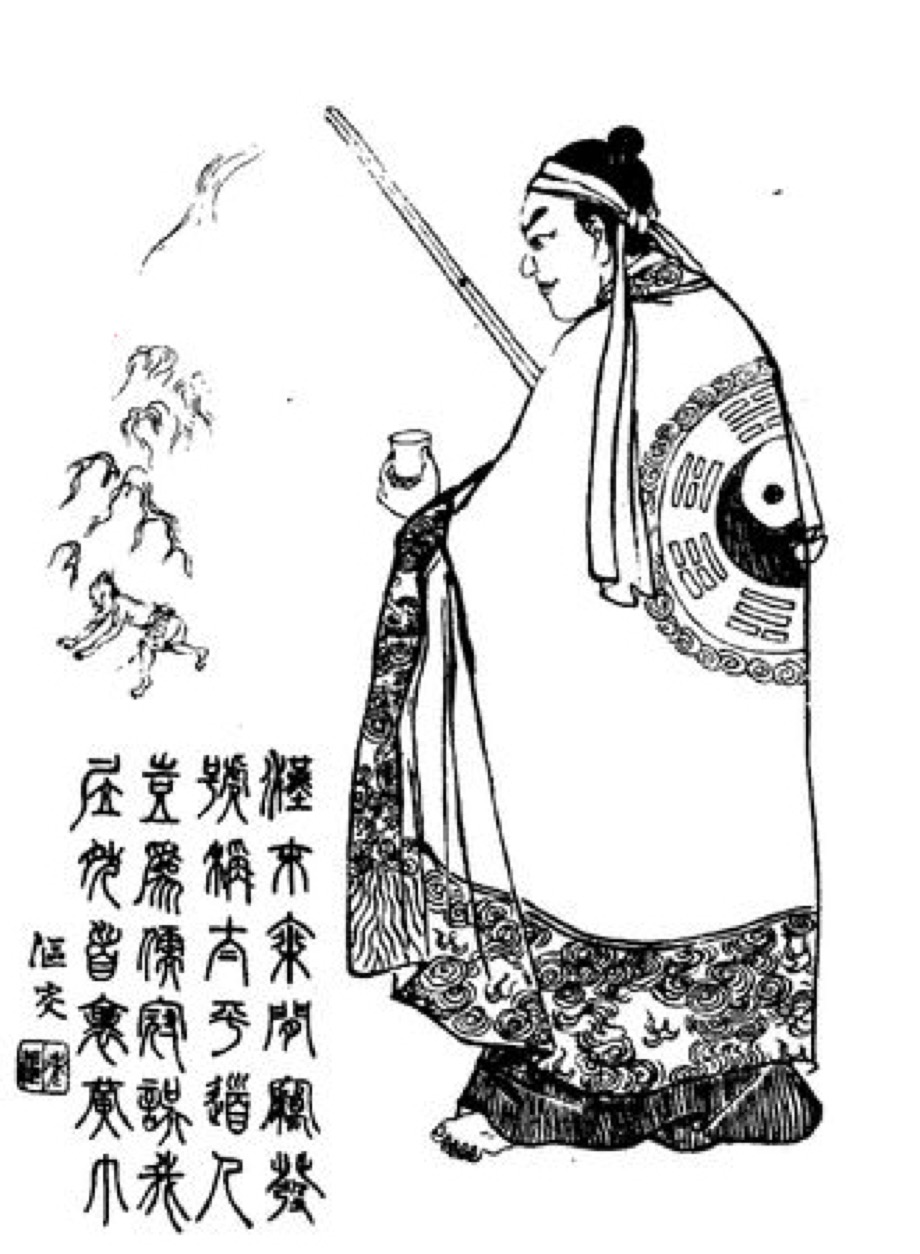
Portrait of Zhang Jiao
The Yellow Heaven’s Architect
Zhang Jiao did not lead a riot. He built an institution, and then he burned it down on schedule. For roughly a decade before 184 CE, while the Han court sank into eunuch intrigue and famine spread through the provinces, he moved quietly through the countryside as a healer — offering the sick confession, talismanic water, and the promise that their suffering came from sin rather than fate. That promise scaled. What began as village-level faith healing became the Way of Great Peace, a religious organization spanning multiple provinces, hundreds of thousands strong, held together not by an army but by a story: the Blue Heaven of the corrupt Han was already dead, and a Yellow Heaven of universal peace was coming to replace it.
The remarkable thing is not that the story spread — famished, over-taxed populations have always been receptive to promises of renewal. The remarkable thing is what Zhang Jiao did with the people who believed it. He organized them. Thirty-six regional commands, each under a “general,” each instructed to rise on the same day, wearing the same yellow headscarves, chanting the same prophecy. That is not a mob. That is architecture — built underground, over years, by a man who needed no title from the court he intended to replace, only the loyalty of a population he had personally healed.
Even the plot’s failure reveals the design. When the conspiracy was betrayed just weeks before the planned date, Zhang Jiao did not scramble — he triggered the rising early across the whole network at once, and it still very nearly worked: garrisons overrun, the Han court forced to arm regional strongmen it could not otherwise trust, a chain of consequence that would outlive Zhang Jiao himself by decades and ultimately dissolve the empire he had set out to replace. A man who can hold a distributed, multi-province conspiracy together for years and still activate it coherently under duress is not merely charismatic. He is an ENFJ of the visionary-organizer variety — Fe building the movement, Ni supplying the long horizon it was built toward.
Zhang Jiao did not simply preach that Heaven would change. He built the machine that was supposed to change it, and set the day.
A Healer Who Became a Movement
Fe — dominant
Every account of Zhang Jiao begins with the same detail: he healed people. Not through force, not through payment, but through a ritual of confession — sufferers admitted their sins, drank water blessed over talismans, and were told their illness would lift because the moral order underneath it had been named and repaired. Whatever the clinical mechanism, the social mechanism was unmistakable Fe: Zhang Jiao offered people a shared framework for their pain, one that located the cause not in their private misfortune but in a collective moral failure — the corruption of the Blue Heaven itself — that he alone could name and, eventually, promised to fix.
That framework is what let a village healer become the head of a movement spanning provinces. Fe doesn’t need to know every follower personally; it needs to construct a value system compelling enough that strangers recruit each other into it. The Way of Great Peace did exactly that — cell by cell, without Zhang Jiao ever needing to appear in most of the villages that rose in his name. He built the emotional and moral architecture; the movement supplied its own momentum.
It shows, too, in what he promised: not personal salvation, but universal peace — a Yellow Heaven for everyone, not a private favor for the faithful few. That collectivizing instinct, the reflex to frame a private grievance as a shared destiny, is Fe at the scale of an empire, and it is the only plausible engine behind a following that large, built from nothing but a healer’s reputation and a prophecy.
Thirty-Six Commands, One Date
Ni — auxiliary
The single fact that separates Zhang Jiao from every other charismatic preacher of unrest in Chinese history is timing. He did not simply proclaim that the Han’s Blue Heaven was dying and let the prophecy work on its own schedule. He picked a date, organized thirty-six regional commands under trusted subordinates, and synchronized them to rise together — the same yellow headscarves, the same slogan, on the same day, across provinces that could not easily communicate with one another. That is not improvisation. That is a plan held in the mind years before its execution.
Ni is the function that can hold a single, distant image of how events must converge and then work backward from it — subordinating the present to a future it can see but no one else can verify yet. Zhang Jiao spent roughly a decade in quiet organizing, never tipping his hand to the court, building loyalty through healing while the real architecture — the cellular command structure meant to activate at once — assembled beneath it. Nothing about that timeline rewards impatience; it rewards a leader capable of sitting on a vision for years without diluting it.
The clearest proof of the Ni came at the worst possible moment: when the plot was betrayed just before the planned date. A less visionary leader might have aborted, or panicked into a chaotic scramble. Zhang Jiao triggered the whole network early, across every province at once, and it still ignited most of the empire into crisis. Only a leader who had genuinely modeled the interdependence of his own conspiracy — who understood the shape of the whole, not just his own piece of it — could compress that timeline without the plan collapsing into noise.
The Preacher Takes the Field
Se — tertiary
Once the rebellion broke, Zhang Jiao did not retreat into the role of prophet-in-chief, issuing pronouncements from behind his generals. He took the field. He commanded forces personally in the fighting that followed the rising, staying with the campaign until his death from illness months later — before the Han armies under Huangfu Song had fully broken the rebellion he started. For a man whose power was built entirely on ritual and prophecy, that willingness to stand in the physical chaos he had unleashed is notable.
This is Se in its tertiary register: not the dominant sensory command of a born tactician, but a capacity to act decisively in the immediate, physical present when the moment calls for it — useful, even necessary, but not where Zhang Jiao’s real gift lay. His genius was upstream of the battlefield, in the years of quiet recruitment and the architecture of the rising itself; the campaign that followed was a function he could perform, competently and courageously, but not the one that made him formidable.
It is telling, too, that the rebellion’s military execution was the part that faltered fastest. The vision held; the synchronized rising largely came off as planned. It was the sustained field campaign — the grinding, tactical, present-tense work of holding ground against professional Han armies — where the movement began to lose, and where Zhang Jiao himself, rather than adapting into a battlefield commander, simply ran out of time.
A Theology, Not a System
Ti — inferior
What Zhang Jiao did not build was a rigorous internal logic to withstand scrutiny. The Way of Great Peace’s doctrine — a corrupt Blue Heaven collapsing into a just Yellow Heaven, illness as a symptom of sin, healing as confession — was moving, not airtight. It was a moral narrative built to be felt and repeated, not a system built to survive interrogation, and Zhang Jiao never seems to have treated it as one.
The absence shows most clearly in the movement’s vulnerability to betrayal. A leader with strong Ti instincts tends to compartmentalize a conspiracy precisely so that no single defection can expose the whole; Zhang Jiao’s network, for all its cellular structure, was betrayed whole, forcing the entire rising forward on short notice. The architecture was visionary and morally coherent — it was not built with the cold, structural paranoia of a Ti thinker planning for failure modes.
None of this diminishes what he accomplished. Inferior Ti in an ENFJ rarely produces a systems-builder; it produces someone who reaches for logical rigor under pressure and finds it thinner than the conviction that got him there. Zhang Jiao’s rebellion succeeded as a moral and organizational feat and strained badly the moment it needed cold structural discipline instead — which is exactly where an Fe-Ni leader, however extraordinary, tends to run out of road.
Why ENFJ Over ENFP
Why not ENFP?
An ENFP reading undersells the discipline this rebellion required. Spontaneous charisma can gather a crowd, even a large one, but it cannot hold thirty-six regional commands in covert coordination for years and then activate them on a single date across provinces that could not communicate with each other. That is not Ne-Fi improvisation snowballing outward — it is sustained Ni-Te judging discipline underneath the Fe vision, a top-down architecture that a purely exploratory temperament does not build and does not keep secret for a decade.
The tell is the synchronization itself. An ENFP’s energy tends to radiate outward in the moment, recruiting through improvisation and lively enthusiasm that adapts to whoever is in front of it. Zhang Jiao’s movement did the opposite: it moved toward a fixed point years in the future, disciplined enough that when betrayal forced the timeline forward, the whole structure still fired together rather than dissolving into scattered local uprisings. That is judgment governing vision, not perception chasing possibility — the signature of an ENFJ, not an ENFP.
Connected Figures
Further Reading
- Fire over Luoyang: A History of the Later Han Dynasty — Rafe de CrespignyThe standard modern account of the rebellion's political and social context.
- A Biographical Dictionary of the Later Han to the Three Kingdoms — Rafe de CrespignyEntry on Zhang Jiao, drawing together the fragmentary primary sources on his life and death.
- The Scripture on Great Peace: The Taiping jing and the Beginnings of Daoism — Barbara HendrischkeOn the religious and ideological roots of the movement Zhang Jiao led.
- Everyday Life in Early Imperial China — Michael LoeweBackground on Han-era popular religion, healing cults, and the conditions of crisis that made the Way of Great Peace possible.
