 Historical Figure MBTI
#1206 · 9-3-26 · The Mughal Empire
Adham Khan
Mughal Commander · Son of Maham Anga
c. 1531–1562
5 min read
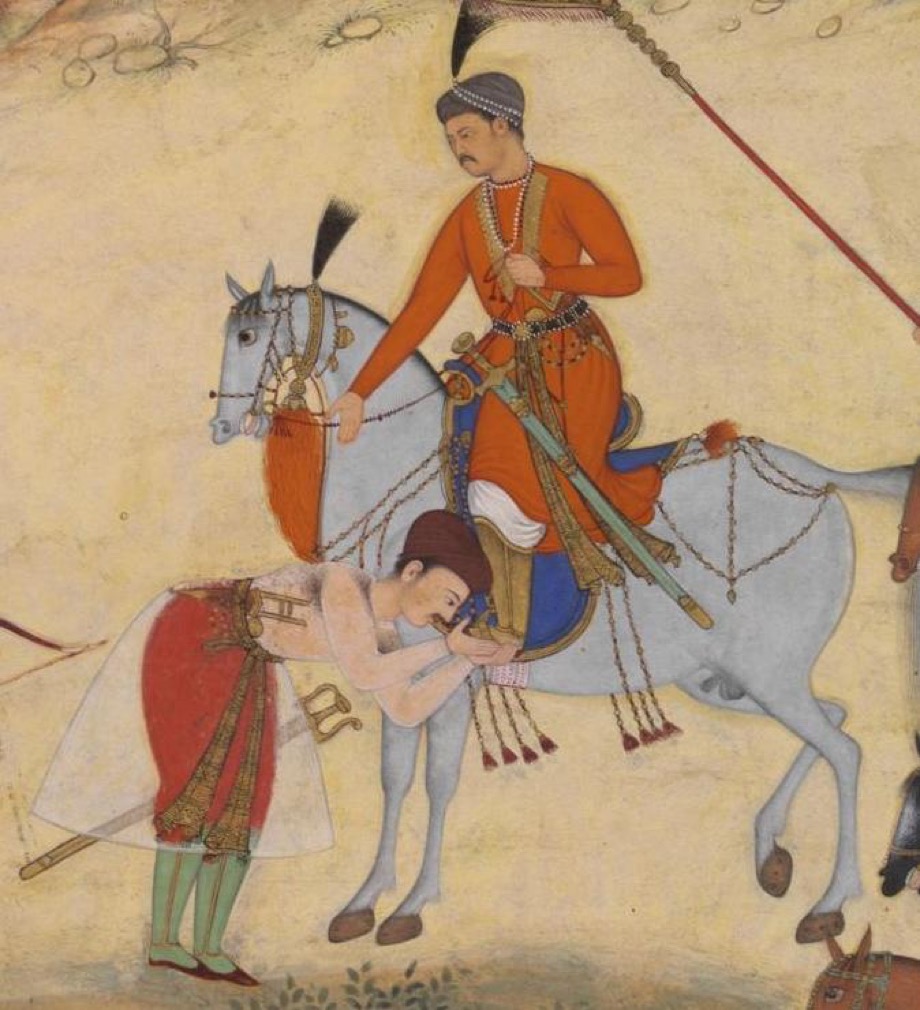
Portrait of Adham Khan — 1590–1595 (later depiction)
Too close to the throne
Adham Khan occupied the dangerous space between an emperor’s servant and an emperor’s household companion. His mother, Maham Anga, had cared for Akbar as a child. That connection brought proximity and opportunities which military service alone might not have secured. It also encouraged expectations that became untenable when the sovereign began deciding, with increasing force, where household privilege must end.
His career culminated in the killing of Ataga Khan in 1562 and his own execution. The official history turns the confrontation into an exemplary assertion of Akbar’s justice. That purpose makes the account invaluable and difficult: it preserves actions while assigning motives and moral meanings that favor the emperor. A profile of Adham cannot simply repeat the historian’s denunciations as though they were a private confession.
The proposed ESTP reading is low-confidence and concerns the reported pursuit of immediate advantage. It is not a claim that aggression defines this type. We lack a broad record of Adham’s ordinary decisions, intellectual life, or relationships outside the crises for which he is remembered. Even a detailed account of misconduct remains a narrow sample of a person.
Adham Khan tentatively reads as an ESTP led by dominant extraverted sensing: he reaches for immediate leverage before its consequences have settled.
The victory he tried to keep
In 1561 Adham and Pir Muhammad Khan led the Mughal campaign against Baz Bahadur in Malwa. Victory at Sarangpur gave them access to substantial spoils and captives. The court narrative accuses the commanders of brutal conduct and presents Adham as retaining what should have gone to the emperor. The issue was not simply whether he had fought successfully. It was whether an imperial officer could act as though victory had made the conquered resources personally his.
Akbar traveled rapidly to Malwa and confronted the situation before the household network could comfortably manage it at a distance. Adham submitted and surrendered spoils, with Maham involved in the aftermath. The episode demonstrates an ability to recognize an immediate reversal and adjust conduct. It also shows how little a successful campaign guaranteed when the ruler himself arrived to inspect the terms on which success had been claimed.
Dominant extraverted sensing is proposed for the way the narrative repeatedly places him at an opening he can exploit or a confrontation he can enter. He acts within the immediate field of possession and force. The reading is limited because a campaign history naturally concentrates on action. Its value lies in the reported pattern of seizing opportunities before reckoning with the institutional boundary around them, rather than in the fact that he was a soldier.
An exception made for himself
The dispute over booty posed a practical calculation. An officer could possess resources on the ground while remaining formally answerable to the sovereign. Adham’s reported withholding seems to depend on treating that immediate possession, together with his household standing, as usable leverage. When Akbar intervened, the calculation failed. The court’s expectation of obedience was not exhausted by rewarding a victory.
Auxiliary introverted thinking is only a tentative lens here. It may suggest a personalized logic of what can be managed, retained, or explained away within a particular situation. We do not have enough sustained argument from Adham to establish it positively. The official narrative portrays his later attempt to answer for Ataga’s killing as evasive and confused; it cannot tell us whether he usually reasoned analytically. ESTP is therefore an interpretive preference that rests more firmly on the proposed dominant pattern than on this reconstruction of its supporting function.
The audience that stopped protecting him
Ataga Khan’s rise sharpened competition between groups whose standing came partly through foster ties to the emperor. In May 1562 Adham entered the place where Ataga and other officers were transacting business. According to the Akbarnama, he approached with armed companions, signaled the attack, and his men struck Ataga down. He then moved toward the imperial apartments. These actions are attributed to the court account; its portrayal of his jealousy and intentions must be distinguished from the sequence it reports.
The same account describes Akbar confronting him, striking him down, and ordering him thrown from a terrace. When the first fall did not kill him, the order was repeated. The public violence answered public violence, making household familiarity visibly subordinate to royal power. Tertiary extraverted feeling offers a weak interpretation of Adham’s dependence on status, accomplices, and an audience that had previously accommodated him. It does not explain the killing. In the decisive encounter, those relationships could no longer secure the outcome he needed.
Why ESTP Over ESFP
Why not ESFP?
ESFP could also explain direct action, confidence, and a preference for immediate satisfaction. ESTP receives a slight preference because the surviving episodes emphasize leverage, expedient submission, and attempts to manage a confrontation rather than a consistently articulated personal code. This is negative and selective evidence, especially in a narrative written to condemn him. The distinction is too fragile to treat as a settled identification.
The missing long view is visible in the outcome, but failure cannot prove an inferior function. Adham’s conduct threatened the authority on which his advancement depended. Political rivalry, privilege, and choices made under pressure explain that contradiction more directly than a complete personality stack could. The proposed type helps frame questions about his behavior; it does not supply the motives the sources leave uncertain.
Connected Figures
Further Reading
- The Akbarnama — Abu’l-Fazl; translated by Henry BeveridgeThe official court history, indispensable when read with attention to its praise of the emperor.
- The Mughal Empire — John F. RichardsA modern synthesis of conquest, administration, and the changing ideological basis of Mughal power.
- The History of Humayun (Humayun-Nama) — Gulbadan Begum; translated by Annette S. BeveridgeThe family account and translator’s notes provide context for foster households and the early court.
