 Historical Figure MBTI
#1205 · 9-3-26 · The Mughal Empire
Maham Anga
Foster Mother · Political Patron
Died 1562; birth unknown
5 min read
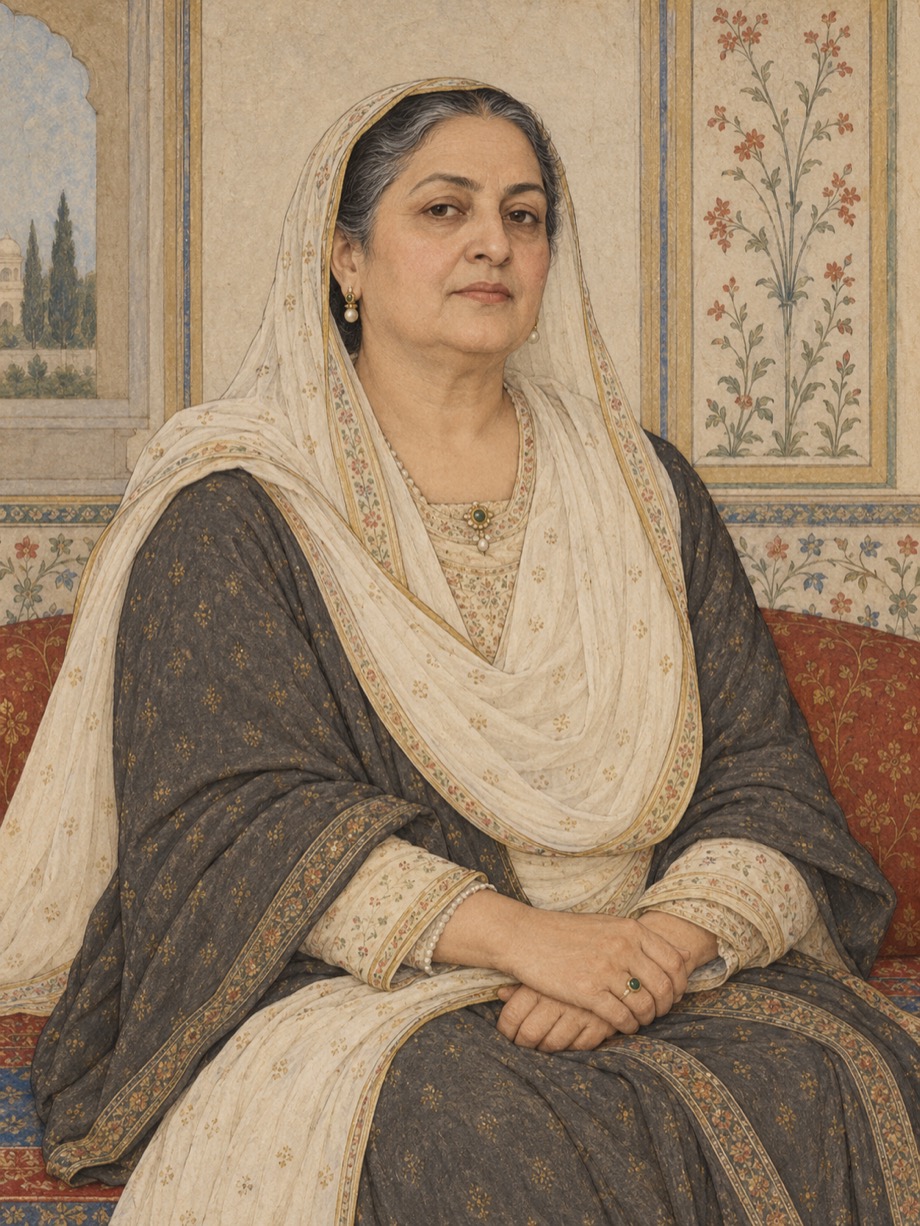
AI-assisted Portrait of Maham Anga
The household beside the throne
Maham Anga’s influence began before Akbar could exercise a sovereign’s power. She belonged to the foster household that cared for him amid the disruptions of his father’s reign. That intimacy became politically consequential when the child was an emperor. Access, trust, and the capacity to arrange people’s business placed her near the center of a government whose public offices never stood entirely apart from its private relationships.
The proposed ESTJ reading is low-confidence. It rests on reported management of access and affairs, not on the assumption that an influential woman must have been domineering. We meet her through court narratives that justify Akbar’s eventual independence and through later historians who sometimes turn maternal influence into a cautionary tale. The evidence supports political agency; it gives much less certainty about the disposition behind it.
Her son Adham Khan benefited from the connection, but his disastrous career should not absorb hers. Maham served the household over many years, developed relationships beyond her immediate family, and could receive respect from the same historian who condemned Adham’s actions. Keeping these distinctions makes the final tragedy more intelligible than casting mother and son as a single villain.
Maham Anga tentatively reads as an ESTJ led by dominant extraverted thinking: household trust becomes a practical means of arranging affairs.
The people who could get things done
When Bairam Khan’s regency dissolved in 1560, Maham joined the circle through which Akbar began governing more directly. The Akbarnama associates her with Shihab al-Din Ahmad Khan in presenting matters to the emperor. The description places her within the handling of government, not merely whispering advice behind a curtain. Yet her influence depended on Akbar’s continuing confidence and on the cooperation of officers whose interests could diverge.
A small anecdote preserved in the translator’s notes is more concrete than sweeping claims that she ruled everything. When money was urgently needed for Akbar and an official professed himself unable to supply it, Maham used her household network to obtain the amount. The story shows a practical route through an immediate obstruction. It also reveals how servants and women within the household could connect the sovereign’s needs to resources outside a formal exchange between male officeholders.
Dominant extraverted thinking is proposed for that readiness to arrange a result through known channels and responsible people. It is a lens on the conduct reported, not a demonstration drawn from her title. Court patronage involved ambition, obligations, service, and competition. Maham’s effectiveness within it suggests practical command; whether this reflected her usual thinking or the demands of her position remains unsettled.
Authority accumulated through service
Her status drew on a relationship that preceded many of the men now seeking office. Foster kinship was a recognized bond with political consequences: the emperor’s childhood belonged to a circle whose claims to familiarity differed from those of a newly arrived commander. Maham’s standing could make a son’s advancement seem a continuation of household service. It could also make dismissing that son more difficult than correcting an ordinary subordinate.
Auxiliary introverted sensing is a tentative interpretation of this reliance on established ties and accumulated obligation. She worked with the authority of a remembered past, although the sources do not give a personal statement that she preferred continuity for its own sake. Her experience was useful because it supplied people she knew, channels she could use, and expectations others understood. An effective court operator had to know that inherited landscape before attempting to direct it.
Protection meets a sovereign limit
In 1561 Adham’s campaign in Malwa produced a conflict over the spoils and his behavior as an imperial commander. Court accounts place Maham in efforts to protect him and negotiate the consequences when Akbar intervened. Their descriptions also attach grave allegations to her handling of captive women. These narratives require attribution, especially where accusations make the emperor’s escape from household influence appear morally necessary. The profile cannot determine her private intent or treat every later judgment as an independent witness.
Tertiary extraverted intuition offers a weak but possible lens on her ability to find alternative routes when a familiar arrangement came under threat: intervening personally, using intermediaries, and seeking a revised outcome. Such flexibility may equally reflect ordinary political necessity. What is clear is that the protective network had limits. The appointment of Ataga Khan to high responsibility gave another foster household greater influence and narrowed the space in which Maham’s position could operate.
Why ESTJ Over ESFJ
Why not ESFJ?
ESFJ is a serious alternative because her authority arose through care, familiarity, and the maintenance of relationships. The accounts that survive can describe the same intervention as practical direction or protection of a personal bond. ESTJ receives a slight preference from the repeated emphasis on handling business and securing outcomes. The distinction is too uncertain to infer emotional coldness or to turn maternal loyalty into proof of a particular type.
The least secure element is any account of her inner values. In 1562 Adham’s killing of Ataga Khan led to his execution on Akbar’s order. The court history depicts Maham as respecting the sovereign while suffering intensely in private. This is a remembered and moralized scene, not direct access to her mind. She died forty days later, already ill before the catastrophe.
Connected Figures
Further Reading
- The Akbarnama — Abu’l-Fazl; translated by Henry BeveridgeThe official court history, indispensable when read with attention to its praise of the emperor.
- The Mughal Empire — John F. RichardsA modern synthesis of conquest, administration, and the changing ideological basis of Mughal power.
- The History of Humayun (Humayun-Nama) — Gulbadan Begum; translated by Annette S. BeveridgeThe family history and its editorial apparatus illuminate foster kinship and household politics.
